






How to compare cycle life of lead acid motorcycle battery options?
- Beyond nominal cycle counts, how do different lead-acid motorcycle battery chemistries (flooded, AGM, Gel) truly compare in *real-world* longevity for typical motorcycle usage patterns, considering factors like discharge depth and charge cycles?
- Flooded Lead-Acid Batteries (Wet Cell):
- AGM Batteries (Absorbent Glass Mat):
- Gel Batteries:
- When replacing my lead acid motorcycle battery, how do I accurately determine if I need to prioritize higher Cold Cranking Amps (CCA) for reliable starts or Amp-hour (Ah) capacity for accessories, especially if my riding habits change?
- Understanding CCA (Cold Cranking Amps):
- Understanding Ah (Ampere-hour):
- My motorcycle's charging system seems fine, but my lead-acid battery keeps failing prematurely. What specific, subtle issues within the charging system can silently degrade a battery's lifespan, and how can I test for them myself?
- Intermittent Undercharging:
- Slight Overcharging (Creeping Voltage):
- High AC Ripple:
- Parasitic Drain:
- Are the popular 'battery desulfators' or 'rejuvenators' genuinely effective for restoring a struggling lead-acid motorcycle battery, or are their claims often overstated, especially for batteries that have been deeply discharged multiple times?
- How Sulfation Occurs:
- How Desulfators Work:
- Effectiveness and Limitations:
- What are the *precise* characteristics (voltage, current regulation, desulfation modes) I should look for in a smart battery maintainer to ensure maximum cycle life and prevent sulfation during long-term storage of my lead acid motorcycle battery, rather than just any 'trickle charger'?
- Multi-Stage Charging Profile:
- Automatic Temperature Compensation:
- Compatibility with Battery Chemistry:
- Spark-Proof and Reverse Polarity Protection:
- Output Current:
- Automatic Recovery from Power Outage:
- How does the internal construction of different lead-acid motorcycle battery types (e.g., traditional flooded vs. AGM's compressed plates) specifically resist or succumb to the unique vibration stresses encountered in various motorcycle riding conditions, impacting their longevity?
- Flooded Lead-Acid Batteries (Wet Cell):
- AGM Batteries (Absorbent Glass Mat):
- Gel Batteries:
- My motorcycle battery's specific gravity varies wildly across cells (in a flooded type) or it consistently reads low with a voltage tester despite recent charging. What specific internal battery issues are these indicating, and when is it truly beyond recovery?
- Conclusion: Powering Your Ride with Confidence
Demystifying Your Lead Acid Motorcycle Battery: Expert Answers to Beginner's Toughest Questions
As a motorcycle enthusiast, the heart of your ride's electrical system is its battery. For many, the tried-and-true lead acid motorcycle battery remains the go-to choice, offering a balance of performance and value. However, the seemingly straightforward world of batteries hides a surprising depth of technicalities that often leave beginners with more questions than answers. Online information, while abundant, frequently lacks the granular detail needed to make truly informed decisions, especially when considering factors like how to compare cycle life of lead acid motorcycle battery options?
At Tiandong Battery, with decades of experience in battery manufacturing and a commitment to innovation, we understand these pain points. We've compiled six specific, frequently asked questions that go beyond the surface, offering expert, in-depth insights to help you understand, choose, and maintain your motorcycle starting battery effectively.
Beyond nominal cycle counts, how do different lead-acid motorcycle battery chemistries (flooded, AGM, Gel) truly compare in *real-world* longevity for typical motorcycle usage patterns, considering factors like discharge depth and charge cycles?
When you look at a lead acid battery, the advertised cycle count is often a theoretical number derived from specific lab conditions (e.g., 50% depth of discharge, controlled temperature). In the real world of motorcycle usage, things are far more complex.
-
Flooded Lead-Acid Batteries (Wet Cell):
Traditional flooded batteries generally offer 200-400 cycles at 50% DoD. Their main vulnerability in real-world motorcycle applications is vibration, which can dislodge active material, and the need for regular maintenance (checking electrolyte levels). Deep discharges significantly shorten their battery lifespan. If regularly maintained and not deeply discharged, they can last 3-5 years, but their performance degrades faster with neglect. -
AGM Batteries (Absorbent Glass Mat):
AGM batteries (a type of VRLA battery) typically offer 400-800 cycles at 50% DoD. Their key advantage is superior vibration resistance and sealed, maintenance-free operation. The glass mats hold the electrolyte in place, preventing spillage and plate damage from shocks. This makes them ideal for demanding motorcycle environments. They also handle higher discharge/recharge rates better than flooded batteries. In typical motorcycle use (frequent shallow discharges for starting, occasional deeper discharges with accessories), a well-maintained AGM can easily last 4-7 years, often outperforming flooded cells due to their robustness and lower self-discharge rate. -
Gel Batteries:
Gel batteries (also VRLA) use a silica-based gel to immobilize the electrolyte. They excel in deep cycle applications, often rated for 500-1000+ cycles at 50% DoD. While excellent for applications requiring sustained power draw (like electric scooters or specific custom bikes with many accessories), their primary drawback for motorcycles is their lower peak current delivery (CCA) compared to AGM and their sensitivity to overcharging. For pure starting power in most standard motorcycles, AGM often provides a better balance. Gel batteries are less susceptible to vibration than flooded, similar to AGM, but can be more prone to internal resistance buildup if charged improperly. Their lifespan in motorcycles can be comparable to AGM, provided the motorcycle charging system is perfectly matched to their charging voltage requirements.
ly, for most modern motorcycles, AGM offers the best real-world longevity due to its balance of vibration resistance, sealed design (reducing maintenance-induced failures), and strong CCA performance, especially when paired with a good battery maintainer.
When replacing my lead acid motorcycle battery, how do I accurately determine if I need to prioritize higher Cold Cranking Amps (CCA) for reliable starts or Amp-hour (Ah) capacity for accessories, especially if my riding habits change?
This is a critical decision. Prioritizing correctly ensures both reliable starts and adequate power for your electronics.
-
Understanding CCA (Cold Cranking Amps):
CCA is a measure of a battery's ability to deliver a large burst of current for a short period (typically 30 seconds at 0°F / -18°C) while maintaining a minimum voltage. For motorcycles, particularly those with high-compression engines or those operated in cold climates, CCA is paramount for starting. A higher CCA ensures your starter motor gets the juice it needs to turn over a cold engine quickly and efficiently. If your engine struggles to start, especially in cooler weather, or if you've added modifications that increase cranking resistance, prioritizing CCA is vital. -
Understanding Ah (Ampere-hour):
Ah measures a battery's total energy storage capacity—how much current it can deliver over a longer period. For example, a 10 Ah battery can theoretically deliver 1 amp for 10 hours, or 10 amps for 1 hour. This is crucial for powering accessories like heated grips, GPS, extra lighting, or charging devices while the engine is off or idling. If your riding habits involve long commutes with multiple electronic accessories, or if you often take breaks with the engine off but accessories running (e.g., camping), then higher Ah capacity becomes more important to prevent premature discharge.
To accurately determine your needs:
- Check OEM Specifications: Always start with your motorcycle manufacturer's recommended CCA and Ah ratings. This is the baseline your bike was designed for.
- Assess Your Cold Starting Needs: Do you ride in cold weather frequently? Does your bike have a large displacement or high compression? If so, aim for a CCA rating at or slightly above the OEM recommendation.
- Calculate Accessory Draw: List all non-OEM accessories (heated gear, USB chargers, auxiliary lights, alarm systems, GPS) and find their power consumption (watts). Divide watts by 12 volts to get amps. Sum these up. If your total accessory draw significantly exceeds the reserve capacity the OEM battery provides (especially with the engine off or idling), you'll benefit from a higher Ah rating. However, remember that the alternator's output at idle is limited; a larger battery merely provides a longer buffer.
- Consider Riding Style: Short, frequent rides may not fully recharge a high-capacity battery, leading to sulfation. Long rides with high accessory use benefit from higher Ah. If you primarily ride in warm weather and have few accessories, sticking close to OEM specs with a reliable maintenance-free battery like an AGM is usually best.
For most users, a balanced VRLA battery (AGM) that meets or slightly exceeds OEM CCA while offering a decent Ah capacity is the optimal choice for a reliable motorcycle starting battery.
My motorcycle's charging system seems fine, but my lead-acid battery keeps failing prematurely. What specific, subtle issues within the charging system can silently degrade a battery's lifespan, and how can I test for them myself?
A seemingly functional motorcycle charging system can indeed be a silent killer of lead acid motorcycle batteries. Many riders check the voltage at the battery terminals and, seeing 13.8V-14.7V, assume all is well. However, subtle issues can cause chronic undercharging or overcharging, significantly shortening battery lifespan.
Subtle Issues and Their Impact:
-
Intermittent Undercharging:
- Problem: Regulator/rectifier output dropping slightly under load or at certain RPMs; corroded connections in the charging circuit; stator issues that aren't yet causing a full failure. This is often not enough to trigger a warning light but prevents the battery from reaching a full state of charge.
- Impact: Chronic undercharging leads to sulfation—the formation of lead sulfate crystals on the battery plates. These crystals harden over time, reducing the battery's capacity to hold a charge and deliver current (reduced Ah and CCA). This is the number one cause of premature battery failure.
-
Slight Overcharging (Creeping Voltage):
- Problem: A failing voltage regulator that allows the voltage to creep up slightly above the ideal 14.4V-14.7V range, perhaps intermittently or under specific conditions (e.g., high RPMs).
- Impact: Overcharging causes the electrolyte in flooded lead-acid batteries to gas excessively, losing water and exposing plates. In VRLA batteries (AGM/Gel), it leads to internal heat buildup, gassing, and eventual dry-out and plate degradation, drastically reducing battery lifespan. It can also warp plates.
-
High AC Ripple:
- Problem: A failing rectifier bridge can allow AC current to pass into the DC charging circuit. This might not significantly alter the average DC voltage but introduces harmful fluctuations.
- Impact: AC ripple causes excessive heat within the battery, degrading the plates and accelerating sulfation. It can also damage other electronic components on the bike.
-
Parasitic Drain:
- Problem: Although not strictly a charging system issue, a small, persistent electrical drain (e.g., faulty alarm, corroded wiring, miswired accessory) can repeatedly discharge the battery when the bike is off. The charging system then constantly struggles to recover it.
- Impact: Repeated deep discharges lead to rapid sulfation and significantly reduce the cycle life of any lead acid motorcycle battery, even high-quality AGM types.
How to Test for Them (DIY with a Multimeter):
- Voltage Drop Test (Charging Circuit Integrity): With the bike running and charged, measure voltage at the battery terminals. Then, measure between the positive battery terminal and the positive output of the regulator/rectifier. A drop of more than 0.5V indicates excessive resistance in the wiring (corrosion, loose connections). Repeat for the negative side (negative terminal to engine ground).
- AC Ripple Test: Set your multimeter to AC voltage. With the engine running at 2000-3000 RPM, measure across the battery terminals. A reading above 0.5V AC indicates significant AC ripple, suggesting a failing rectifier. Good systems should read closer to 0.1-0.2V AC.
- Full Voltage Output Range Test: Warm up the engine. Using a multimeter, check the DC voltage across the battery terminals at idle and then again at 3000-5000 RPM. The voltage should typically remain stable between 13.8V and 14.7V. If it drops below 13.5V (undercharging) or consistently rises above 14.8V (overcharging), you have a regulator/rectifier or stator issue. Test with headlights on and off to see load impact.
- Parasitic Drain Test: Disconnect the negative battery cable. Set your multimeter to measure Amps (mA). Connect the positive meter lead to the disconnected negative cable and the negative meter lead to the negative battery post. Ensure all accessories are off and the ignition is off. A drain exceeding 20-50mA (depending on the bike's complexity and alarm system) indicates a parasitic drain. Pull fuses one by one to isolate the culprit.
Regularly performing these tests can help you diagnose and rectify subtle charging system faults before they claim another motorcycle battery.
Are the popular 'battery desulfators' or 'rejuvenators' genuinely effective for restoring a struggling lead-acid motorcycle battery, or are their claims often overstated, especially for batteries that have been deeply discharged multiple times?
The effectiveness of 'battery desulfators' and 'rejuvenators' for lead acid motorcycle batteries is a nuanced topic, often mired in hype. While they aren't entirely snake oil, their capabilities are frequently overstated, especially for batteries in advanced states of degradation.
-
How Sulfation Occurs:
Sulfation is the primary cause of capacity loss and failure in lead acid batteries. It occurs when a battery is left in a discharged state, or when it's repeatedly undercharged. Lead sulfate crystals form on the battery plates, insulating the active material and preventing normal chemical reactions. These crystals can be soft and easily reversible initially, but over time, they harden and grow, becoming 'hard sulfation' which is much more difficult to remove. -
How Desulfators Work:
Most desulfators work by applying high-frequency, low-current pulses to the battery. The theory is that these pulses vibrate the lead sulfate crystals, causing them to break down and convert back into active material (lead dioxide and lead). Some also incorporate a specific charge profile to aid this process. -
Effectiveness and Limitations:
- Mild Sulfation: For batteries experiencing *mild* or *fresh* sulfation (e.g., a battery left discharged for a few weeks but not completely dead), desulfators can be genuinely effective. They can often recover a significant portion of the battery's original Ah capacity and CCA, extending its battery lifespan. Modern smart battery maintainers often incorporate desulfation modes for this reason.
- Deeply Discharged/Hard Sulfation: This is where the claims become problematic. If a lead acid motorcycle battery has been deeply discharged multiple times, left discharged for months, or exhibits severe voltage drops under load, it's likely suffering from hard sulfation, physical plate damage (e.g., warping, shedding of active material), or internal short circuits. In these cases, desulfators are largely ineffective. The crystals are too hard to break down, or the physical damage is irreversible. Attempting to 'rejuvenate' such a battery can even be dangerous, potentially causing excessive heat or gassing. Realistically, once a battery shows significant signs of permanent damage (e.g., very low specific gravity in one cell of a flooded battery), it's beyond reasonable recovery.
- Not a Cure-All: Desulfators are a preventative maintenance tool or a recovery tool for early-stage issues, not a magic bullet for a dead battery. They cannot fix physical damage, reverse chemical stratification, or replace lost active material.
Conclusion: If your lead acid motorcycle battery is relatively new but has been inadvertently discharged for a short period, a quality desulfator (often integrated into a smart charger) might help. However, for an old battery showing chronic issues or one that has been deeply discharged multiple times and left in that state, replacement is almost always the more reliable and safer option. Prevention through proper charging and maintenance is far more effective than trying to reverse severe sulfation.
What are the *precise* characteristics (voltage, current regulation, desulfation modes) I should look for in a smart battery maintainer to ensure maximum cycle life and prevent sulfation during long-term storage of my lead acid motorcycle battery, rather than just any 'trickle charger'?
Using the right battery maintainer is crucial for maximizing the cycle life and preventing sulfation in your lead acid motorcycle battery during long-term storage. A simple 'trickle charger' can actually do more harm than good, as it often provides a constant, unregulated low current that can lead to overcharging and gassing, particularly with modern VRLA batteries like AGM and Gel. Look for these precise characteristics in a smart maintainer:
-
Multi-Stage Charging Profile:
- Bulk Stage: Delivers maximum safe current to bring the battery to ~80% charge quickly.
- Absorption Stage: Reduces current and maintains a constant voltage (typically 14.4V-14.7V for 12V lead acid) to bring the battery to 100% charge, preventing overcharging.
- Float Stage: The most crucial stage for long-term maintenance. Once fully charged, the maintainer drops to a lower, constant 'float' voltage (typically 13.2V-13.6V for 12V batteries). This voltage is just enough to counteract the battery's natural self-discharge without causing gassing or excessive heat. This is what truly prolongs battery lifespan.
- (Optional) Desulfation/Recondition Stage: Some advanced maintainers include a mode that applies higher voltages (e.g., 15.8V) or pulse charges for a limited time to break down mild sulfation. This is beneficial for recovering slightly neglected batteries but shouldn't be a constant mode.
-
Automatic Temperature Compensation:
Charging voltage requirements change with temperature. A smart maintainer with a temperature sensor will adjust its output voltage slightly (e.g., lower voltage in hot conditions, higher in cold) to ensure optimal and safe charging, preventing both undercharging and overcharging.Real data indicates a change of approximately -0.02 to -0.03 Volts per °C above 25°C, and vice versa for colder temperatures. This precision is critical for VRLA battery health. -
Compatibility with Battery Chemistry:
Ensure the maintainer explicitly states compatibility with your specific lead acid motorcycle battery type: Flooded, AGM battery, or Gel battery. Each type has slightly different optimal charging voltages and profiles. Many good maintainers have selectable modes for these chemistries. -
Spark-Proof and Reverse Polarity Protection:
Essential safety features to prevent damage to the battery, charger, and yourself during connection. -
Output Current:
For motorcycle batteries (typically 5-30 Ah), a maintainer with an output current between 0.75A and 1.5A is usually sufficient. Higher currents (e.g., 3-5A) are for faster charging large automotive batteries; using too high a current for a prolonged period on a small motorcycle battery can cause excessive heat. -
Automatic Recovery from Power Outage:
If power is lost and restored, the maintainer should resume its charging cycle automatically without manual intervention.
By selecting a maintainer with these specific features, you ensure your motorcycle battery receives the precise care it needs, drastically extending its cycle life and ensuring reliable starts.
How does the internal construction of different lead-acid motorcycle battery types (e.g., traditional flooded vs. AGM's compressed plates) specifically resist or succumb to the unique vibration stresses encountered in various motorcycle riding conditions, impacting their longevity?
Motorcycles subject batteries to constant vibration, a significant stressor that traditional automotive batteries often don't face to the same extent. The internal construction of a lead acid motorcycle battery plays a pivotal role in its vibration resistance and, consequently, its battery lifespan.
-
Flooded Lead-Acid Batteries (Wet Cell):
- Construction: These batteries have plates suspended in a liquid electrolyte. The plates are typically cast lead-alloy grids coated with active material. Separators (usually made of PVC or polyethylene) are placed between the plates to prevent short circuits.
- Vulnerability: The primary vulnerability of flooded batteries to vibration lies in the movement of their internal components. Constant jarring can cause:
- Shedding of Active Material: Vibration can cause the lead paste on the positive plates to shed or flake off. This material collects at the bottom of the battery as 'mud,' reducing the active surface area, decreasing Ah capacity, and eventually causing internal short circuits if it builds up enough to bridge the plates.
- Plate Damage/Warping: Severe vibration can lead to physical deformation or cracking of the plates, especially thinner ones. This can compromise the structural integrity and electrical connection.
- Separator Damage: Vibration can damage the separators, leading to short circuits between plates.
-
AGM Batteries (Absorbent Glass Mat):
- Construction: AGM batteries utilize fine, absorbent glass mats packed tightly between the lead plates. These mats soak up the electrolyte, immobilizing it and essentially creating a 'dry' cell. The plates, mats, and separators are compressed together within the battery casing.
- Vibration Resistance: This compressed, 'dry' construction is key to AGM's superior vibration resistance:
- Immobilized Electrolyte: Since the electrolyte is absorbed into the glass mats, it cannot slosh around, eliminating electrolyte stratification and preventing plate damage from liquid movement.
- Compressed Plate Stack: The tightly packed and compressed plates are held firmly in place by the glass mats. This significantly reduces the ability of the active material to shed or for the plates to move, crack, or warp under vibration. This directly translates to greater durability and longer battery lifespan in demanding motorcycle environments, particularly for off-road or high-vibration bikes.
- Sealed Design: Being a VRLA battery, its sealed nature also means no electrolyte spills, which is safer and prevents corrosion on other motorcycle components.
-
Gel Batteries:
- Construction: Gel batteries use a silica-based gel that immobilizes the electrolyte. Like AGM, they are sealed VRLA batteries.
- Vibration Resistance: Similar to AGM, the immobilized electrolyte and often robust casing of Gel batteries provide good vibration resistance. The gel prevents shedding of active material and plate movement. They generally perform better than flooded batteries in this regard, often on par with AGM in terms of physical resilience to vibration. However, as noted before, their lower peak current delivery (CCA) can be a limiting factor for starting powerful motorcycle engines.
For high-vibration applications or riders prioritizing durability and maintenance-free battery operation, AGM batteries offer a clear advantage due to their tightly packed, immobilized internal structure, providing excellent vibration resistance and a longer operational life.
My motorcycle battery's specific gravity varies wildly across cells (in a flooded type) or it consistently reads low with a voltage tester despite recent charging. What specific internal battery issues are these indicating, and when is it truly beyond recovery?
These are classic indicators that your lead acid motorcycle battery is struggling with internal issues, moving beyond simple sulfation and towards terminal decline. Understanding these signs helps you make an informed decision about replacement versus attempting recovery.
Specific Gravity Varies Wildly Across Cells (Flooded Batteries):
- What it indicates: A hydrometer measures the specific gravity of the electrolyte in each cell of a flooded lead-acid battery. A fully charged cell should have a specific gravity of approximately 1.265-1.285. Wild variations (e.g., one cell at 1.280, another at 1.150, and another at 1.200) point to significant internal problems in the cells with lower readings.
- Specific Internal Issues:
- Internal Short Circuit: This is a common and severe issue. Active material (lead paste) shedding from the plates due to vibration or age can build up at the bottom of the cell, eventually bridging the positive and negative plates. This creates a direct electrical path, preventing that cell from ever holding a full charge. It will show a very low specific gravity.
- Severely Sulfated Cell: While general sulfation affects all cells, an extremely low specific gravity in just one or two cells suggests that those cells are critically sulfated, with lead sulfate crystals so dense and hardened that they cannot be easily broken down by normal charging. This can be due to manufacturing defects or localized issues.
- Damaged Plate: Physical damage to a plate within a cell can prevent it from participating fully in the chemical reaction, resulting in a lower state of charge for that cell.
- Beyond Recovery? YES, almost certainly. If one or more cells show significantly lower specific gravity (e.g., more than 0.050 difference from others) *after a full, proper charge*, that cell is fundamentally compromised. The internal short or severe sulfation is irreversible with standard charging or even most desulfation techniques. The battery's overall voltage will be limited by the weakest cell, rendering it unreliable for starting. This battery is a candidate for immediate replacement.
Consistently Reads Low with a Voltage Tester Despite Recent Charging:
- What it indicates: You charge your lead acid motorcycle battery, remove it from the charger, and within a short period (hours to a day), its open-circuit voltage drops significantly (e.g., from 12.8V down to 12.2V or lower), even without any load. This suggests a problem with its ability to *hold* a charge.
- Specific Internal Issues:
- High Internal Resistance: This is a broad indicator of internal degradation. Excessive sulfation (even if not localized to one cell), shedding of active material, or corroded internal connections all contribute to increased internal resistance. A high internal resistance means the battery struggles to accept a full charge, dissipates energy as heat, and cannot deliver sufficient current (CCA) to crank the engine efficiently. Even if it reads a decent voltage, it will collapse under load.
- Minor Internal Short Circuits (Multiple Cells): Instead of one complete short, you might have micro-shorts or dendrite growth in multiple cells, slowly draining the battery internally. This manifests as rapid self-discharge after charging.
- Plate Degradation/Corrosion: Over time, the positive plates in lead acid batteries naturally corrode, especially with repeated charging/discharging cycles and exposure to high temperatures. This reduces the amount of active material available for chemical reactions, permanently reducing capacity.
- Beyond Recovery? Likely, yes. If a battery cannot hold a charge for more than a day or two after being fully charged, even when disconnected from the motorcycle (ruling out parasitic drain), its internal resistance is too high, or it has significant internal shorts. While some mild sulfation can be mitigated, this consistent low voltage indicates fundamental degradation of the active material or internal structure. A battery testing machine (CCA tester) will confirm this by showing very low CCA values, even if the voltage briefly appears acceptable. It's time for a new battery.
In both scenarios, these specific issues indicate irreversible damage to the battery's chemical or physical structure. While some 'rejuvenation' efforts can sometimes extend the life of a mildly sulfated battery, these advanced symptoms almost always warrant replacement for safety and reliability.
Conclusion: Powering Your Ride with Confidence
Understanding your lead acid motorcycle battery, from the nuances of cycle life comparison between flooded, AGM, and gel battery types to the intricate details of charging voltage and vibration resistance, empowers you to make smarter purchasing decisions and extend your battery's lifespan. By focusing on factors like actual usage patterns, the critical balance of CCA versus Ah, the subtle threats from a malfunctioning motorcycle charging system, the realistic expectations of desulfation, and the precise requirements for a smart battery maintainer, you ensure your ride is always ready. Maintenance-free battery options, especially modern AGM VRLA battery designs, offer superior performance, durability, and peace of mind against issues like sulfation and internal resistance, providing an excellent battery lifespan and a robust motorcycle starting battery. For reliable, high-performance lead acid motorcycle batteries that meet the highest industry standards, contact us today for a personalized quote. Visit www.tiandongbattery.com or email us at 13428386694@163.com.

Bulk Motorcycle Batteries Direct from Factory – Save Costs, Boost Profit
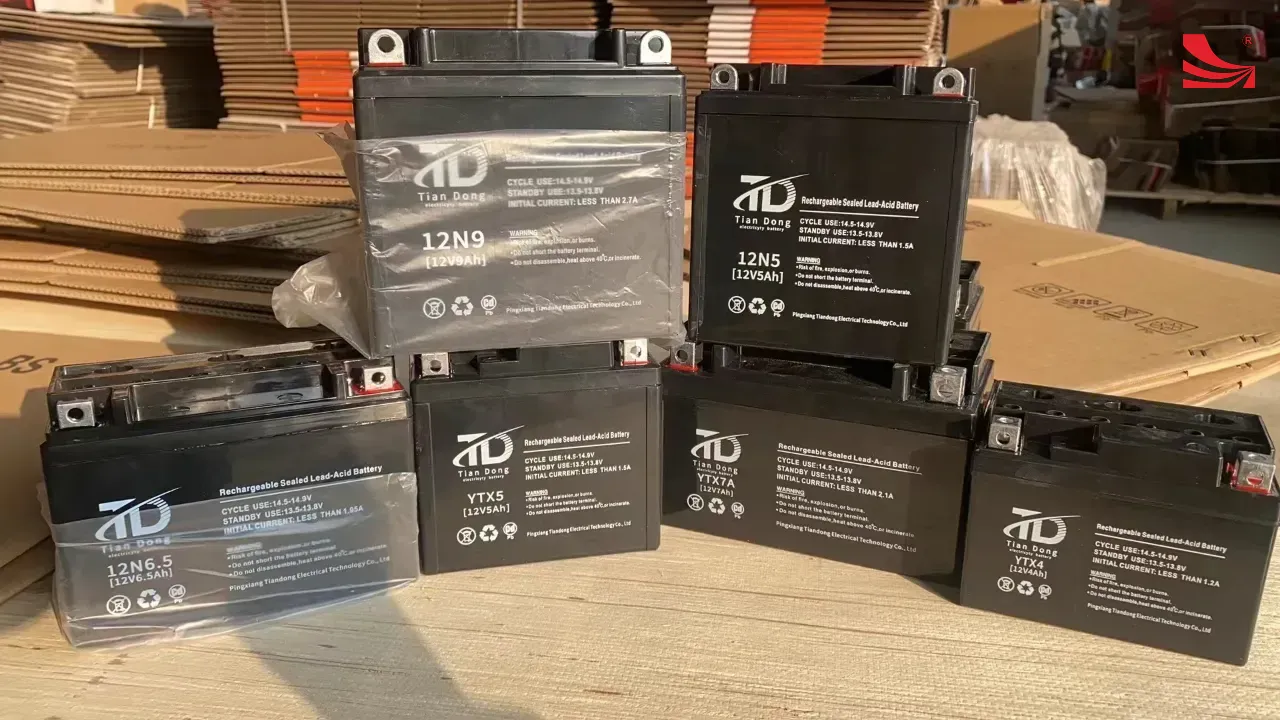
High Performance Motorcycle Batteries for Global Markets

Tiandong Electric Appliance Showcases High-Performance Motorcycle Batteries at Guangzhou Expo

What kind of battery is best for a motorcycle?

The Ultimate Guide to Electric Scooter Batteries: Performance, Longevity, and Future Innovations (2026 & Beyond)

The Ultimate 2026 Guide to Motorcycle Battery Types: Choose, Maintain, and Upgrade for Peak Performance
Product
What kind of battery is best for a motorcycle?
AGM batteries are a popular choice because they combine the best of both worlds: the durability of lead-acid batteries and the low maintenance of lithium-ion batteries. AGM batteries are sealed, so they don't require water refills, and they're designed to handle rough conditions, making them ideal for motorcycles.
What brands of raw materials do you use?
We use high-quality materials to ensure performance. we use 99.99% pure lead , ensure long life and high Cold Cranking Amps (CCA).
What is the typical lifespan of your batteries?
Depending on the model and usage conditions, our batteries typically last between 2 to 4 years under normal operation.
How long does a motorcycle battery typically last?
A motorcycle battery generally lasts between 2 and 4 years, depending on usage, maintenance, and environmental conditions.
OEM/ODM
Is an OEM battery safe?
Authentic original equipment manufacturer (OEM) batteries undergo safety testing and certification. Counterfeit batteries do not, and therefore may not have the proper protection inside the cells to prevent overcharging and overheating, which can lead to serious injuries and damage from thermal runaway.
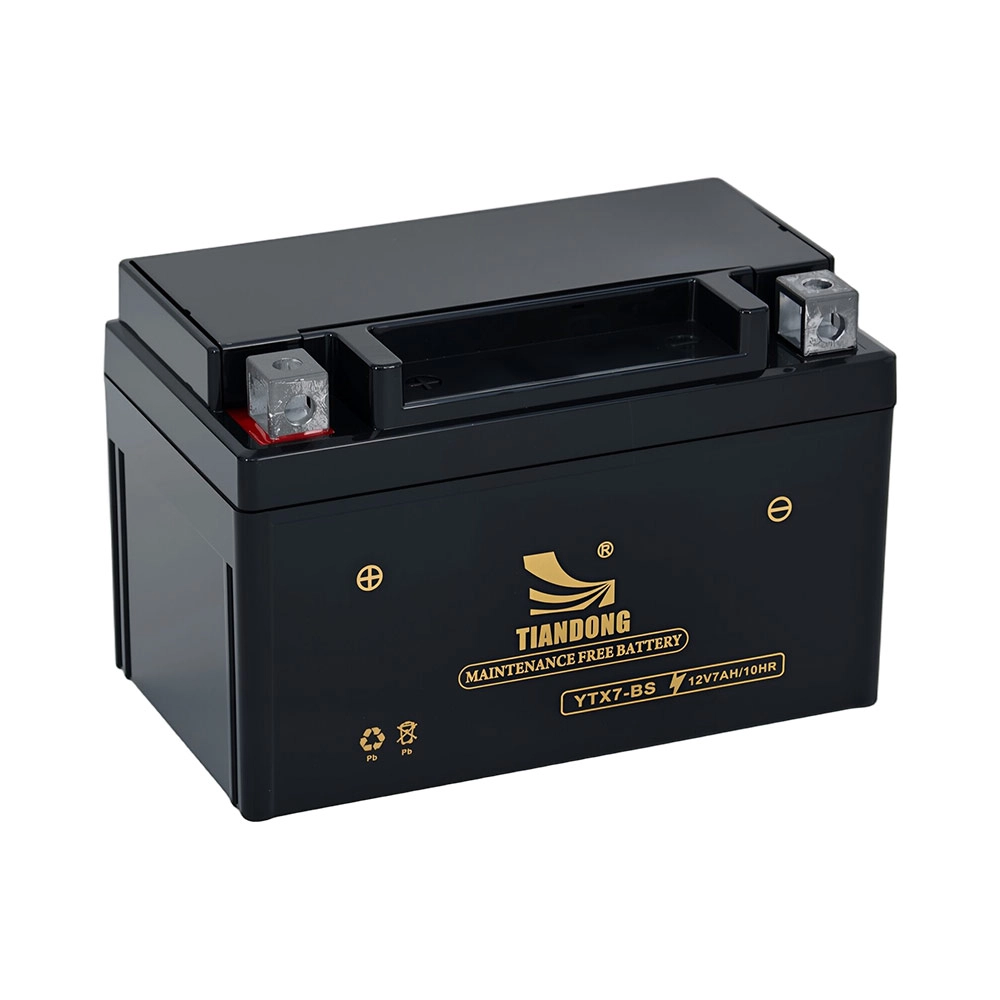
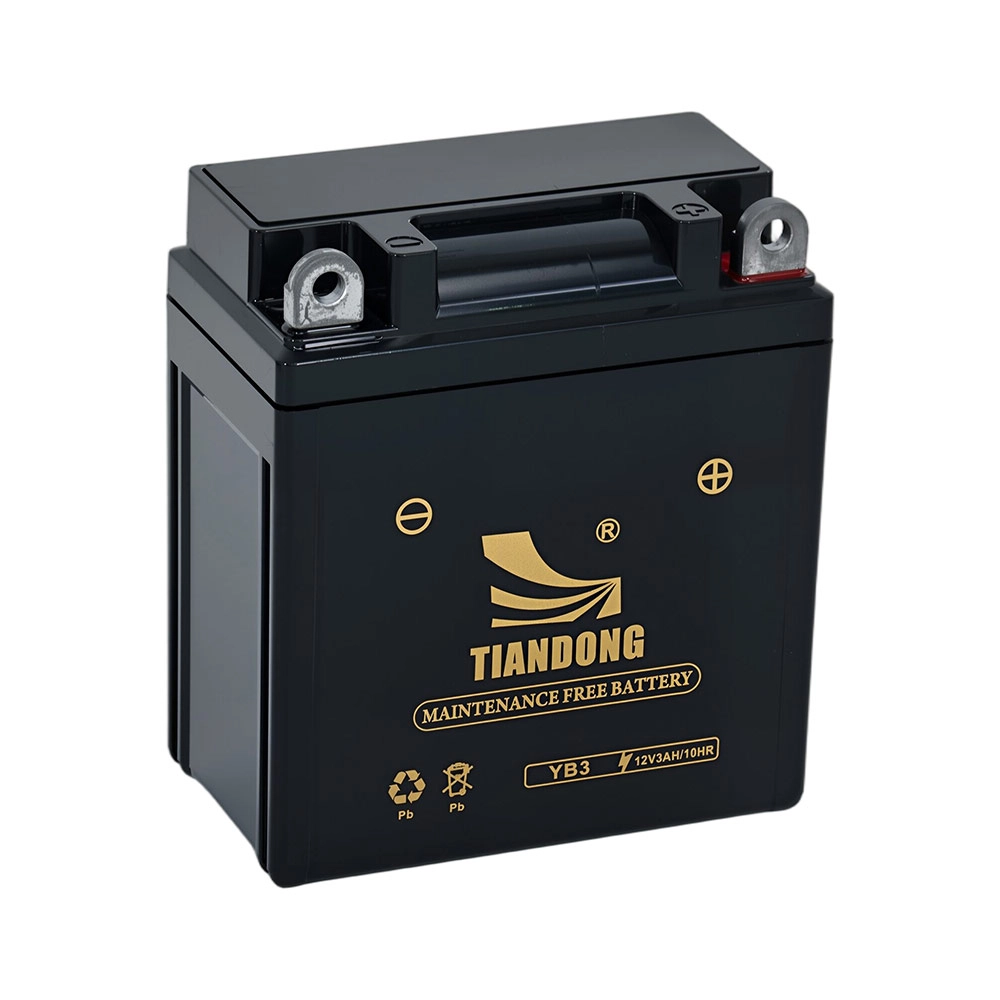
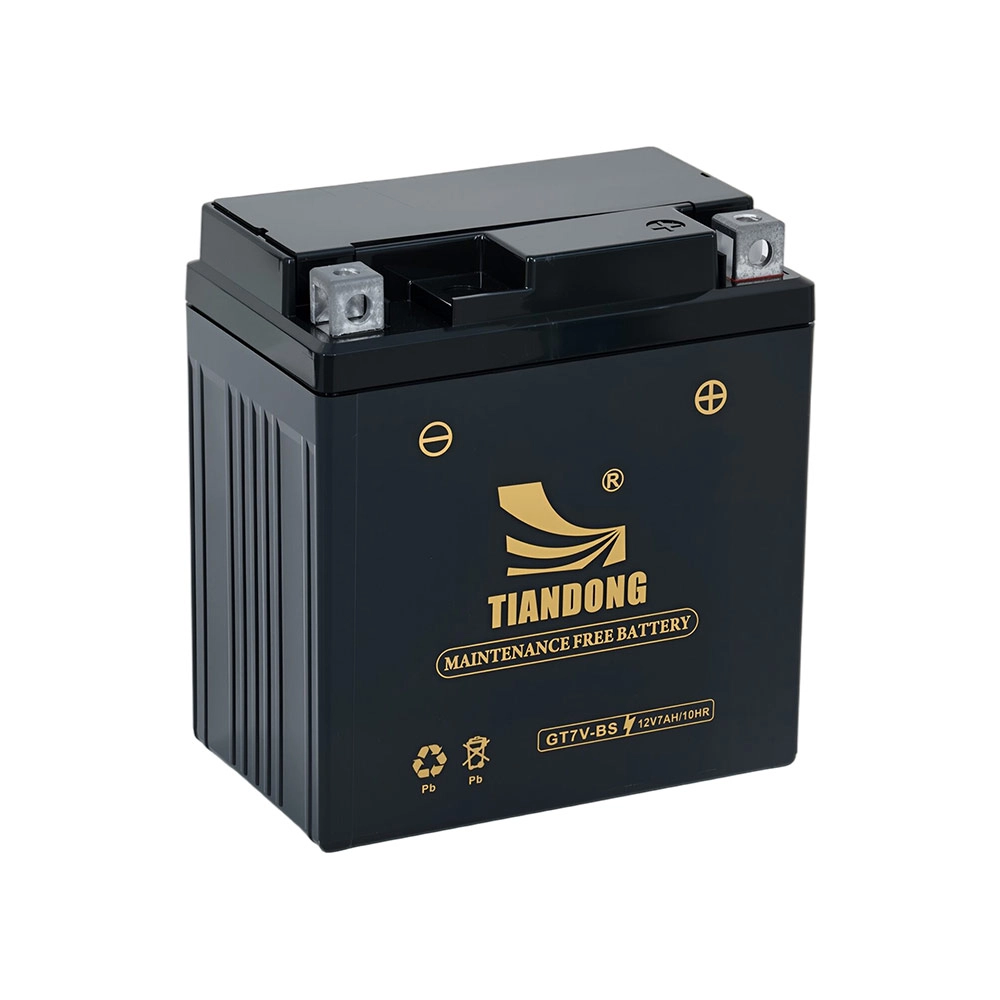
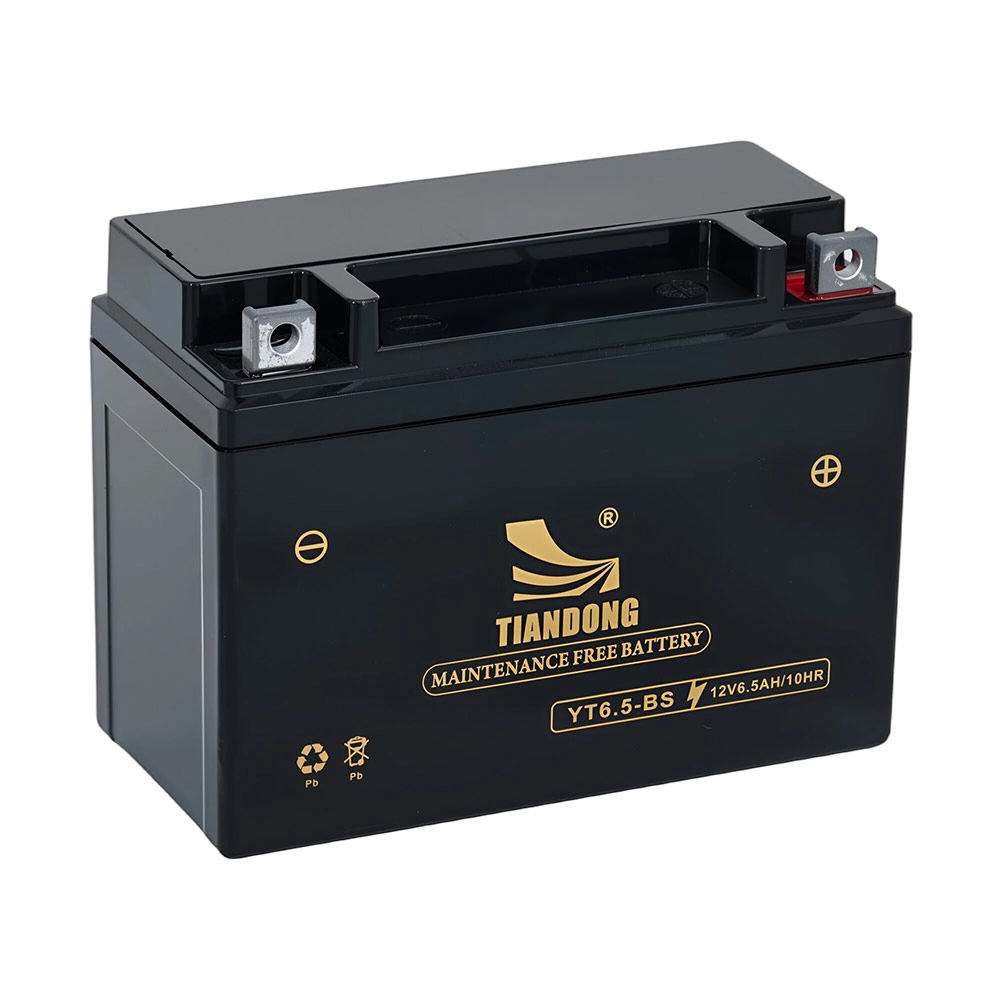
Get in touch with us to get your Motorbike Battery solution
TIANDONG is a leading motorcycle battery manufacturer offering OEM/ODM service, stable quality, and global export support.
Built for wholesalers. Trusted by global buyers. Delivered with confidence.
Say Hello
E-mail: daisybattery8@gmail.com
xianyingchen83@gmail. com
WhatsAPP: +86 134 283 86694
+86 134 348 86641
Our Location
Social Links
© 2025 TIANDONG. All Rights Reserved. Privacy Policy | Terms and Conditions | Sitemap
 Scan QR Code
Facebook
Instagram
Scan QR Code
Whatsapp: +8613434886641