






Weight vs capacity: is 4.05kg YT14 ideal for your motorcycle?

- Choosing the right battery: balancing weight, capacity, and practical use
- Why weight matters for motorcycles
- Understanding capacity and runtime
- Where the YT14 fits
- Technical comparison: YT14 versus common alternatives
- Energy density and what it means
- Table: YT14 vs common battery types (typical values)
- Starting performance and cold conditions
- Use cases: who benefits from a 4.05kg 14Ah battery?
- Commuters and city riders
- Touring and long-distance riders
- Performance and track riders
- Maintenance, lifespan, and motorcycle battery wholesale considerations
- Maintenance and charging best practices
- Lifespan expectations and warranty
- Wholesale buying: what to inspect and negotiate
- Practical decision guide: should you choose the YT14?
- Checklist to decide
- When to choose an alternative
- Safety, installation, and standards
- FAQ
- Is the YT14 12V 14Ah suitable for electric motorcycles?
- How much range will 168Wh give my electric motorcycle?
- Can I replace my SLA YT14 with a lithium equivalent?
- How long will the TIANDONG YT14 last?
- What should wholesale buyers look for?
- Where can I get technical standards for motorcycle batteries?
- Contact and product
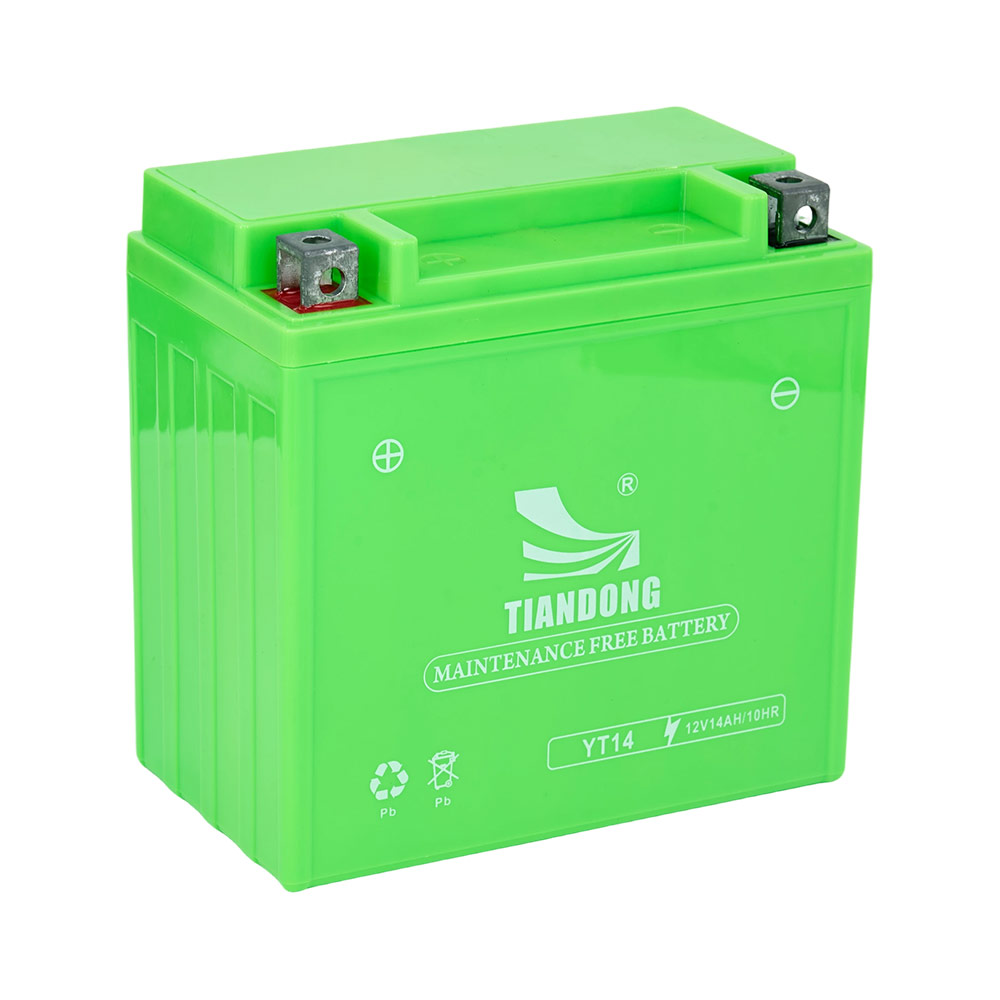
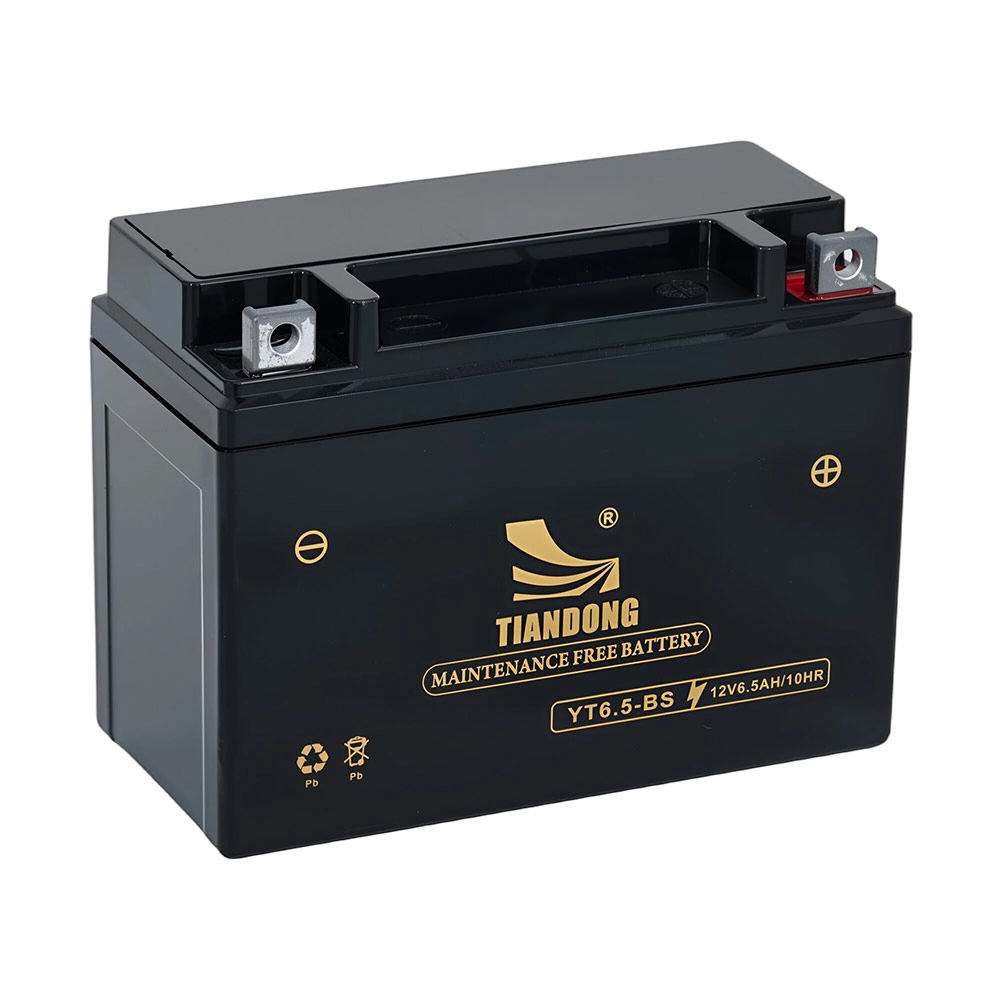
The TIANDONG YT14 12V 4.05kg 14AH motorcycle battery delivers reliable power and long-lasting performance. Ideal for various bikes, it’s perfect for motorcycle battery wholesale buyers seeking quality and durability. Choose TIANDONG for trusted motorcycle battery solutions.
Quick summary: When choosing an electric motorcycle battery, weight and capacity are two interdependent factors that determine range, handling, and installation fit. The YT14 12V 4.05kg 14AH sits in a practical middle ground for many commuter and light-sport motorcycles: its 14Ah capacity (≈168Wh at 12V) yields dependable starting and accessory power while its 4.05kg mass keeps additional weight modest. Below we analyze performance, trade-offs, alternatives, maintenance, and buyer considerations so you can determine whether the YT14 is ideal for your motorcycle and riding style.
Choosing the right battery: balancing weight, capacity, and practical use
Why weight matters for motorcycles
Every kilogram added to a motorcycle affects handling, acceleration, braking, and fuel efficiency (or electric range). A heavier battery moves the bike’s center of gravity (CG) and increases unsprung weight if mounted near suspension components. For riders focused on agile handling—sport riders or technical trail riders—a lighter battery can make a perceptible difference in cornering and responsiveness. Urban commuters and touring riders, by contrast, often prioritize capacity and reliability over the last few hundred grams of weight.
Understanding capacity and runtime
Battery capacity, measured in ampere-hours (Ah), multiplied by nominal voltage gives usable energy in watt-hours (Wh). The YT14 is rated at 12V and 14Ah: 12V × 14Ah = 168Wh. For motorcycles with electric accessories (EFI, lights, heated grips, audio), usable capacity determines how long the bike can run electrical loads without charging. For starting, the battery must also deliver high instantaneous current (cold cranking amps for ICE bikes). For electric motorcycles, pack-level energy and power density (Wh and W) determine range and acceleration.
Where the YT14 fits
The YT14 12V 4.05kg 14AH Motorcycle Batteries are positioned as a compact, reliable option for many mid-sized motorcycles and scooters. At about 4.05kg, the unit is light enough to avoid major handling penalties while providing sufficient capacity for frequent starters, city riders, and moderate accessory loads. If your motorcycle specifies a YT14 or a similar group size (often referred to as YTX14/YT14 in aftermarket listings), this battery is a direct fit for electrical and physical mounting requirements.
Technical comparison: YT14 versus common alternatives
Energy density and what it means
Energy density (Wh/kg) helps compare how much usable energy a battery carries relative to its weight. The YT14 delivers roughly 168Wh at 4.05kg, about 41.5 Wh/kg—typical for sealed lead-acid (SLA/AGM) batteries used in many motorcycles. By comparison, lithium-ion cells of similar form factor can offer 150–250 Wh/kg or more, which translates to smaller mass for the same energy or greater energy for the same weight. For a breakdown of battery chemistries and typical energy densities, consult authoritative resources such as the U.S. Department of Energy overview on batteries (energy.gov) and the general battery chemistry discussion on Wikipedia (Lead–acid battery — Wikipedia).
Table: YT14 vs common battery types (typical values)
| Model / Type | Voltage | Capacity (Ah) | Weight (kg) | Energy (Wh) | Energy Density (Wh/kg) | Typical Chemistry |
|---|---|---|---|---|---|---|
| YT14 (example) | 12V | 14Ah | 4.05 | 168 | 41.5 | Sealed lead-acid (SLA/AGM, common) |
| Typical SLA 12V 14Ah alternative | 12V | 14Ah | 4.5–5.5 | 168 | 30–37 | SLA (conventional) |
| Small Li-ion pack (equivalent energy) | 12V nominal | ~14Ah (pack) | ~0.8–1.2 | 168 | 140–210 | Lithium-ion (LiFePO4 / NMC) |
Notes: values are representative. Lithium packs require battery management systems (BMS) and specific chargers; SLA/AGM are more plug-and-play for traditional motorcycle electrical systems.
Starting performance and cold conditions
Besides energy, starting performance requires high discharge capability: cold cranking amps (CCA) or peak current rating. SLA/AGM variants like many YT14-class batteries are engineered to supply strong cranking power for internal combustion engine starts. Lithium packs can provide comparable or superior peak current for the same mass but may behave differently in very cold temperatures. When replacing an OEM battery, ensure the replacement provides equal or greater starting current and fits the same mounting and connector standards specified by the manufacturer.
Use cases: who benefits from a 4.05kg 14Ah battery?
Commuters and city riders
If most of your rides are short urban trips with frequent stops, the YT14 offers a good balance: reliable starts, sufficient capacity for lights and accessories, and low enough weight to keep the motorcycle nimble in traffic. Its modest mass will not noticeably upset handling at lower speeds, and its capacity supports multiple starts and short accessory use between rides.
Touring and long-distance riders
Long-distance riders may prioritize capacity and redundancy. If you frequently use high-draw accessories (heated gear, GPS, multiple lights) or take extended trips without charging opportunities, consider higher-capacity solutions or lithium upgrades (with appropriate BMS and charging setup) to save weight or extend range. For heavy touring motorcycles that already have higher curb weight, the incremental 4.05kg of the YT14 is often acceptable in exchange for proven reliability.
Performance and track riders
On track or sport applications, every kilogram matters. Riders seeking maximum agility sometimes choose lightweight lithium packs that offer similar or greater energy at a fraction of the weight. However, lithium conversions require attention to mounting, crash protection, and charging compatibility. If you need a straightforward replacement without changes to the bike’s electrical system, an AGM-style YT14 is a safer, lower-risk choice.
Maintenance, lifespan, and motorcycle battery wholesale considerations
Maintenance and charging best practices
To get the expected lifespan from YT14-class batteries, follow basic care: maintain correct charge voltage, avoid deep discharges, and use a charger compatible with SLA/AGM (or with a selectable mode for AGM). Store batteries at a full charge in cool, dry conditions to minimize self-discharge and sulfation. For technical guidance on battery care and standards, industry organizations such as the Battery Council International (BCI) provide resources on storage and handling.
Lifespan expectations and warranty
SLA/AGM motorcycle batteries typically last 2–5 years depending on use, climate, and charging habits. Heavy vibration, frequent deep discharges, and high heat shorten life. When buying YT14 batteries in bulk (motorcycle battery wholesale), check supplier warranty terms, batch testing, and batch labeling to ensure predictable performance across units.
Wholesale buying: what to inspect and negotiate
If you’re a dealer or fleet manager sourcing TIANDONG YT14 12V 4.05kg 14AH Motorcycle Batteries in volume, ask for the following from suppliers: proof of testing (capacity and cranking tests), traceability (manufacture date and batch codes), packaging that prevents discharge in transit, and warranty terms for replacements. Consider agreeing on minimum shelf-life remaining on delivered stock so you don’t sell near-expired batteries. For technical standards and supplier evaluation, consult organizations such as SAE International for automotive battery standards and best practices.
Practical decision guide: should you choose the YT14?
Checklist to decide
- Does your motorcycle OEM recommend a YT14 or equivalent group size? If yes, the YT14 is likely compatible.
- Do you need a light-weight upgrade for track use? If yes, investigate lithium alternatives and required electrical changes.
- Are you a commuter needing reliable starting and modest accessory support? The YT14 is a strong, affordable choice.
- Will you buy in bulk for resale or fleet use? Verify supplier QA, warranties, and shelf-life.
When to choose an alternative
Choose a different battery if you need substantially more energy without adding weight (lithium packs) or if your bike requires a much higher cranking current than the YT14 can provide. Also consider alternatives if you need deep-cycle capability for long accessory runtime—some chemistries and sizes are better adapted for deep discharge profiles.
Safety, installation, and standards
Always follow manufacturer mounting instructions, torque specifications for battery terminals, and polarity checks. For an overview of battery types and their safe handling, see authoritative references such as the U.S. Department of Energy battery resources (energy.gov) and the general electrochemical background on Wikipedia (Electric motorcycle — Wikipedia).
FAQ
Is the YT14 12V 14Ah suitable for electric motorcycles?
It depends on the electric motorcycle’s design. The YT14 is a 12V module often used for starter systems and accessories on ICE motorcycles and small EV auxiliary systems. For full propulsion packs in electric motorcycles, higher-voltage, high-capacity lithium systems are typically used. If your electric motorcycle uses a 12V auxiliary battery for controls, lighting, or backup systems, the YT14 can be suitable.
How much range will 168Wh give my electric motorcycle?
Range from 168Wh depends entirely on motor and vehicle efficiency. If your motorcycle consumes 50Wh/km, 168Wh would theoretically give ≈3.4 km. For propulsion, most electric motorcycles consume hundreds of Wh per km, so 168Wh is limited for main drive use but acceptable for auxiliary loads and starting. For more on energy consumption and battery sizing for EVs, see government resources (energy.gov).
Can I replace my SLA YT14 with a lithium equivalent?
Yes, but only if the lithium replacement provides correct voltage, terminal layout, and has an appropriate BMS and mounting. Charging systems configured for SLA may need adjustment or a different charger for lithium chemistry. Verify cold-start performance and ensure safe mounting in case of crashes. When in doubt, consult a qualified mechanic or the battery manufacturer.
How long will the TIANDONG YT14 last?
Typical lifespan for SLA/AGM motorcycle batteries is 2–5 years depending on usage, storage, and charging habits. Proper charging, avoiding deep discharges, and protecting the battery from extreme temperatures will extend life.
What should wholesale buyers look for?
Inspect manufacturer certifications, sample test reports, warranty terms, manufacture date, shelf-life guarantees, packaging integrity, and MOQ discounts. Ask for references and batch test results to ensure consistent quality.
Where can I get technical standards for motorcycle batteries?
Key organizations include SAE International (sae.org) and Battery Council International (bci.org) which offer guidance on testing, handling, and labeling. For chemistry fundamentals, reference Wikipedia’s lead–acid and electric motorcycle pages (Lead–acid battery, Electric motorcycle).
Contact and product
If you’d like to evaluate the TIANDONG YT14 12V 4.05kg 14AH Motorcycle Batteries for your lineup, request samples, or buy wholesale, please view this product or contact our sales team for pricing and technical datasheets. Our technical support can help confirm fitment, expected cranking performance, and suitable chargers for your application.
Final note: The YT14 strikes a strong balance for many riders and buyers: modest weight for good handling, adequate capacity for daily use, and wide aftermarket availability. For specialized needs (very low weight, very high capacity, or full electric propulsion), review lithium options and system-level compatibility before switching.

YT12 Battery Lifespan: Maintenance Tips to Extend Life

Charging time and charger tips for YT14 electric motorcycle battery
YT12 12V 12AH Review: Best Battery for Street Bikes?
Top 10 EPS Battery Manufacturers and Supplier Brands
Questions you may concerned about
Product
What is the most common motorcycle battery type?
AGM batteries are currently the most widely used due to their balance of cost and performance.
Are your batteries maintenance-free?
Yes, our batteries are sealed VRLA or GEL types that require no water refilling. They are ready to use and easy to maintain.
Do you offer OEM or custom branding?
Yes, we provide full OEM and ODM services, including logo printing, packaging customization, and model adjustments.
Support
What is Tiandong’s production capacity?
The company produces approximately 6 million batteries per year, supported by 15,000 tons of electrode plate production capacity.
OEM/ODM
Is an OEM battery safe?
Authentic original equipment manufacturer (OEM) batteries undergo safety testing and certification. Counterfeit batteries do not, and therefore may not have the proper protection inside the cells to prevent overcharging and overheating, which can lead to serious injuries and damage from thermal runaway.
Get in touch with us to get your Motorbike Battery solution
TIANDONG is a leading motorcycle battery manufacturer offering OEM/ODM service, stable quality, and global export support.
Built for wholesalers. Trusted by global buyers. Delivered with confidence.
Say Hello
E-mail: daisybattery8@gmail.com
xianyingchen83@gmail. com
WhatsAPP: +86 134 283 86694
+86 134 348 86641
Our Location
Social Links
© 2025 TIANDONG. All Rights Reserved. Privacy Policy | Terms and Conditions | Sitemap
 Scan QR Code
Facebook
Instagram
Scan QR Code
Whatsapp: +8613434886641