






Charging time and charger tips for YT14 electric motorcycle battery

- Understanding what determines charging time for a 12V motorcycle battery
- Key factors that control charge duration
- Charge stages — bulk, absorption, float (and why they matter)
- Real-world variables: temperature, age, and discharge depth
- Recommended chargers and charging algorithms for the YT14
- Why choose a smart charger (IUoU / multi-stage) for an electric motorcycle battery
- Charger specifications to look for (recommended settings for YT14)
- When high-current chargers are acceptable — and when they’re not
- Practical charging tips and maintenance to extend battery life
- Daily and routine charging habits
- Storage and seasonal care
- Troubleshooting common charging issues
- Charging time estimates and charger selection guide
- Estimated charging times for a 14AH motorcycle battery (YT14)
- Selecting a charger by use case
- Installation and electrical considerations
- TIANDONG YT14 product note
- FAQ — Charging and care for the YT14 electric motorcycle battery
- Q: How long will the YT14 take to charge from empty to full?
- Q: Can I use any 12V motorcycle charger for YT14?
- Q: Is fast charging (high current) safe for the YT14?
- Q: What should I do if the charger reports a fault or won’t charge the battery?
- Q: How should I store YT14 batteries over winter?
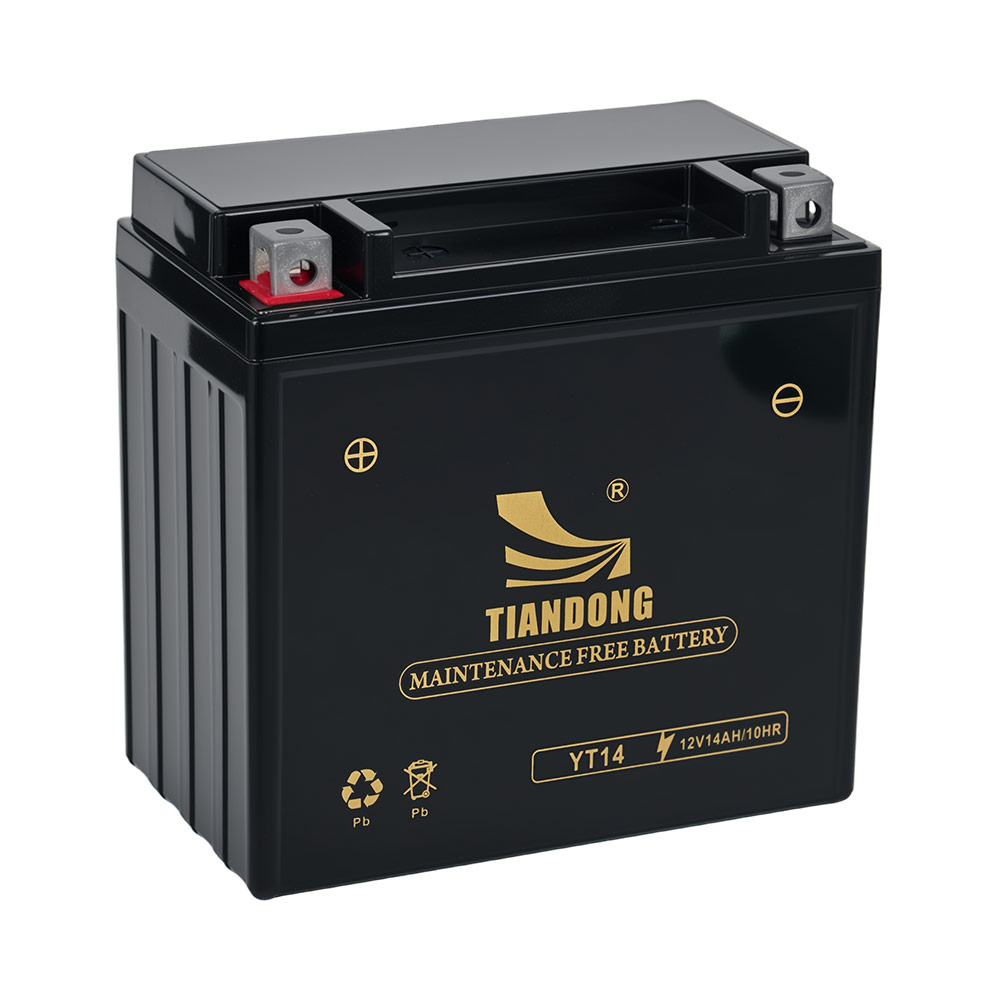
This summary is optimized for indexing: clear product-focused keywords (electric motorcycle battery, YT14 12V 4.05kg 14AH Motorcycle Batteries), geographic-agnostic charging guidance, and practical charger specifications that help local distributors, mechanics, and riders find precise charging time estimates and recommended charger types.
Understanding what determines charging time for a 12V motorcycle battery
Key factors that control charge duration
Charging time for any electric motorcycle battery is not a fixed number — it depends on several interacting factors: the battery's rated capacity (Ah), the state of charge (SoC) when charging starts, the charger current (A), charging algorithm (bulk/absorption/float), battery chemistry and health, and ambient temperature. For the YT14 12V 4.05kg 14AH Motorcycle Batteries, the 14AH rating is the starting point: higher charger currents charge faster but can stress the battery if not managed properly. Typical recommended charging currents for sealed lead-acid/AGM-style 12V motorcycle batteries are between 0.05C and 0.3C (for a 14Ah battery, 0.05C = 0.7A, 0.3C ≈ 4.2A).
Charge stages — bulk, absorption, float (and why they matter)
Modern chargers use staged charging: bulk (constant current), absorption (constant voltage), and float (maintenance). During bulk the charger supplies most of the energy quickly; during absorption the voltage is held and current tapers as the battery nears full; float keeps the battery topped up without overcharge. These stages define total charging time — bulk gets you to ~80–90% relatively quickly, while the remaining 10–20% can take as long or longer depending on charger behavior. See technical background on lead-acid battery charging on Wikipedia: Lead–acid battery (Wikipedia).
Real-world variables: temperature, age, and discharge depth
Cold batteries accept charge more slowly and may require temperature-compensated charging. An older YT14 battery with sulfation or reduced capacity will show longer time to reach acceptance current and may never reach full capacity quickly. Deeply discharged batteries (very low SoC) take longer because more energy must be returned and the absorption phase becomes proportionally longer.
Recommended chargers and charging algorithms for the YT14
Why choose a smart charger (IUoU / multi-stage) for an electric motorcycle battery
A smart, multi-stage charger reduces risk, improves charging speed safely, and extends service life by applying the correct voltages and tapering currents at the right times. For sealed 12V 14AH batteries a charger that implements IUoU (or IUIoU) profiles with temperature compensation is ideal. Smart chargers detect nearly-full state and switch to absorption and float, preventing overcharge while ensuring a fully charged battery. Authoritative sources on battery charging practices include Battery University: Battery University.
Charger specifications to look for (recommended settings for YT14)
Recommended charger specs for YT14 12V 14AH:
- Output voltage: regulated 14.4–14.8V (absorption), float at 13.4–13.8V (AGM/VRLA typical ranges depend on manufacturer)
- Recommended charge current: 0.1C–0.3C (1.4A–4.2A). Use 2A–4A chargers for balance between speed and longevity for daily use. Use 0.5A–1A trickle chargers only for storage if the battery is in good condition.
- Temperature compensation: -3 to -5 mV/°C per cell (important if batteries are charged in hot/cold climates)
- Safety features: reverse polarity protection, short-circuit protection, automatic switch to float, and voltage/current limiting
For industry context on safety and standards consider organizations such as SAE and IEEE which publish electrical and charging guidance for vehicle systems: SAE International and IEEE.
When high-current chargers are acceptable — and when they’re not
High-current chargers (≥0.5C) can charge a 14Ah battery faster, but they must be smart chargers that manage voltage and current precisely. Avoid charging at or above 1C (≈14A) unless the battery datasheet explicitly allows it; rapid charging shortens cycle life and may damage sealed batteries if the venting pressure rises. For routine charging, stick to 0.1C–0.3C as the safe, balanced range.
Practical charging tips and maintenance to extend battery life
Daily and routine charging habits
- Charge after each ride if the battery is partially discharged to prevent sulfation. For occasional riders, a smart maintainer is preferable to leaving the battery at low SoC.
- Avoid leaving the battery at high float voltage for excessive time unless the charger is specifically designed for long-term maintenance. A proper float voltage maintains charge without over-stressing the battery.
- Use a compatible connector or charging adapter tailored for motorcycles to avoid poor connections that cause heating and reduced charging efficiency.
Storage and seasonal care
For winter storage remove the battery (if feasible) and store in a cool, dry place with 40–60% charge. Periodically use a float/maintenance charger to keep SoC above 50%. Cold temperatures reduce capacity and charging efficiency; temperature-compensated charging avoids under/overcharging in cold or hot climates.
Troubleshooting common charging issues
Symptoms and solutions:
- Slow charge or charger stays in constant current: check battery health — sulfation or high internal resistance may be present.
- Charger shuts down quickly or reports fault: verify cable polarity and connectors; check battery voltage and surface charge (allow rest for 30 minutes then re-measure).
- Battery overheats during charging: stop immediately — this indicates internal damage, incorrect charger settings, or poor ventilation.
Charging time estimates and charger selection guide
Estimated charging times for a 14AH motorcycle battery (YT14)
Use the following table to estimate charging time for the YT14 14Ah battery. These are realistic approximations for a sealed lead-acid/AGM-style 12V battery using a multi-stage smart charger. Actual times vary with SoC, battery health, and temperature.
| Charger Current (A) | Charge Rate (C) | Time to ~80% (hours) | Time to ~100% (hours) | Recommended Use |
|---|---|---|---|---|
| 0.7 A | 0.05C | 10–14 | 14–18 | Long-term maintenance / tender |
| 1.4 A | 0.1C | 6–8 | 8–12 | Storage topping / safe weekly charging |
| 2–4 A | 0.14C–0.3C | 3–6 | 4–8 | Recommended daily charger for YT14 (balance speed and life) |
| 7 A | 0.5C | 1.5–3 | 2–4 | Occasional fast charge if allowed by battery spec |
| 14 A | 1C | <1 | 1–2 | Not recommended unless specifically supported |
Notes: Time to 80% is dominated by current and bulk charging efficiency. The last 10–20% (absorption) can take a disproportionate amount of time. For long battery life, prioritize correct voltage regulation and a smart absorption/float profile.
Selecting a charger by use case
- Urban commuter (daily rides, frequent usage): 2–4A smart charger with multi-stage profile.
- Seasonal rider (infrequent use): 0.5–1.5A charger plus a float/maintainer for storage.
- Fleet operator / wholesale buyers: supply chargers rated for 0.2–0.3C per battery plus proper charging stations and training — use chargers that include logging, temperature compensation and fault reporting features.
Installation and electrical considerations
Always connect charger clamps to clean battery terminals. For on-bike charging, ensure the motorcycle's electronics are isolated if required by the charger manual. Observe manufacturer guidelines for in-situ charging; some motorcycles require access panels or removal of the seat to reach the battery safely. When wiring a charging station for multiple batteries, follow appropriate fuse and wiring gauge standards as recommended by SAE/IEC documentation to avoid voltage drop and overheating.
TIANDONG YT14 product note
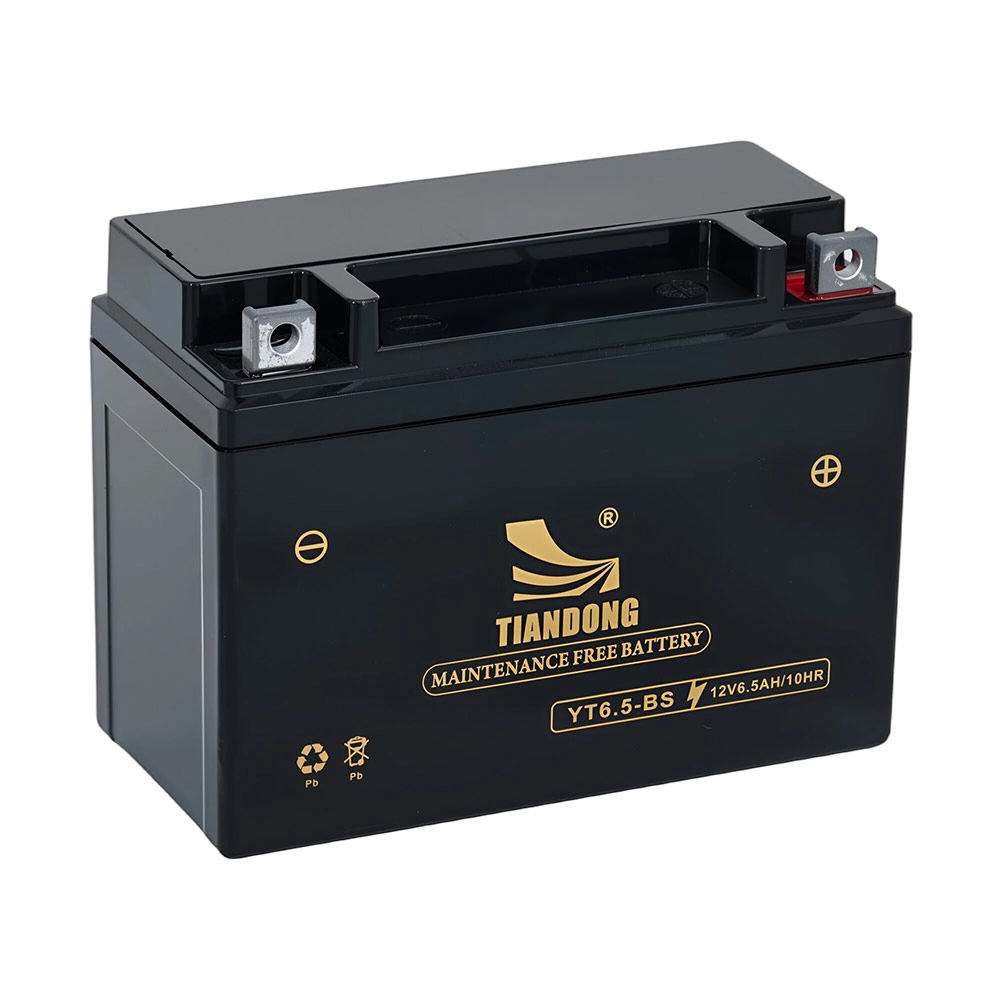
The TIANDONG YT14 12V 4.05kg 14AH motorcycle battery delivers reliable power and long-lasting performance. Ideal for various bikes, it’s perfect for motorcycle battery wholesale buyers seeking quality and durability. Choose TIANDONG for trusted motorcycle battery solutions.
FAQ — Charging and care for the YT14 electric motorcycle battery
Q: How long will the YT14 take to charge from empty to full?
A: Approximate charge times depend on charger current. Using a 2–4A smart charger expect 4–8 hours. Slower 1.4A chargers take 8–12 hours. Very slow (0.7A) requires 14+ hours. Refer to the charging time table above for details.
Q: Can I use any 12V motorcycle charger for YT14?
A: Use a charger suitable for sealed lead-acid/AGM-style 12V batteries with multi-stage charging and temperature compensation. Avoid simple constant-voltage or constant-current chargers without absorption/float control. For best practice see Battery University: Battery University.
Q: Is fast charging (high current) safe for the YT14?
A: Fast charging can be safe only if the battery manufacturer specifies support and a smart charger controls voltage and termination. Frequent fast charges shorten life. For routine charging stick to 0.1–0.3C.
Q: What should I do if the charger reports a fault or won’t charge the battery?
A: Check polarity and cable connections, allow the battery to rest if it has a surface charge, and measure open-circuit voltage. If the battery is very old or sulfated, it may not accept a charge properly and could need replacement. For systematic diagnostics consult SAE resources: SAE International.
Q: How should I store YT14 batteries over winter?
A: Store at ~50%–70% charge in cool, dry conditions. Use a float/maintenance charger periodically. Avoid fully discharged storage and extreme cold. Temperature-compensated chargers help during seasonal extremes.
For technical specifications, wholesale inquiries, or to order TIANDONG YT14 12V 4.05kg 14AH Motorcycle Batteries, contact our sales team or view the product page. Our specialists can recommend the right charger models and setup for your fleet or shop.
Contact us: For bulk orders and technical support, please get in touch via our sales channel or visit the product listing to check availability and OEM options.
References and further reading: Lead–acid battery (Wikipedia), Battery University, SAE International, IEEE.

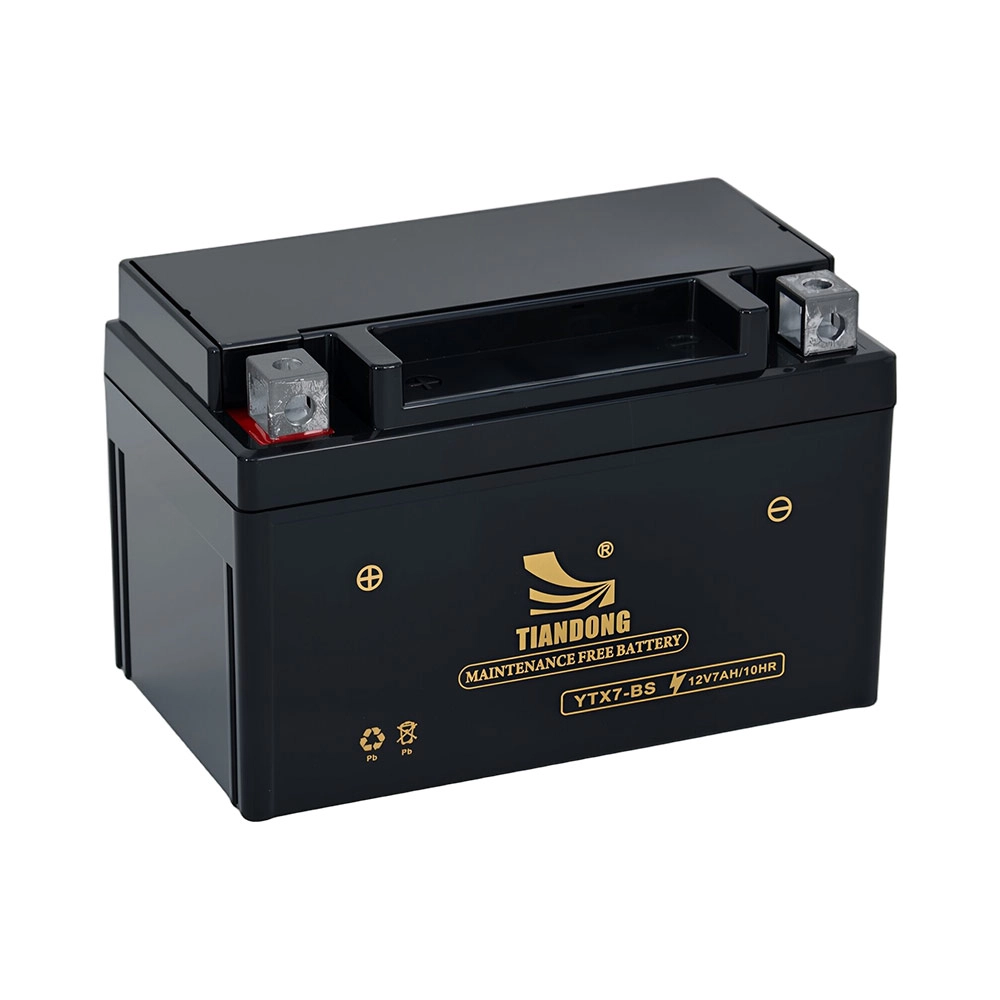
Where to Buy Genuine YTX7-BS AGM Motorcycle Batteries Online

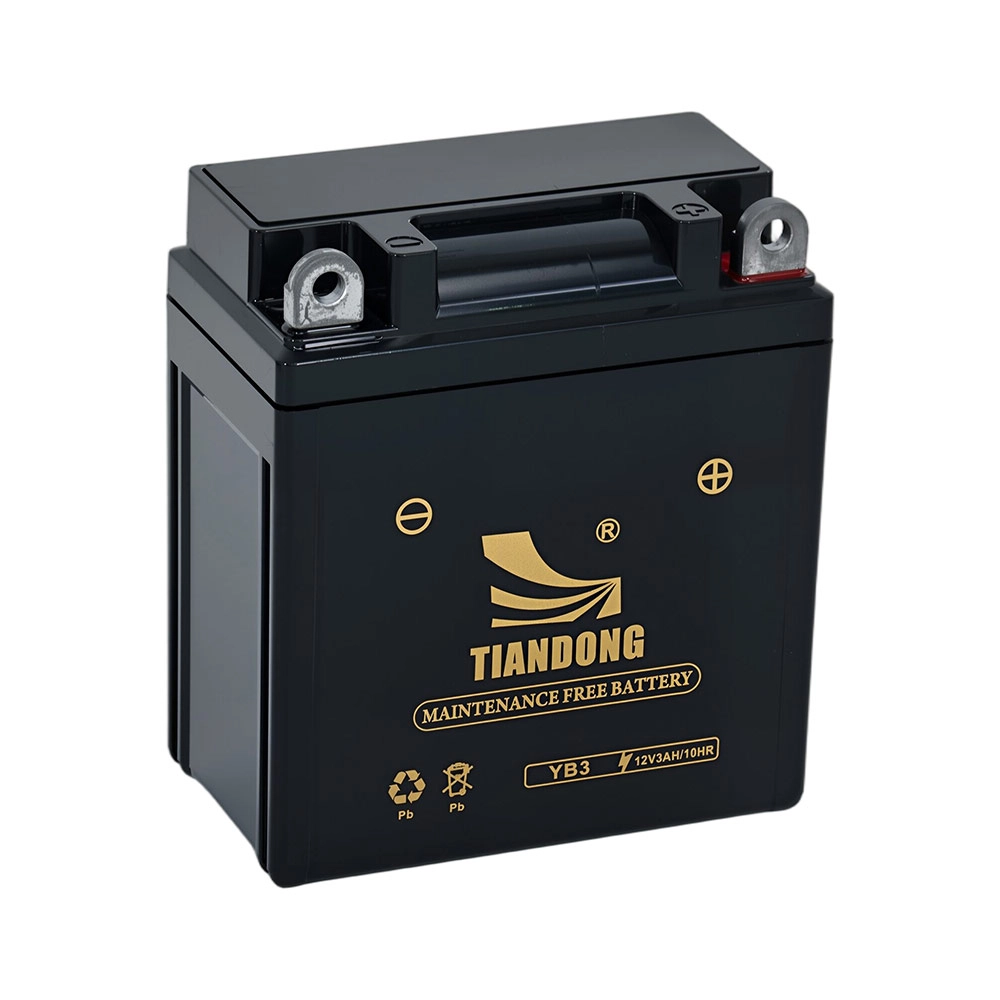
Top Alternatives to YB3 1.25kg 12V 3AH for Small Motorcycles

YT12 12V 12AH Installation Tips for Faster Starts

Warranty & Lifespan: Choosing the Best Motorcycle Batteries B2B
Questions you may concerned about
Product
Are you a trading company or a manufacturer?
We are a direct factory located inJiangxi Province, China. You are welcome to visit our production line and quality control lab. We specialize in lead-acid batteries for motorcycles and have been in this industry for 20 years.
How long is the lead time and where do you ship?
Standard lead time is 7–15 days. We export to over 20 countries, including Vietnam, India, Egypt, and Thailand.
What certifications do your batteries have?
Our batteries are certified with CE, ISO9001, and RoHS, and meet export standards for markets in Southeast Asia, South Asia, and Africa.
What kind of battery is best for a motorcycle?
AGM batteries are a popular choice because they combine the best of both worlds: the durability of lead-acid batteries and the low maintenance of lithium-ion batteries. AGM batteries are sealed, so they don't require water refills, and they're designed to handle rough conditions, making them ideal for motorcycles.
Are your batteries maintenance-free?
Yes, our batteries are sealed VRLA or GEL types that require no water refilling. They are ready to use and easy to maintain.
Get in touch with us to get your Motorbike Battery solution
TIANDONG is a leading motorcycle battery manufacturer offering OEM/ODM service, stable quality, and global export support.
Built for wholesalers. Trusted by global buyers. Delivered with confidence.
Say Hello
E-mail: daisybattery8@gmail.com
xianyingchen83@gmail. com
WhatsAPP: +86 134 283 86694
+86 134 348 86641
Our Location
Social Links
© 2025 TIANDONG. All Rights Reserved. Privacy Policy | Terms and Conditions | Sitemap
 Scan QR Code
Facebook
Instagram
Scan QR Code
Whatsapp: +8613434886641