






Why B2B Buyers Choose Motorcycle Lead Acid Batteries
- Why B2B Buyers Choose Motorcycle Lead Acid Batteries
- Introduction: Commercial Demand for Reliable Motorcycle Power Solutions
- Product Spotlight: 6-EVF-58 12V 63AH Motorcycle Lead Acid Battery
- Cost and Total Cost of Ownership: Why B2B Buyers Favor Lead Acid
- Reliability and Mature Technology: Proven Performance in the Field
- Supply Chain and Scalability: Practical Reasons for Sourcing Lead Acid Batteries
- Performance Characteristics for Two-Wheel EVs: Fit-for-Purpose Attributes
- Comparison: Motorcycle Lead Acid vs Lithium — What B2B Buyers Need to Know
- Safety, Testing and Compliance: What Buyers Should Require
- Charging, Maintenance and Fleet Management Practices
- Warranty, After-Sales Support and Supplier Selection Criteria
- When Lead Acid Is the Right Choice: Use Cases and Buyer Profiles
- Brand and Product Advantages: Why TIANDONG’s 6-EVF-58 Appeals to B2B Buyers
- Procurement Checklist: Questions B2B Buyers Should Ask Suppliers
- Frequently Asked Questions (FAQ)
- Q1: Is the 6-EVF-58 12V 63AH suitable for long-range electric motorcycles?
- Q2: How many cycles can I expect from a motorcycle lead acid battery?
- Q3: What charging system should we use for the 6-EVF-58?
- Q4: Are there bulk purchasing or OEM options for the 6-EVF-58?
- Q5: How should end-of-life lead acid batteries be handled?
- Contact Sales / View Product
- Authoritative References and Further Reading
Why B2B Buyers Choose Motorcycle Lead Acid Batteries
Introduction: Commercial Demand for Reliable Motorcycle Power Solutions
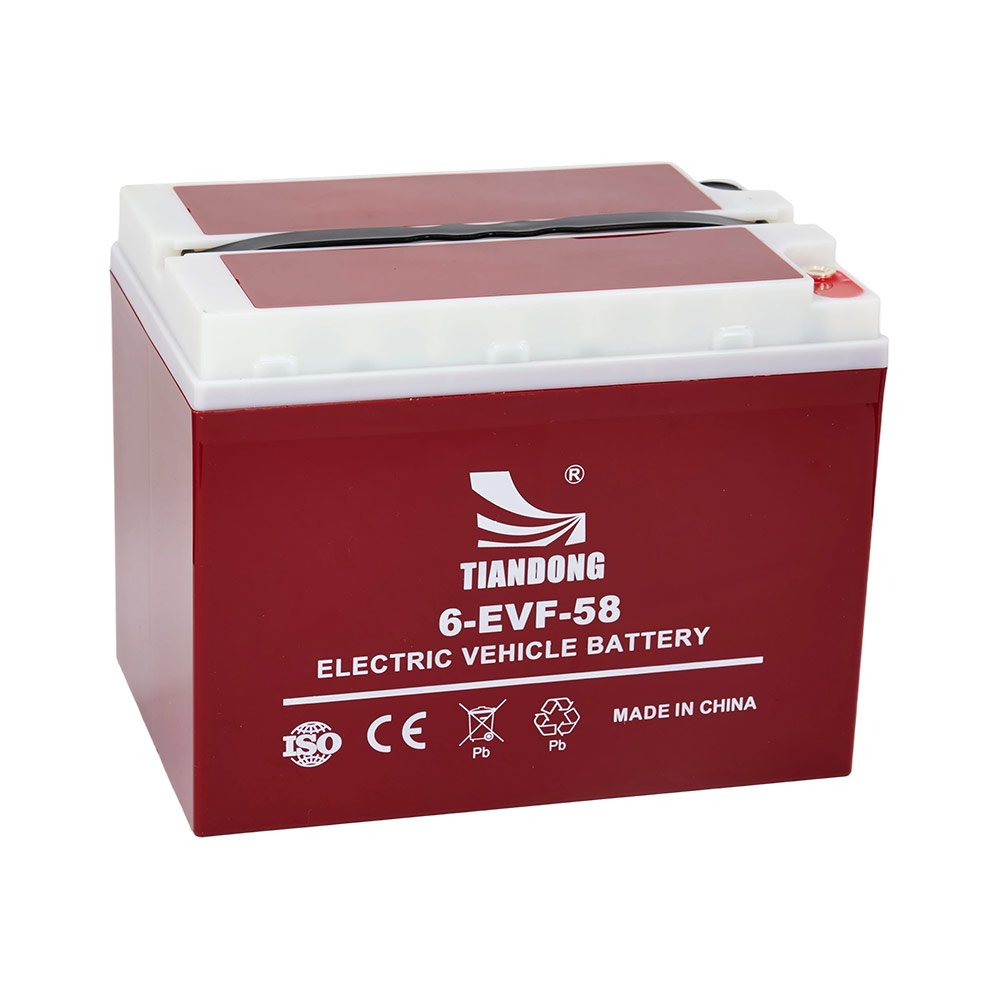
For fleet operators, OEMs, dealers and distributors, selecting the right battery for two-wheel electric vehicles is a business decision that affects total cost of ownership, warranty exposure, uptime and customer satisfaction. The motorcycle lead acid battery remains a dominant choice in many B2B segments thanks to its blend of proven technology, predictable lifecycle, mature supply chains and lower upfront cost compared with alternatives. This article explores the technical, commercial and operational reasons why B2B buyers continue to specify and buy motorcycle lead acid batteries, with a focus on an industry-relevant product: the TIANDONG 6-EVF-58 12V 63AH Powerful Batteries Rechargeable Lead Acid Battery Two-Wheel Electric Vehicle Battery Pack.
Product Spotlight: 6-EVF-58 12V 63AH Motorcycle Lead Acid Battery
The TIANDONG 6-EVF-58 12V 63AH Rechargeable Lead Acid Battery delivers reliable power for two-wheel electric vehicles. Designed by top electric vehicle battery manufacturers, this durable battery pack ensures long-lasting performance and optimal efficiency. Ideal for all electric vehicles.
Cost and Total Cost of Ownership: Why B2B Buyers Favor Lead Acid
One of the primary reasons B2B buyers choose motorcycle lead acid battery packs is cost-effectiveness. For high-volume procurement, the lower capital price per unit reduces initial project outlay for fleets and OEMs. Beyond purchase price, lead acid batteries often have predictable replacement schedules and well-understood maintenance needs, which simplifies budgeting and lifecycle planning.
Key commercial advantages for B2B purchasers include:
- Lower per-unit cost compared with many lithium chemistries (especially for sealed lead acid vs early-stage lithium suppliers).
- Simpler warranty and service models due to long industry experience—easier to negotiate bulk-supply terms.
- Wide availability and established recycling streams—reduces end-of-life handling expenses and regulatory risk.
Reliability and Mature Technology: Proven Performance in the Field
Lead acid battery technology has been used for over a century. For motorcycle and two-wheel electric vehicle applications, the technology is mature and components are standardized. This maturity provides B2B buyers with predictable performance across environments and seasons. The 6-EVF-58 12V 63AH model is built to meet typical two-wheel load profiles—steady discharge for vehicle propulsion and sufficient reserve capacity for accessories.
Supply Chain and Scalability: Practical Reasons for Sourcing Lead Acid Batteries
B2B procurement emphasizes reliable supply chains. Lead acid batteries benefit from an extensive global manufacturing base and consistent raw material availability. For buyers requiring regular replenishment or large-volume shipments—such as delivery fleets, rental operators or motorcycle manufacturers—this predictability reduces lead-time risk and supports production planning.
Advantages for large-scale buyers:
- Multiple qualified suppliers in key regions—enables competitive sourcing and risk diversification.
- Established logistics and freight handling norms—simplifies import/export and customs processes.
- Recycling infrastructure and regulatory frameworks (e.g., battery take-back programs) already exist in most markets, reducing compliance costs.
Performance Characteristics for Two-Wheel EVs: Fit-for-Purpose Attributes
Motorcycle lead acid batteries are engineered for the specific duty cycles of two-wheel electric vehicles: high current during acceleration and moderate continuous discharge during cruising. Lead acid packs like the 6-EVF-58 12V 63AH are often sealed, maintenance-free (VRLA/AGM) variants that provide vibration resistance and safe installation in compact motorcycle frames.
- Cold-cranking and high-current pulse capability suitable for electric motors.
- Robust mechanical design to withstand road vibration and shocks.
- Sealed designs reduce maintenance needs for fleets.
Comparison: Motorcycle Lead Acid vs Lithium — What B2B Buyers Need to Know
When evaluating battery chemistries, buyers weigh energy density, upfront cost, cycle life, safety and total cost. The table below summarizes common trade-offs relevant to motorcycle and two-wheel applications.
| Attribute | Motorcycle Lead Acid Battery (e.g., 6-EVF-58) | Lithium (LiFePO4 / NMC) |
|---|---|---|
| Upfront Cost | Lower | Higher |
| Energy Density | Lower (heavier for same capacity) | Higher (lighter, more compact) |
| Cycle Life | Moderate (typically hundreds to 1000 cycles depending on depth of discharge) | Higher (often 1000–3000 cycles) |
| Safety Profile | Stable, well-understood; sealed VRLA variants have low thermal runaway risk | Good if managed; requires BMS and cell management to ensure safety |
| Recycling & End-of-Life | Mature recycling industry; lead recovery well-established | Developing recycling streams; higher complexity for some chemistries |
| Maintenance | Low for sealed VRLA (periodic checks) | Low, but requires BMS and proper charging systems |
Safety, Testing and Compliance: What Buyers Should Require
B2B buyers should insist on documented testing and compliance. For motorcycle lead acid batteries, relevant standards and checks include:
- Terminal and vibration testing to ensure reliable connections in motorcycles.
- Capacity and load testing to verify amp-hour rating under realistic discharge profiles.
- Safety certifications relevant to the destination market (UN transportation rules for batteries, local electrical safety standards).
Reputable suppliers will provide datasheets, test reports and factory inspection records. The 6-EVF-58 12V 63AH typically ships with a datasheet specifying charging profiles, recommended charge voltages, and temperature compensation guidelines—all important for maintaining capacity and extending life.
Charging, Maintenance and Fleet Management Practices
Proper charging and maintenance are essential to maximize battery life and minimize downtime. For sealed lead acid motorcycle batteries, recommended practices include:
- Use of chargers that follow manufacturer-recommended charge voltages and stages (bulk/absorption/float).
- Avoiding deep discharge when possible—partial state-of-charge cycling extends life.
- Temperature-aware charging: batteries should be charged within recommended temperature ranges to prevent overcharge or sulfation.
Fleet managers benefit from simple monitoring routines: periodic capacity checks, visible inspection for case damage, and adherence to charging schedules. These practices reduce unexpected replacements and help plan procurement cycles.
Warranty, After-Sales Support and Supplier Selection Criteria
For B2B buyers, supplier reliability matters as much as product specs. Evaluate vendors on:
- Clear warranty terms and scope (pro-rata vs full-replacement, handling of field failures).
- Availability of replacement stock and spare part logistics.
- Technical support and on-site testing assistance for high-volume deployments.
- Environmental compliance and recycling programs.
A supplier like TIANDONG that provides standardized models such as the 6-EVF-58 12V 63AH and publishes datasheets, test certificates and lifecycle guidance simplifies procurement and reduces administrative overhead for buyers.
When Lead Acid Is the Right Choice: Use Cases and Buyer Profiles
Lead acid batteries are often the best choice for buyers with the following needs:
- Large-volume procurement where upfront cost and predictable replacement are primary concerns.
- Applications where vehicle weight penalties are acceptable relative to cost savings (e.g., deliveries in short-range urban settings).
- Environments with robust recycling infrastructure and established maintenance routines.
Examples: last-mile delivery fleets in emerging markets, scooter-sharing operators with centralized charging depots, and OEMs providing cost-sensitive standard models.
Brand and Product Advantages: Why TIANDONG’s 6-EVF-58 Appeals to B2B Buyers
TIANDONG’s 6-EVF-58 12V 63AH Powerful Batteries Rechargeable Lead Acid Battery Two-Wheel Electric Vehicle Battery Pack stands out for several B2B-focused reasons:
- Commercially competitive pricing that reduces initial capex for large orders.
- Designed for two-wheel EV duty cycles with vibration-resistant construction and sealed VRLA safety features.
- Manufacturing and QC processes aligned with industry supply chains—simplifies logistics for OEMs and distributors.
- Comprehensive product documentation (datasheets, charge recommendations, test results) for fleet integration and warranty handling.
Procurement Checklist: Questions B2B Buyers Should Ask Suppliers
Before placing bulk orders, use this checklist to qualify suppliers and models:
- Can you provide datasheets, test reports, and sample units for in-field trials?
- What are typical lead times at different order volumes? Are there volume discounts?
- What warranty terms and RMA procedures do you offer for bulk customers?
- Do you support pre-shipment inspections and third-party QC audits?
- What recycling or take-back programs are available in our markets?
Frequently Asked Questions (FAQ)
Q1: Is the 6-EVF-58 12V 63AH suitable for long-range electric motorcycles?
A1: The 6-EVF-58 is optimized for two-wheel electric vehicles with typical urban duty cycles. Because lead acid batteries have lower energy density than lithium, they are better suited to shorter-range applications or where cost is a priority. For long-range performance, evaluate higher-capacity configurations or alternative chemistries.
Q2: How many cycles can I expect from a motorcycle lead acid battery?
A2: Cycle life depends on depth of discharge, charging practices and temperature. Sealed lead acid batteries typically deliver several hundred cycles at moderate depths of discharge. Following recommended charging profiles and avoiding deep discharges will maximize life.
Q3: What charging system should we use for the 6-EVF-58?
A3: Use a charger that matches the manufacturer’s recommended charge voltage and stage algorithm (bulk/absorption/float). Temperature compensation is recommended for environments with significant temperature variation. Consult the TIANDONG datasheet for exact values.
Q4: Are there bulk purchasing or OEM options for the 6-EVF-58?
A4: Yes. TIANDONG and other reputable manufacturers typically offer OEM labeling, customized packaging and volume pricing. Contact the supplier for MOQ, lead times and customization options.
Q5: How should end-of-life lead acid batteries be handled?
A5: Lead acid batteries should be returned to licensed recyclers. Lead and sulfuric acid are recyclable and recovery processes are mature; many regions have regulatory frameworks or take-back programs to facilitate safe recycling.
Contact Sales / View Product
If you are a fleet manager, OEM or distributor evaluating motorcycle lead acid battery options, contact our sales team to request samples, datasheets and pricing for the 6-EVF-58 12V 63AH Powerful Batteries Rechargeable Lead Acid Battery Two-Wheel Electric Vehicle Battery Pack. For immediate product details and to start a quotation, click to view the product or request a commercial proposal from our team.
For buyers interested in market strategy, revisiting safety, material handling, and recycling standards provides essential context. This brings the content loop back to foundational risk and compliance considerations.
Safety and Recycling Considerations for Lead Acid Batteries
Authoritative References and Further Reading
For objective technical and regulatory standards, consult the following sources:
- Battery Council International — Lead Battery Basics: https://batterycouncil.org
- Wikipedia — Lead–acid battery: https://en.wikipedia.org/wiki/Lead%E2%80%93acid_battery
- World Health Organization / UNEP — Battery recycling and environmental guidance: https://www.unep.org
- UN Recommendations on the Transport of Dangerous Goods (UN Model Regulations): https://unece.org/transport/standards/welcome-un-regulations
- SAE International — Standards on vehicle electricals and connectors: https://www.sae.org
End of article.

How to extend YTX7-BS battery life with smart chargers

Choosing Maintenance Free VRLA for UPS Battery Replacement

Bulk Buying Tips for Reliable Motorcycle Batteries

Installation Tips for YTX5-BS Sealed Lead Acid Motorcycle Batteries
Questions you may concerned about
Product
What brands of raw materials do you use?
We use high-quality materials to ensure performance. we use 99.99% pure lead , ensure long life and high Cold Cranking Amps (CCA).
Do you offer OEM or custom branding?
Yes, we provide full OEM and ODM services, including logo printing, packaging customization, and model adjustments.
Shipping
Which countries does Tiandong export to?
Tiandong batteries are exported to more than 20 countries, including Vietnam, India, Egypt, Thailand, and Indonesia.
How long does delivery take?
For stock items, delivery takes about 7-15 days after receiving the deposit. For bulk orders or custom logo orders, it usually takes 25-35 days depending on the quantity.
customer
Why import motorcycle batteries from China factories?
Chinese manufacturers offer:
- Competitive pricing
- Large production capacity
- OEM customization
- Stable export experience
Get in touch with us to get your Motorbike Battery solution
TIANDONG is a leading motorcycle battery manufacturer offering OEM/ODM service, stable quality, and global export support.
Built for wholesalers. Trusted by global buyers. Delivered with confidence.
Say Hello
E-mail: daisybattery8@gmail.com
xianyingchen83@gmail. com
WhatsAPP: +86 134 283 86694
+86 134 348 86641
Our Location
Social Links
© 2025 TIANDONG. All Rights Reserved. Privacy Policy | Terms and Conditions | Sitemap
 Scan QR Code
Facebook
Instagram
Scan QR Code
Whatsapp: +8613434886641