






Warranty, Testing and QA: Buying 6-EVF-58 in Volume
- Warranty, Testing and QA: Buying 6-EVF-58 in Volume
- Overview: why motorcycle lead acid battery warranties matter for volume buyers
- Product introduction: TIANDONG 6-EVF-58 for two-wheel electric vehicles
- Understanding warranty types for motorcycle lead acid battery purchases
- Typical warranty terms to expect for 12V 63AH motorcycle lead acid battery
- Pre-shipment testing: what to require when buying 6-EVF-58 in bulk
- Factory quality assurance and manufacturing standards for motorcycle lead acid batteries
- Sampling plans and acceptance criteria when purchasing in volume
- Comparison: expected performance of 6-EVF-58 vs. typical motorcycle lead acid battery options
- Inspection checklist for receiving shipments of motorcycle lead acid batteries
- Recommended acceptance criteria (example)
- Root-cause analysis and warranty claim process
- Shipping, packaging, and storage requirements for lead acid packs
- Cost-of-ownership: assessing warranty and QA impact on fleet economics
- Certifications and standards to request for reliable motorcycle lead acid battery suppliers
- Brand advantages: why choose TIANDONG 6-EVF-58 for bulk motorcycle applications
- Practical checklist before issuing a purchase order for 6-EVF-58 in volume
- FAQ — Buying 6-EVF-58 and motorcycle lead acid battery in volume
- Q: What warranty should I expect when buying 6-EVF-58 in large quantities?
- Q: How should I test incoming batteries to reduce risk?
- Q: What common failures are covered by warranty vs. excluded?
- Q: How long can I store lead acid batteries before performance degrades?
- Q: What documentation should I request from the supplier?
- Contact and next steps — view product and request volume quote
- Authoritative references
Warranty, Testing and QA: Buying 6-EVF-58 in Volume
Overview: why motorcycle lead acid battery warranties matter for volume buyers
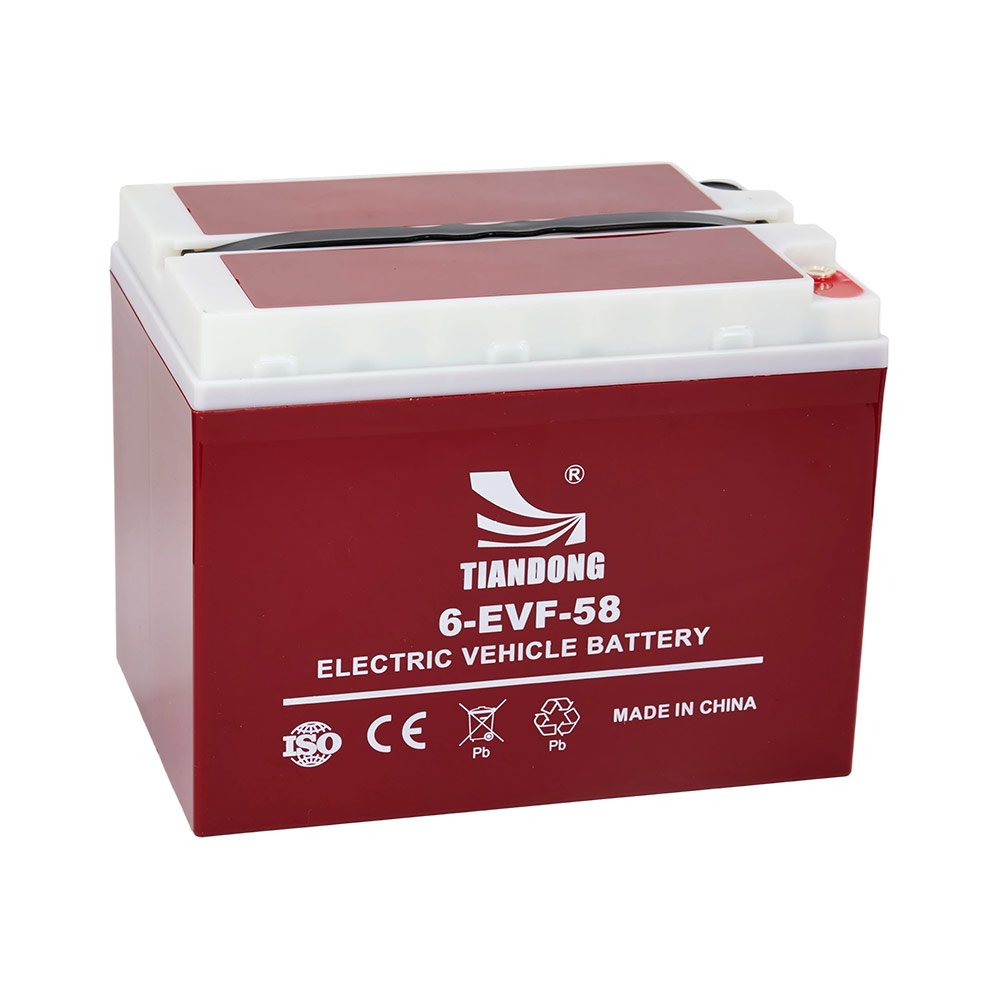
When you buy motorcycle lead acid battery packs like the 6-EVF-58 12V 63AH Powerful Batteries Rechargeable Lead Acid Battery Two-Wheel Electric Vehicle Battery Pack in volume, warranty and quality assurance are not optional — they determine total cost of ownership, uptime, and customer satisfaction. For fleets, OEMs, dealers, or large retailers, the right warranty reduces service claims and rebuild costs; robust testing and QA lower the risk of receiving substandard batches that cause returns or reputation damage.
Product introduction: TIANDONG 6-EVF-58 for two-wheel electric vehicles
The TIANDONG 6-EVF-58 12V 63AH Rechargeable Lead Acid Battery delivers reliable power for two-wheel electric vehicles. Designed by top electric vehicle battery manufacturers, this durable battery pack ensures long-lasting performance and optimal efficiency. Ideal for all electric vehicles.
Understanding warranty types for motorcycle lead acid battery purchases
Volume buyers typically encounter three warranty structures: manufacturer's limited warranty, extended/conditional warranty, and pro-rated warranty. Each has distinct implications:
- Manufacturer's limited warranty — usually covers defects in materials and workmanship for a fixed period (e.g., 12–24 months). Claims accepted if failure is shown to be manufacturing-related.
- Pro-rated warranty — pays a decreasing share of battery replacement value over time (common for lead-acid batteries with longer nominal warranties but expected degradation).
- Extended/conditional warranties — contingent on approved testing, installation, or maintenance regimes (e.g., proper charging systems, periodic load testing) and often used for fleet agreements.
For the 6-EVF-58 sold in volume, negotiate clarity on start date (shipment date vs. commissioning), claim procedures, and whether warranty covers transport damage or only factory defects.
Typical warranty terms to expect for 12V 63AH motorcycle lead acid battery
Best-practice warranty coverage for lead-acid EV batteries includes:
- Minimum 12 months full replacement for manufacturing defects;
- Pro-rated coverage for months 13–36 (if offered);
- Clear exclusion clauses (abuse, over-discharge, improper charging, physical damage);
- Defined RMA and failure analysis procedure with turnaround times.
Ask suppliers to provide sample warranty contracts and historical warranty claim rates when you request quotes. Low claim rates and transparent root-cause reports indicate mature QA processes.
Pre-shipment testing: what to require when buying 6-EVF-58 in bulk
Insist on documented pre-shipment tests to detect early failures and specification drift. Common tests for motorcycle lead acid battery packs include:
- Visual inspection and polarity/terminal verification;
- Open-circuit voltage (OCV) and specific gravity (where applicable);
- Internal resistance/impedance measurement to detect plate or connection issues;
- Capacity test (C20 or C5 standard) on a randomized sample lot to confirm amp-hour rating;
- Float and cyclic charge endurance checks in climatic chambers where relevant.
Request a certificate of conformity and individual batch test reports (serial numbers or batch codes) prior to shipment. For large orders, define acceptable sample sizes and failure thresholds (for example, 3% failure allowed on random sampling) and what remedial actions will follow.
Factory quality assurance and manufacturing standards for motorcycle lead acid batteries
Strong QA begins on the factory floor. Key elements to verify during supplier audits:
- Incoming material inspection (lead plates, separators, acid concentration);
- Controlled assembly processes with torque and seal checks for terminals and case integrity;
- Process control charts and SPC data for critical parameters (acid specific gravity, cast-on lug quality);
- Electrolyte filling and formation procedures with documented formation schedules — proper formation is critical for initial capacity and cycle life;
- End-of-line testing, labeling, and serialization for traceability;
- ISO 9001 or equivalent management systems and, where applicable, ISO 14001 for environmental controls.
Require the supplier provide QA manuals, typical defect rates, corrective action reports, and evidence of operator training. If possible, perform a factory audit or employ a third-party inspection firm for major orders.
Sampling plans and acceptance criteria when purchasing in volume
Define sampling and acceptance criteria in your purchase agreement. A sensible approach:
- Use ANSI/ASQ Z1.4 (or ISO 2859) sampling tables as baseline for acceptance sampling;
- Set stricter AQL (Acceptable Quality Level) for electrical performance metrics than for cosmetic issues;
- Specify corrective action timelines; for example, if a batch fails, supplier must replace or rework within 30 days and cover inbound/outbound shipping if failure is supplier responsibility.
Comparison: expected performance of 6-EVF-58 vs. typical motorcycle lead acid battery options
The table below gives side-by-side practical comparisons for buyers evaluating the 6-EVF-58 against generic 12V 50–70Ah lead-acid packs commonly used in two-wheel EVs.
| Attribute | TIANDONG 6-EVF-58 (12V 63AH) | Typical SLA 12V 55–70AH |
|---|---|---|
| Nominal Voltage / Capacity | 12V / 63Ah | 12V / 50–70Ah |
| Typical Weight | ~20–24 kg (varies by case) | ~18–26 kg |
| Cycle Life (at 20%–30% DoD) | 200–400 cycles (dependent on charge regime) | 150–400 cycles |
| Warranty (common) | 12–24 months (negotiable for volume) | 12–24 months |
| Suitable for | Two-wheel EVs, scooters, starters | Two-wheel EVs, backup, starters |
Note: The figures above are representative industry ranges. For accurate comparisons, request the supplier's detailed datasheet and cycle life curves under your expected depth-of-discharge and charging regime.
Inspection checklist for receiving shipments of motorcycle lead acid batteries
At receipt, follow a clear inspection process to catch shipping damage or QA problems early:
- Count boxes and verify batch/serial numbers against packing list;
- Inspect external packaging for dents, punctures, or signs of exposure to freezing or heat;
- Randomly open and visually inspect sample units for terminal damage, cracks, electrolyte leakage, or mismatched labels;
- Perform electrical spot checks: open-circuit voltage, internal resistance, and a short capacity test on random units;
- Record and photograph any evidence of damage or discrepancy and notify supplier within the agreed claim window.
Recommended acceptance criteria (example)
For large lots, accept when:
- Total defects ≤ AQL agreed (e.g., 2.5% for critical electrical failures);
- No evidence of electrolyte leakage or cracked cases;
- Sample capacity results within ±10% of specification;
- Supplier provides test certificates for each shipped batch.
Root-cause analysis and warranty claim process
Define a documented RMA/Warranty flow before placing orders:
- Simple online RMA submission with photos and test logs;
- Initial triage within 48–72 hours to determine whether failure is likely manufacturing-related;
- Return authorization and clear shipping instructions for failed units;
- Supplier performs failure analysis (e.g., impedance mapping, plate inspection, acid analysis) and provides written report;
- Resolution options: repair, replacement, or pro-rated credit depending on findings and warranty terms.
Insist on data-driven failure reports. If a supplier resists providing root-cause details, treat that as a red flag for longer-term partnership risk.
Shipping, packaging, and storage requirements for lead acid packs
Protecting batteries during transit and storage reduces early-life failures:
- Packaging must prevent shorting of terminals (insulated covers) and secure stacks to avoid crushing;
- Transport regulations — lead acid batteries are regulated goods; check applicable ADR/IATA/IMDG rules for your route and request supplier compliance documentation;
- Storage: store at 50–70% state of charge in cool, ventilated area and avoid freezing temperatures; store no longer than specified shelf-life without maintenance charging;
- Long-term storage requires float charging or periodic recharge every 3–6 months to avoid sulfation that reduces capacity.
Cost-of-ownership: assessing warranty and QA impact on fleet economics
When comparing quotes, calculate total landed cost, including expected warranty replacements and inspection costs. A lower unit price with weak QA often leads to higher service and replacement expenses. Consider these elements:
- Unit price versus proven durability and claimed cycle life;
- Warranty claim rate history and supplier responsiveness;
- Cost of logistics for returns, including downtime and labor;
- Value of extended post-sales support (test reports, training, spare terminal kits).
Certifications and standards to request for reliable motorcycle lead acid battery suppliers
Certifications provide independent assurance of manufacturing and safety controls. Request documentation for:
- ISO 9001 (quality management systems);
- Relevant product safety markings or test reports (e.g., CE where applicable, UN38.3 for transport of batteries where relevant — note: UN38.3 generally covers lithium but transport safety documentation still applies to lead-acid handling requirements);
- RoHS declarations if your market requires restricted substances compliance;
- Third-party lab test reports for capacity and cycle performance if available.
Brand advantages: why choose TIANDONG 6-EVF-58 for bulk motorcycle applications
When selecting a brand for volume procurement, consider these TIANDONG strengths (as examples of what buyers should seek and verify):
- Dedicated two-wheel EV battery design with appropriate capacity and form factor for scooters and small motorcycles;
- Documented pre-shipment testing and batch traceability to reduce defective-in-field rates;
- Commercial willingness to negotiate volume warranties and defined RMA processes for faster resolution;
- Experience in OEM supply chains and familiarity with storage and shipping requirements for lead-acid packs.
Ask for references and case studies specific to two-wheel electric vehicle deployments to confirm real-world performance.
Practical checklist before issuing a purchase order for 6-EVF-58 in volume
Before finalizing the PO, confirm the following items:
- Warranty terms and start date are written into the contract;
- Minimum QA and pre-shipment tests, sample size, and acceptance criteria are agreed;
- RMA and root-cause analysis process with SLAs included;
- Packaging and labeling meet your receiving and store/dispatch rules;
- Certifications and test reports are received and validated;
- Price includes or separates costs for testing, additional documentation, and potential rework.
FAQ — Buying 6-EVF-58 and motorcycle lead acid battery in volume
Q: What warranty should I expect when buying 6-EVF-58 in large quantities?
A: Expect a baseline warranty of 12 months for manufacturing defects, with the option to negotiate pro-rated coverage or extended terms for volume orders. Ensure the contract clarifies start date, exclusions, and RMA timelines.
Q: How should I test incoming batteries to reduce risk?
A: Perform visual inspection, measure open-circuit voltage and internal resistance, and conduct capacity tests on a randomized sample. Require supplier pre-shipment test certificates for each batch.
Q: What common failures are covered by warranty vs. excluded?
A: Manufacturing defects (shorted cells, plate failure, improper formation) are typically covered. Exclusions include physical abuse, improper charging, over-discharge, freezing, and non-approved modifications.
Q: How long can I store lead acid batteries before performance degrades?
A: Store at moderate temperatures (~15–25°C) and at ~50–70% state of charge. Perform a maintenance or float charge every 3–6 months to prevent sulfation. Long storage without maintenance reduces capacity and cycle life.
Q: What documentation should I request from the supplier?
A: Batch test reports, certificate of conformity, datasheet and cycle life curves, safety/transport documentation, and QA management system certificates (e.g., ISO 9001).
Contact and next steps — view product and request volume quote
If you are ready to evaluate the TIANDONG 6-EVF-58 12V 63AH Powerful Batteries Rechargeable Lead Acid Battery Two-Wheel Electric Vehicle Battery Pack for your fleet or distribution network, contact our sales team for batch test reports, factory audit evidence, and volume pricing. For immediate product details and to request a quotation with warranty terms and sampling plan, contact us or view the product page.
Once warranty protection and QA processes are clear, long-term performance becomes the next priority. Buyers evaluating total cost of ownership often want insight into care routines and operational lifespan. The following article explains proper maintenance and lifecycle optimization.
Maintenance and Lifecycle Management for Lead Acid
Authoritative references
For industry-level guidance and technical details referenced see:
- Battery University — articles on lead-acid battery care, cycle life and testing: https://batteryuniversity.com
- Lead–acid battery — Wikipedia (overview and typical characteristics): https://en.wikipedia.org/wiki/Lead%E2%80%93acid_battery
- IATA — Dangerous Goods Regulations (transport compliance reference): https://www.iata.org/en/programs/cargo/dgr/
Note: When applying this guidance, always validate supplier-provided technical data with independent testing for your specific operating conditions.

Affordable vs Premium Motorcycle Batteries: Is YTX7L Worth It?

Choosing Maintenance Free VRLA for UPS Battery Replacement
Top 10 Electric Scooter Battery Manufacturers and Supplier Brands

Best maintenance routine for 12V Deep Cycle motorcycle batteries
Questions you may concerned about
Product
What causes motorcycle batteries to fail?
Common causes include over-discharging, extreme temperatures, poor charging systems, and low-quality manufacturing materials.
Are you a trading company or a manufacturer?
We are a direct factory located inJiangxi Province, China. You are welcome to visit our production line and quality control lab. We specialize in lead-acid batteries for motorcycles and have been in this industry for 20 years.
What is the most common motorcycle battery type?
AGM batteries are currently the most widely used due to their balance of cost and performance.
customer
Can overseas clients visit the Tiandong factory?
Yes. Tiandong welcomes international customers to visit the factory, production workshops, and logistics warehouses to better understand the manufacturing and quality control process.
Shipping
Which countries does Tiandong export to?
Tiandong batteries are exported to more than 20 countries, including Vietnam, India, Egypt, Thailand, and Indonesia.
Get in touch with us to get your Motorbike Battery solution
TIANDONG is a leading motorcycle battery manufacturer offering OEM/ODM service, stable quality, and global export support.
Built for wholesalers. Trusted by global buyers. Delivered with confidence.
Say Hello
E-mail: daisybattery8@gmail.com
xianyingchen83@gmail. com
WhatsAPP: +86 134 283 86694
+86 134 348 86641
Our Location
Social Links
© 2025 TIANDONG. All Rights Reserved. Privacy Policy | Terms and Conditions | Sitemap
 Scan QR Code
Facebook
Instagram
Scan QR Code
Whatsapp: +8613434886641