






Storage, Handling and Safety for Sealed Lead Acid Small Batteries
- Storage, Handling and Safety for Sealed Lead Acid Small Batteries
- Why proper storage matters for your small motorcycle battery
- Recommended storage conditions for sealed lead-acid small motorcycle batteries
- Packaging and stacking rules for small motorcycle battery inventory
- Handling best practices for sealed lead-acid small motorcycle batteries
- Charging and maintenance recommendations for a small motorcycle battery
- Transport and shipping rules for sealed lead-acid small motorcycle batteries
- Installation tips for motorcycle use of a small motorcycle battery
- Emergency procedures: spills, leaks and thermal events
- Disposal and recycling of sealed lead-acid small motorcycle batteries
- Comparison: small SLA batteries vs other small motorcycle batteries
- Brand advantages — why choose the TIANDONG 12N5-BS small motorcycle battery
- Checklist for buyers: receiving, storing and commissioning small motorcycle battery stock
- Frequently Asked Questions (FAQ)
- Q1: How long can I store a sealed lead-acid small motorcycle battery before it needs charging?
- Q2: Can I charge the 12N5-BS with any motorcycle battery charger?
- Q3: Is the 12N5-BS safe to transport by air?
- Q4: How do I dispose of or recycle a used small motorcycle battery?
- Q5: What signs show a small motorcycle battery is failing?
- Contact / View Product
- Authoritative references and further reading
Storage, Handling and Safety for Sealed Lead Acid Small Batteries
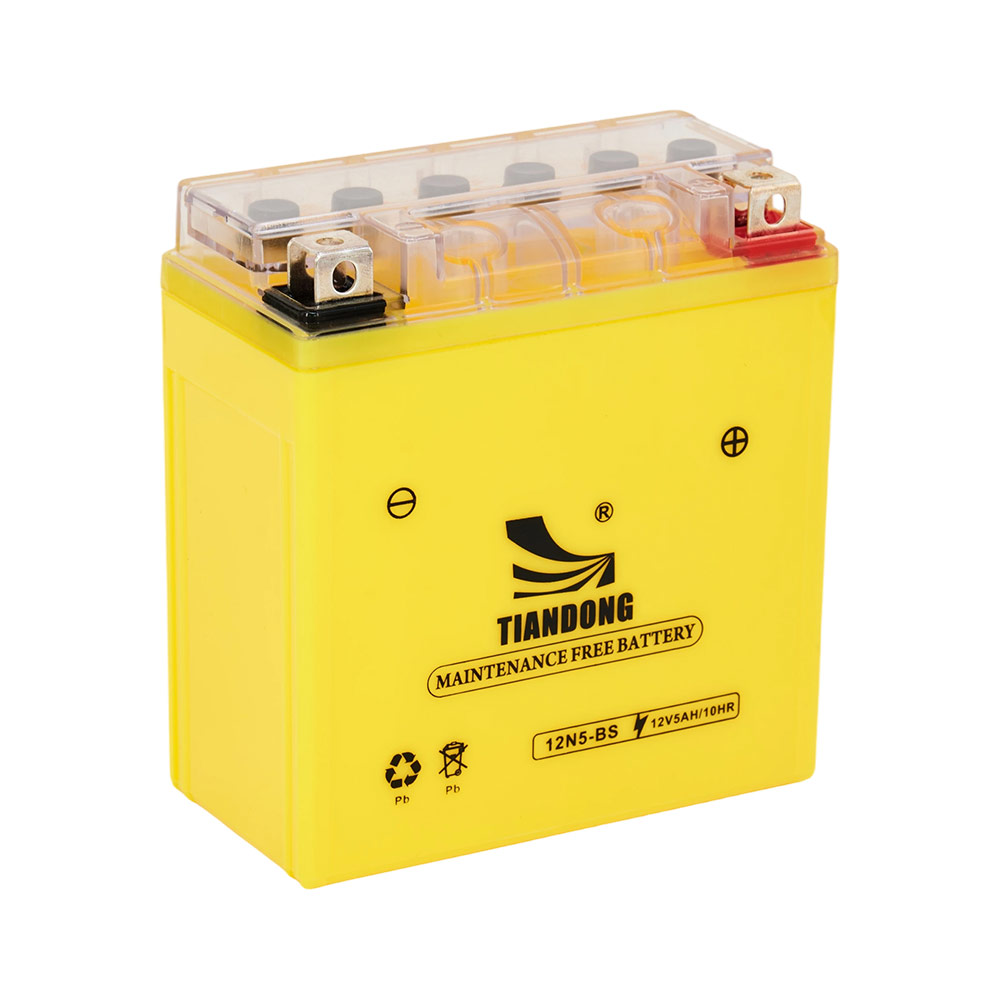
Small motorcycle battery owners and fleet managers need clear, practical guidance to store and handle sealed lead-acid (SLA) batteries safely. This guide covers the full lifecycle for small motorcycle batteries — from warehouse storage and local handling to transport, installation, maintenance and end-of-life recycling — and highlights specific considerations for models such as the 12N5-BS 1.80kg 12V ≥5AH Motorcycle Battery Seal Lead Acid Powerful Battery for Motorcycle Motorcycle Accessories.
Why proper storage matters for your small motorcycle battery
Proper storage preserves state of charge, prevents terminal corrosion, reduces self-discharge, and avoids hazardous situations (leakage, thermal runaway). For a small motorcycle battery like the TIANDONG 12N5-BS, which is lightweight (1.80kg) and sealed, the risks are lower than for flooded batteries but still significant when left in poor conditions. Storing SLA batteries in cool, dry, ventilated areas at moderate state-of-charge (SOC) prolongs service life and keeps the battery ready for use.
Recommended storage conditions for sealed lead-acid small motorcycle batteries
Follow these storage controls to maximize life and safety for small motorcycle battery units:
- Temperature: store between 10°C and 25°C (50°F and 77°F) when possible. Short-term exposure up to 30°C (86°F) is acceptable but accelerates self-discharge.
- Relative humidity: keep below 70% and avoid condensation.
- State of charge: store at 40–60% SOC for long-term storage (over 1 month). For ready-to-use inventory, 80–100% SOC is acceptable if recharged periodically.
- Ventilation: even sealed batteries can emit small amounts of gas under extreme conditions; store in a ventilated area away from ignition sources.
- Orientation: store upright to minimize stress on seals and terminals.
Packaging and stacking rules for small motorcycle battery inventory
Use original manufacturer packaging when possible. For bulk storage of small motorcycle battery units like the 12N5-BS, observe these rules:
- Stack no more than what the packaging specifies — excessive stacking increases mechanical stress.
- Keep batteries on pallets off the floor to prevent moisture ingress.
- Keep terminals covered and insulated to avoid short circuits; use non-conductive separators between units.
- Label clearly with production date and charge status for inventory rotation (FIFO).
Handling best practices for sealed lead-acid small motorcycle batteries
Even though the term sealed implies low maintenance, careful handling avoids damage and injury. For a small motorcycle battery, observe the following:
- Lift safely — at 1.80kg the 12N5-BS is light but still requires a stable grip to prevent drops that could crack the case.
- Avoid shorting terminals: never carry batteries with metal tools touching both terminals; use insulated tote boxes for transport.
- Inspect upon receipt: check for cracks, bulging, leakage or corrosion. Do not use or store damaged batteries.
- Wear PPE when handling: gloves and eye protection are minimal; use a face shield if you expect risk of splashing during charging.
Charging and maintenance recommendations for a small motorcycle battery
Sealed lead-acid batteries require correct charging profiles to avoid reduced capacity or premature failure. For models like the 12N5-BS 12V ≥5AH:
- Use a charger compatible with SLA batteries that offers regulated voltage and automatic termination or float mode.
- Bulk/absorption voltage for 12V SLA typically ranges 14.4–14.7V; float at 13.5–13.8V. Follow the battery manufacturer’s recommended values.
- Avoid excessive fast charging unless the charger and battery are rated for it; temperature-compensated charging is best.
- Recharge after every significant discharge; avoid leaving at low SOC for extended times.
Transport and shipping rules for sealed lead-acid small motorcycle batteries
Transporting small motorcycle battery units is regulated because of the potential for short circuits and, in rare cases, thermal events. Basic rules include:
- Comply with local hazardous materials rules (e.g., IATA, ADR, 49 CFR) when shipping by air, road or sea. Many SLA batteries are considered dangerous goods unless they meet exception criteria.
- Use UN-approved packaging where required; secure batteries to prevent movement and shorting.
- Label packages with correct UN/ID numbers and handling marks if required by transport mode.
Installation tips for motorcycle use of a small motorcycle battery
Installing a small motorcycle battery such as the TIANDONG 12N5-BS requires attention to details that affect performance and safety:
- Confirm polarity and terminal orientation before connecting. Reversed polarity can damage electrical systems.
- Clean terminals and connectors; use dielectric grease to limit corrosion once connected.
- Secure the battery to prevent vibration and rubbing against chassis parts. Vibration shortens battery life.
- Ensure good ventilation around the battery compartment for heat dissipation; avoid enclosing near heat sources like exhaust manifolds.
Emergency procedures: spills, leaks and thermal events
Sealed lead-acid batteries are much safer than flooded equivalents but still require emergency protocols:
- If you detect a bulging case, strong odor, or smoke, evacuate the area and disconnect power if safe to do so.
- For leakage: isolate the battery and contain any liquid with absorbent material. Avoid skin contact and use suitable PPE.
- In case of fire: use Class D or CO2 extinguishers recommended for battery fires; never use water jets on electrical fires if live circuits are involved.
Disposal and recycling of sealed lead-acid small motorcycle batteries
Lead-acid batteries are highly recyclable; lead and plastic components are routinely recovered. Never dispose of a small motorcycle battery in general trash. Follow these steps:
- Return spent batteries to authorized recycling centers, motorcycle retailers, or municipal hazardous waste programs.
- Follow local and national regulations for storage of used batteries prior to recycling.
- Label spent batteries and separate from new inventory to avoid cross-contamination.
Comparison: small SLA batteries vs other small motorcycle batteries
The table below compares sealed lead-acid units like the 12N5-BS to common alternatives (conventional flooded SLA, AGM, and lithium options) for small motorcycle applications.
| Feature | 12N5-BS (SLA) | AGM | Lithium (LiFePO4) |
|---|---|---|---|
| Weight | ~1.80 kg | Similar or slightly lighter | Much lighter (often 40–60% lighter) |
| Cost | Low–moderate | Moderate | High upfront |
| Maintenance | Maintenance-free | Maintenance-free | Maintenance-free |
| Cold-cranking/Shelf life | Good; robust | Better performance | Excellent but needs BMS |
| Recyclability | Very high (lead recovery) | High | Limited infrastructure in some regions |
Brand advantages — why choose the TIANDONG 12N5-BS small motorcycle battery
The 12N5-BS 1.80kg 12V ≥5AH Motorcycle Battery Seal Lead Acid Powerful Battery for Motorcycle Motorcycle Accessories offers several advantages for riders and retailers:
- Reliability: TIANDONG is a trusted lead-acid battery manufacturer with established quality controls for SLA production.
- Maintenance-free design: sealed construction removes the need for water topping while offering robust performance for starting and accessory loads.
- Lightweight and compact: at 1.80kg this battery reduces overall motorcycle weight and simplifies installation for a wide range of small bikes and scooters.
- Cost-effective: SLA chemistry balances upfront cost with long-term recyclability and serviceability.
Product brief:
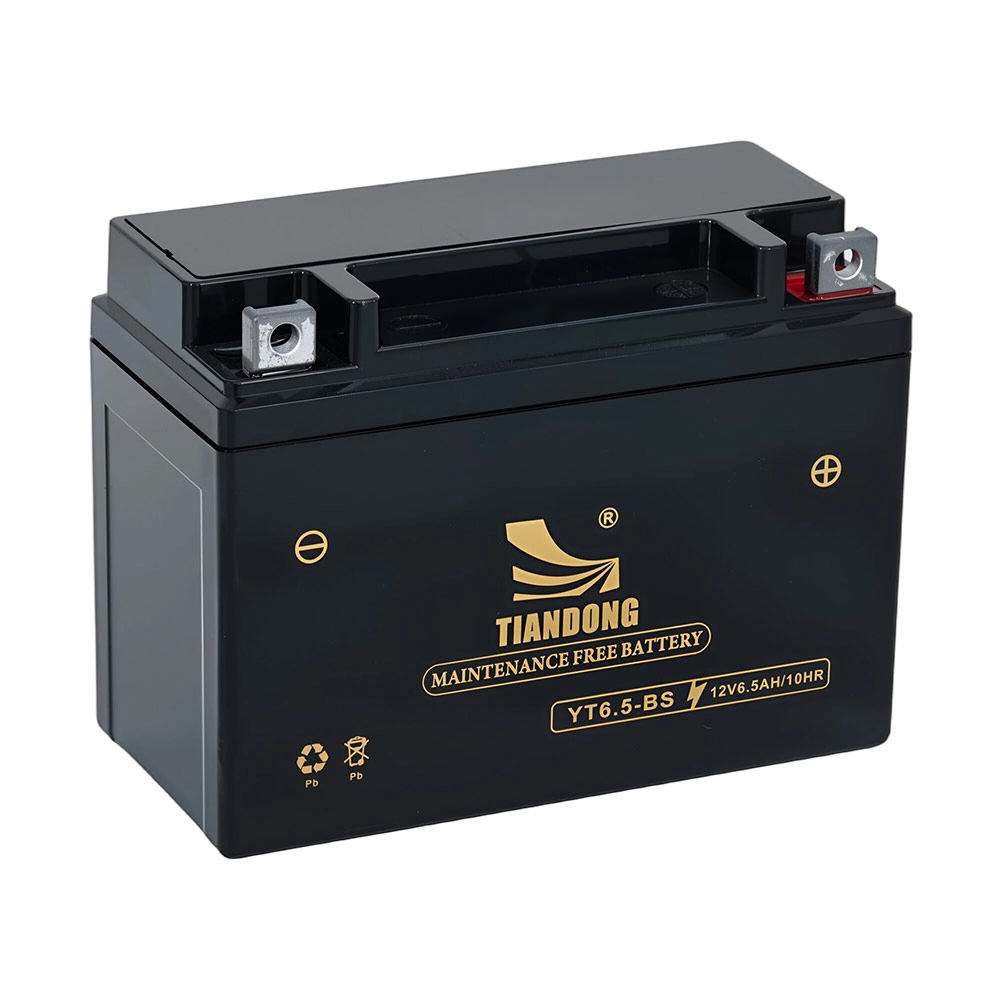
The TIANDONG 12N5-BS 12V ≥5AH sealed lead-acid motorcycle battery delivers reliable power for all riders. We are trusted lead-acid battery manufacturers, offering durable and maintenance-free batteries perfect for motorcycle accessories. Lightweight at 1.80kg for easy installation.
Checklist for buyers: receiving, storing and commissioning small motorcycle battery stock
When you receive a shipment of small motorcycle battery units, perform this quick checklist:
- Verify product labels and production/expiry date.
- Inspect each unit for physical damage or bulging.
- Measure open circuit voltage on sample units to confirm SOC.
- Store per recommended temperature and SOC guidelines and rotate inventory by FIFO.
- Record serial or batch numbers for warranty and traceability.
Frequently Asked Questions (FAQ)
Q1: How long can I store a sealed lead-acid small motorcycle battery before it needs charging?
A1: Storage life depends on temperature and SOC. At 20–25°C, expect 3–6 months before a recharge is advisable. In cooler storage (≈15°C) you can extend this interval. Check open circuit voltage periodically and recharge to recommended levels if SOC falls below about 40%.
Q2: Can I charge the 12N5-BS with any motorcycle battery charger?
A2: Use a charger that supports 12V SLA batteries and provides regulated charging with automatic termination or float. Avoid chargers with only high-voltage or incorrect charging profiles. Temperature-compensated chargers are preferred.
Q3: Is the 12N5-BS safe to transport by air?
A3: Air transport of SLA batteries is subject to IATA Dangerous Goods Regulations and may require specific packaging, documentation, and airline approvals. Check with your carrier and use approved packaging and labels when shipping by air.
Q4: How do I dispose of or recycle a used small motorcycle battery?
A4: Return the battery to authorized collection or recycling centers. Lead-acid batteries are highly recyclable, and many retailers accept returns. Never dispose of them in household trash.
Q5: What signs show a small motorcycle battery is failing?
A5: Common signs include difficulty starting the engine, rapid voltage drop under load, visible case damage or bulging, abnormal heat during charging, or an odor of sulfur. Test voltage and internal resistance to confirm.
Contact / View Product
If you need technical support or want to order the 12N5-BS 1.80kg 12V ≥5AH Motorcycle Battery Seal Lead Acid Powerful Battery for Motorcycle Motorcycle Accessories, contact our sales team or visit the product page: . Our representatives can provide datasheets, safety data sheets (SDS), and compatibility advice for your motorcycle model.
For detailed insights into volume purchasing and technical data, explore Bulk Sourcing 12N5-BS Small Motorcycle Battery: Specs & Pricing.
Authoritative references and further reading
- Sealed lead-acid battery — Wikipedia: https://en.wikipedia.org/wiki/Sealed_lead-acid_battery
- US EPA — Used Lead-Acid Batteries Management & Recycling: https://www.epa.gov/hw/used-lead-acid-batteries-management-recycling
- Battery Council International (BCI): https://batterycouncil.org/
- IATA — Dangerous Goods Regulations (batteries): https://www.iata.org/en/programs/cargo/dgr/
- OSHA — Lead Safety: https://www.osha.gov/lead
- US DOT — Hazardous Materials Regulations (49 CFR): https://www.transportation.gov/odapc/hazmat
For more product specifics, SDS, or shipping documentation for the TIANDONG 12N5-BS, contact our technical support team.

Electric motorcycle battery YT14 specs: 12V 14Ah 4.05kg breakdown
Top 10 VRLA Battery Manufacturers and Supplier Brands

Best motorcycle battery for touring riders: power tips

Bulk UPS Battery Replacement: Buying TIANDONG HP12-12 in Volume
Questions you may concerned about
Product
Do you offer OEM or custom branding?
Yes, we provide full OEM and ODM services, including logo printing, packaging customization, and model adjustments.
Are your batteries maintenance-free?
Yes, our batteries are sealed VRLA or GEL types that require no water refilling. They are ready to use and easy to maintain.
What kind of battery is best for a motorcycle?
AGM batteries are a popular choice because they combine the best of both worlds: the durability of lead-acid batteries and the low maintenance of lithium-ion batteries. AGM batteries are sealed, so they don't require water refills, and they're designed to handle rough conditions, making them ideal for motorcycles.
What certifications do your batteries have?
Our batteries are certified with CE, ISO9001, and RoHS, and meet export standards for markets in Southeast Asia, South Asia, and Africa.
Shipping
Which countries does Tiandong export to?
Tiandong batteries are exported to more than 20 countries, including Vietnam, India, Egypt, Thailand, and Indonesia.
Get in touch with us to get your Motorbike Battery solution
TIANDONG is a leading motorcycle battery manufacturer offering OEM/ODM service, stable quality, and global export support.
Built for wholesalers. Trusted by global buyers. Delivered with confidence.
Say Hello
E-mail: daisybattery8@gmail.com
xianyingchen83@gmail. com
WhatsAPP: +86 134 283 86694
+86 134 348 86641
Our Location
Social Links
© 2025 TIANDONG. All Rights Reserved. Privacy Policy | Terms and Conditions | Sitemap
 Scan QR Code
Facebook
Instagram
Scan QR Code
Whatsapp: +8613434886641