






How to Choose a Good Motorcycle Battery for Fleet Procurement
- How to Choose a Good Motorcycle Battery for Fleet Procurement
- Why choosing a good motorcycle battery matters for fleets
- Understand your fleet requirements before procurement
- Battery chemistry and why it matters for fleets (embed keyword: good motorcycle battery)
- Key technical criteria to evaluate a good motorcycle battery
- Practical procurement criteria beyond technical specs
- How to calculate Total Cost of Ownership (TCO)
- Testing and acceptance criteria for incoming battery lots
- Installation, charging and maintenance best practices
- Why customization matters for fleet procurement
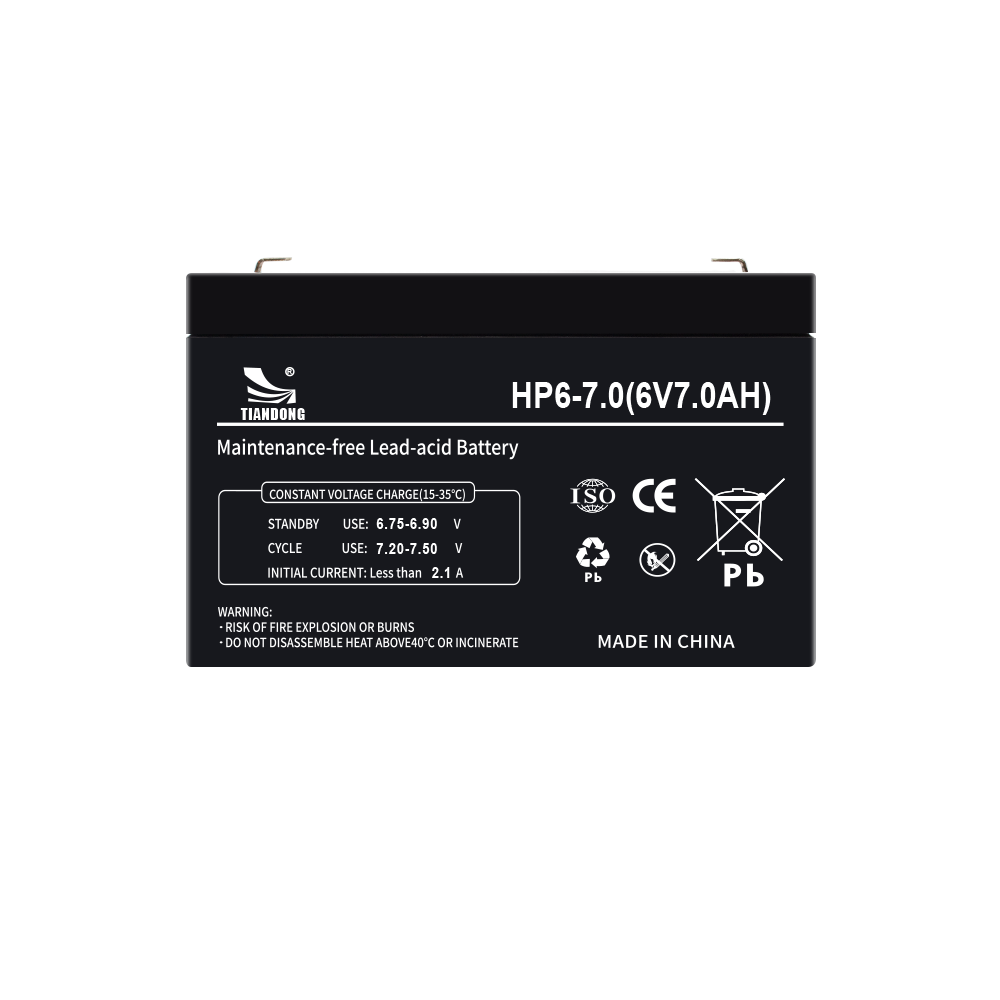
- TIANDONG HP6-7.0 (6V7.0AH) — product overview and fleet suitability
- Comparison table: TIANDONG HP6-7.0 vs. common alternatives
- Procurement process: step-by-step for fleets
- On-site and field validation tips
- How to detect and avoid common issues
- Brand and supplier considerations — why TIANDONG may be a fit for fleets
- Frequently Asked Questions (FAQ)
- Q: What makes a battery a good motorcycle battery for fleets?
- Q: Can TIANDONG HP6-7.0 replace standard 6V batteries in small motorcycles?
- Q: How should fleets test incoming battery batches?
- Q: What charging practices prolong battery life?
- Q: How important is supplier customization?
- Contact and product CTA
- References and authoritative sources
How to Choose a Good Motorcycle Battery for Fleet Procurement
Why choosing a good motorcycle battery matters for fleets
Fleet operators know that battery selection is not just about the purchase price. A good motorcycle battery affects vehicle uptime, maintenance workload, total cost of ownership, safety, and customer satisfaction. For fleets—whether delivery scooters, rental bikes, or municipal motorcycles—standardizing on batteries that balance reliability, lifecycle cost, and ease of service is essential to run predictable operations.
Understand your fleet requirements before procurement
Start by mapping operational profiles: daily kilometers, typical ambient temperatures, duty cycles (stop-start vs. long runs), charging patterns, and service intervals. These parameters determine which battery chemistries and capacities will deliver acceptable life and performance. For example, frequent stop-start and short trips often mean batteries never reach full charge; choose batteries tolerant of partial charge cycles.
Battery chemistry and why it matters for fleets (embed keyword: good motorcycle battery)
There are multiple battery chemistries in motorcycle use. Each has trade-offs that influence whether a battery qualifies as a good motorcycle battery for your fleet.
| Chemistry | Nominal Voltage | Typical Capacity Range | Cycle Life | Maintenance | Pros | Cons |
|---|---|---|---|---|---|---|
| Flooded Lead-Acid | 6V / 12V | 4–20 AH | 200–400 | Requires water top-up | Low cost, robust | Maintenance, spillage risk |
| Sealed AGM (VRLA) | 6V / 12V | 4–30 AH | 300–700 | Maintenance-free | Good deep-cycle tolerance, safe | Higher cost than flooded |
| Gel (VRLA) | 6V / 12V | 4–30 AH | 300–700 | Maintenance-free | Good for vibration and deep discharge | Sensitivity to overcharge |
| LiFePO4 (Lithium) | 12V (often with built-in BMS) | 3–20 AH (equiv.) | 1000–3000 | Maintenance-free, requires BMS | Lightweight, long life | Higher upfront cost, requires compatible charging |
| TIANDONG HP6-7.0 (6V7.0AH) | 6V | 7.0 AH | Manufacturer-specified, customizable | Maintenance-free depending on chosen configuration | Factory direct, customizable, consistent quality | Specific models should match vehicle electrical system |
Key technical criteria to evaluate a good motorcycle battery
When assessing candidates for fleet deployment, evaluate the following technical attributes:
- Voltage and capacity compatibility with vehicle electrical system
- Cold cranking capability if engines require cranking amperage
- Cycle life and depth-of-discharge tolerance based on operational profile
- Charge acceptance and recharge time—important for commercial fleets with short turnaround
- Self-discharge rate for vehicles that sit unused for some days
- Temperature performance—extreme heat or cold reduces life and capacity
- Physical size, terminal type, and mounting—must fit stock battery boxes and harnesses
- Safety features: venting, flame arrestors, and for lithium, an adequate BMS
Practical procurement criteria beyond technical specs
For fleets the supplier is as important as the battery. Consider:
- Supplier track record and manufacturing transparency
- Warranty length and coverage terms (pro-rate vs. full replacement)
- Availability of spare units and consistent SKU supply
- Testing and QA processes at factory (e.g., capacity tests, leakage checks)
- Customization options for labeling, terminals, or packaging for fleet logistics
- End-of-life and recycling support
- Logistics: lead time, shipping reliability, import compliance
How to calculate Total Cost of Ownership (TCO)
Price per unit is only part of the story. A good motorcycle battery for fleet procurement should be evaluated via TCO that includes:
- Acquisition cost per battery
- Lifecycle (expected operational years and cycles)
- Maintenance labor and parts (watering, top-ups, charger compatibility)
- Downtime cost for vehicle out of service
- Warranty recovery & replacement logistics
Example formula: TCO per year = (Purchase cost / Expected service years) + Annual maintenance + Downtime cost + Disposal/recycling cost. Use that to compare chemistries and suppliers.
Testing and acceptance criteria for incoming battery lots
Implement a standardized incoming inspection and test suite before placing battery lots into service. Typical checks include:
- Visual inspection for physical defects, correct labels, and terminal integrity
- Open circuit voltage and specific gravity (if applicable) checks
- Capacity test on a sample basis using a discharge tester to validate AH capacity
- Internal resistance or conductance measurement to evaluate health
- Random cycle tests for new lots to verify cycle performance claims
- Record keeping: batch numbers, test results, and any non-conformances
Installation, charging and maintenance best practices
To get the maximum life from a good motorcycle battery:
- Install correctly oriented and secured to minimize vibration
- Use chargers matched to battery chemistry and with correct charge profiles
- Train technicians to recognize early signs of failure: slow cranking, bulging cases, acid leakage, excessive self-discharge
- For lead-acid, avoid deep discharges where possible; for lithium ensure BMS and chargers provide appropriate voltage/current limits
- Keep records of charge cycles and service to inform replacement planning
Why customization matters for fleet procurement
Fleet deployments benefit from customizable batteries: consistent labeling for asset tracking, terminal types that reduce installation errors, slight capacity tweaks for specific workloads, and packaging optimized for shipping and storage. A supplier able to deliver made-to-order variants reduces retrofit work and accelerates deployment.
TIANDONG HP6-7.0 (6V7.0AH) — product overview and fleet suitability
TIANDONG HP6-7.0 (6V7.0AH) is a customizable, high-quality energy storage battery from TIANDONG, a trusted battery manufacturer with 20+ years of experience. Factory direct supply ensures reliability and performance for your energy storage needs.
Key fleet-oriented advantages of TIANDONG HP6-7.0:
- Compact 6V7.0AH form factor suitable for many small motorcycles and electric scooters
- Customizable options to fit terminal types and labeling needs
- Factory direct supply chain which reduces middleman delays and helps ensure consistent batches
- Designed for stable capacity and consistent QA when purchased in bulk
Comparison table: TIANDONG HP6-7.0 vs. common alternatives
| Feature | TIANDONG HP6-7.0 (6V7.0AH) | Typical 6V Flooded | Typical 6V AGM | Small LiFePO4 Equivalent |
|---|---|---|---|---|
| Nominal Voltage | 6V | 6V | 6V | 12V (pack) |
| Capacity | 7.0 AH | 6–8 AH | 6–10 AH | 3–7 AH (equiv.) |
| Maintenance | Configurable, usually maintenance-free | Requires topping | Maintenance-free | Maintenance-free, needs BMS |
| Typical lifecycle | Supplier-specified; designed for fleet consistency | 200–400 cycles | 300–700 cycles | 1000+ cycles |
| Upfront cost | Competitive with options for volume pricing | Lower | Moderate | Higher |
| Weight | Moderate | Heavier | Moderate | Light |
Procurement process: step-by-step for fleets
1. Define requirements: voltage, capacity, ambient conditions, expected life, compatibility, and auxiliary features. 2. Shortlist suppliers based on experience, certifications, and references. 3. Request samples and perform in-house acceptance tests (voltage, capacity, conductance). 4. Run field pilots on a subset of vehicles to capture real-world performance and charging behavior. 5. Evaluate TCO and warranty terms. 6. Negotiate contracts with clear acceptance tests, batch QA, lead times, and penalty clauses for nonconformance. 7. Plan spare pools, training, and recycling at end-of-life.
On-site and field validation tips
During pilot stages, monitor these KPIs:
- Average days-to-failure and reasons for failure
- Charge acceptance and time-to-full after typical usage
- Vehicle downtime due to battery issues
- Maintenance hours per battery per year
- Consistency across batches
How to detect and avoid common issues
Common fleet problems include incorrect terminals, mismatched chargers, early capacity loss, and inconsistent batch quality. Mitigation measures: standardize part numbers and connectors, insist on lot-level test certificates, require sample-based capacity and conductance certificates, and train technicians in correct charging profiles.
Brand and supplier considerations — why TIANDONG may be a fit for fleets
TIANDONG offers 20+ years of battery manufacturing experience, factory direct models like the TIANDONG HP6-7.0 (6V7.0AH), and customizable options that help fleets standardize. Benefits include stable production batches, the ability to tailor terminal types and packaging for fleet logistics, and direct communication channels that speed up issue resolution. For fleets that require repeatable performance and predictable lead times, working directly with a manufacturer who can customize and test to specification can be a decisive advantage.
Frequently Asked Questions (FAQ)
Q: What makes a battery a good motorcycle battery for fleets?
A: A good motorcycle battery for fleets is one that matches vehicle electrical needs, has predictable lifecycle performance, low maintenance, acceptable upfront and lifecycle costs, strong supplier support, and consistent batch quality.
Q: Can TIANDONG HP6-7.0 replace standard 6V batteries in small motorcycles?
A: TIANDONG HP6-7.0 is a 6V7.0AH unit designed for common small motorcycle and scooter applications. Confirm physical fit, terminal type, and charging compatibility before fleet-wide replacement. Request samples and perform acceptance tests.
Q: How should fleets test incoming battery batches?
A: Perform visual inspections, open-circuit voltage checks, sample capacity discharge tests, internal resistance or conductance measurements, and random cycle tests to confirm supplier claims.
Q: What charging practices prolong battery life?
A: Use chargers with correct voltage and current profiles, avoid extended undercharge or deep discharge cycles, and keep batteries at proper storage state-of-charge if vehicles are idle.
Q: How important is supplier customization?
A: Customization can reduce installation errors, accelerate deployment, and improve logistics—important for fleets that scale quickly. Ask suppliers for labeling, terminal configuration, and packaging options.
Contact and product CTA
To evaluate TIANDONG HP6-7.0 (6V7.0AH) for your fleet, request samples, datasheets and volume pricing. Contact TIANDONG sales at sales@tiandong.com or visit the product page at www.tiandong.com/products/HP6-7.0 to view specifications and order options. For technical procurement support, our team can help you set up pilot tests and acceptance protocols.
With supplier quality, procurement strategy, and product selection clarified, fleet managers can revisit performance comparisons with clearer decision criteria.
This brings the evaluation process full circle back to
Comparing 6V7.0AH Batteries for Commercial Motorcycle Fleets.
References and authoritative sources
- Battery — Wikipedia: https://en.wikipedia.org/wiki/Battery_(electricity)
- Lead-acid battery — Wikipedia: https://en.wikipedia.org/wiki/Lead%E2%80%93acid_battery
- Battery University — https://batteryuniversity.com/
- Battery Council International — https://batterycouncil.org/
- US Department of Energy — Batteries and Storage: https://www.energy.gov/eere/vehicles/articles/fact-861-june-9-2014-battery-storage-technologies-and-applications

How to Recycle Old UPS Battery After Replacement

Charging time and charger tips for YT14 electric motorcycle battery

How to Properly Charge Your YTX7-BS 12V AGM Motorcycle Battery

Shipping, Returns and Warranty for YTX7-BS AGM Motorcycle Battery
Questions you may concerned about
Product
How long is the lead time and where do you ship?
Standard lead time is 7–15 days. We export to over 20 countries, including Vietnam, India, Egypt, and Thailand.
What brands of raw materials do you use?
We use high-quality materials to ensure performance. we use 99.99% pure lead , ensure long life and high Cold Cranking Amps (CCA).
Do you offer OEM or custom branding?
Yes, we provide full OEM and ODM services, including logo printing, packaging customization, and model adjustments.
Shipping
Which countries does Tiandong export to?
Tiandong batteries are exported to more than 20 countries, including Vietnam, India, Egypt, Thailand, and Indonesia.
customer
Can overseas clients visit the Tiandong factory?
Yes. Tiandong welcomes international customers to visit the factory, production workshops, and logistics warehouses to better understand the manufacturing and quality control process.
Get in touch with us to get your Motorbike Battery solution
TIANDONG is a leading motorcycle battery manufacturer offering OEM/ODM service, stable quality, and global export support.
Built for wholesalers. Trusted by global buyers. Delivered with confidence.
Say Hello
E-mail: daisybattery8@gmail.com
xianyingchen83@gmail. com
WhatsAPP: +86 134 283 86694
+86 134 348 86641
Our Location
Social Links
© 2025 TIANDONG. All Rights Reserved. Privacy Policy | Terms and Conditions | Sitemap
 Scan QR Code
Facebook
Instagram
Scan QR Code
Whatsapp: +8613434886641