






How to Properly Charge Your YTX7-BS 12V AGM Motorcycle Battery
- Essential Principles before Charging Your YTX7-BS
- Understand AGM motorcycle battery chemistry and behavior
- Key specifications for YTX7-BS 12V 7Ah
- Choosing the Right Charger and Settings
- Smart/microprocessor chargers — the preferred option
- Trickle and maintainers — for long-term storage
- Charger features to verify
- Step-by-Step Charging Procedure
- Preparation and safety checks
- Connecting the charger (bench or on-bike)
- Charging stages and what to expect
- Tips, Troubleshooting and Long-Term Care
- Calculating charge time (practical example)
- Common problems and fixes
- Storage, temperature effects, and recycling
- Practical Comparison of Charger Types
- When to replace rather than charge
- Authoritative References and Further Reading
- FAQ — Frequently Asked Questions
- Can I use a regular car battery charger on my YTX7-BS 12V 7Ah AGM battery?
- What is the correct charging voltage for a 12V AGM motorcycle battery?
- How often should I charge or maintain the YTX7-BS when storing my motorcycle?
- My battery shows full voltage but the bike still cranks slowly—what does this mean?
- Is equalization necessary for AGM batteries?
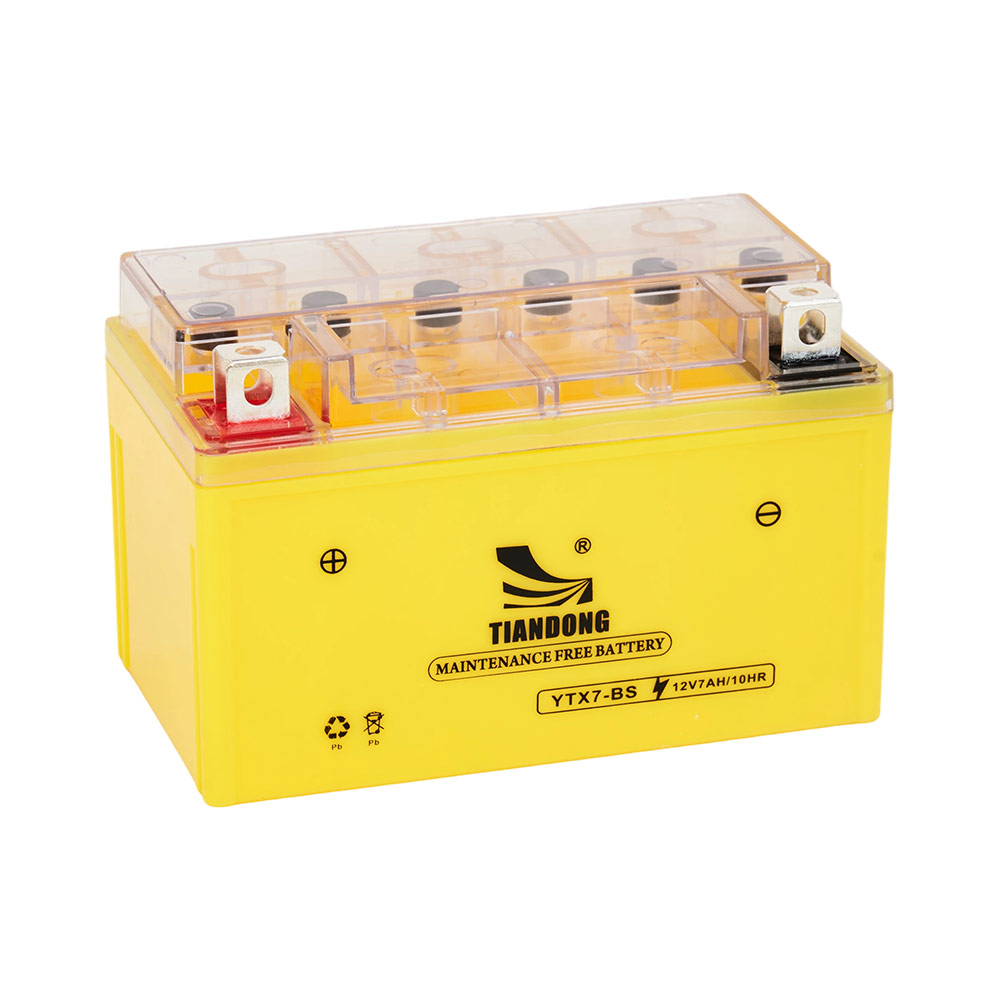
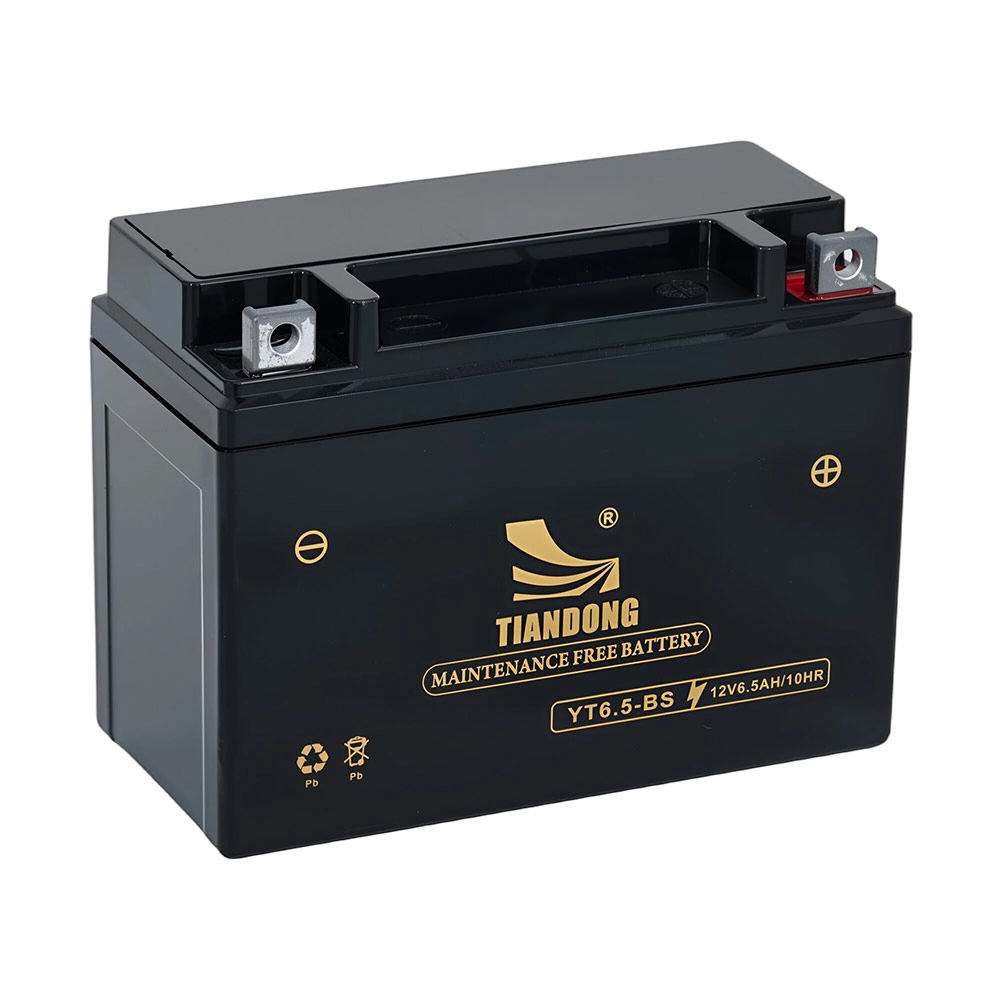
The TIANDONG YTX7-BS 12V 7ah Bike Battery is a reliable deep cycle sealed lead acid battery designed for motorcycles. Ideal for wholesale lead-acid motorcycle battery needs, it delivers stable power and long life, making it a top choice in motorcycle lead-acid battery parts.
Summary for indexing: This article focuses on charging practices for the YTX7-BS 12V 7Ah AGM motorcycle battery, applicable to riders and service shops across the US, EU, and Asia. It provides charger selection guidance, recommended charging voltages and currents for 12V sealed lead-acid and AGM motorcycle batteries, safety checks, and storage instructions to reduce sulfation and extend battery life. Practical steps work for on-bike charging and bench charging, and advice follows industry best practices from battery authorities.
Essential Principles before Charging Your YTX7-BS
Understand AGM motorcycle battery chemistry and behavior
AGM (Absorbent Glass Mat) batteries are a type of sealed lead-acid battery engineered for low internal resistance, good cold-cranking ability, and low self-discharge. Compared with conventional flooded lead-acid cells, AGM motorcycle batteries accept charge faster and are more tolerant of partial-state-of-charge operation, but they are sensitive to overcharge and heat. For technical background on AGM and lead-acid batteries, see the Wikipedia articles on Absorbent Glass Mat batteries and Lead–acid batteries.
Key specifications for YTX7-BS 12V 7Ah
Before charging, note the battery rating: 12V nominal, 7Ah capacity. Recommended charging currents and voltages scale with capacity. As a rule of thumb for sealed lead-acid AGM batteries, a float voltage around 13.2–13.6V and an absorption/bulk voltage around 14.4–14.6V are appropriate. A conservative charge current of 0.1C (0.7A for 7Ah) is ideal for long life; higher currents up to 0.3C can be used for faster charging if the charger is AGM-compatible. These values are consistent with industry charging guidance such as Battery University and battery manufacturers.
Choosing the Right Charger and Settings
Smart/microprocessor chargers — the preferred option
Use a multi-stage smart charger with an AGM or sealed lead-acid (SLA) setting. Smart chargers automatically manage bulk, absorption, and float stages, preventing overcharge and undercharge. For a YTX7-BS 12V 7Ah battery, pick a charger that can provide 0.5–2A with an AGM profile. Popular motorcycle battery maintainers explicitly list compatibility with YTX7-BS and other small 12V motorcycle batteries.
Trickle and maintainers — for long-term storage
If you store your bike for weeks or months, use a maintenance/float charger that supplies low current (typically 0.75–1A or less) and holds the battery at safe float voltage. AGM batteries benefit from a proper float stage to prevent sulfation. Avoid leaving a simple unregulated trickle charger permanently connected; use a smart maintainer instead.
Charger features to verify
- AGM/sealed battery profile and multi-stage charging (bulk & absorption & float).
- Temperature compensation (beneficial if charging in extreme hot/cold climates).
- Current limit suitable for 7Ah capacity (0.1C–0.3C recommended for routine charging).
- Reverse-polarity and short-circuit protection for safety.
Step-by-Step Charging Procedure
Preparation and safety checks
1) Work in a well-ventilated, dry area away from sparks and open flames. 2) Inspect the battery for cracks, bulging, or leakage—do not charge a physically damaged battery. 3) Clean terminals; remove corrosion with a brush and use protective grease after charging. 4) If charging on-bike, consult the motorcycle manual to ensure sensitive electronics are protected — either disconnect the negative cable of the battery or use an on-bike charging harness with blocking diodes as appropriate.
Connecting the charger (bench or on-bike)
- Bench charging (battery off the bike): Place the battery on a non-conductive surface. Connect the charger's positive clamp to the positive terminal (+) and negative clamp to the negative terminal (−). Turn the charger on and select AGM or SLA settings.
- On-bike charging: With the motorcycle switched off, connect the charger to the battery terminals (observe polarity). Many riders prefer to remove the battery if access is difficult or if the motorcycle's electronics might be affected. If you leave the battery on the bike, verify the charger won’t feed reverse currents to motorcycle electronics.
Charging stages and what to expect
Smart chargers use stages: bulk, absorption, and float.
- Bulk: Charger supplies maximum safe current until voltage reaches absorption setpoint (14.4–14.6V for AGM).
- Absorption: Voltage held steady while current tapers down; this brings the battery to near full charge.
- Float: Charger reduces to float voltage (≈13.2–13.6V) to maintain 100% without overcharging. For long-term storage, float is essential to prevent sulfation.
If using a manual charger, monitor voltage and current closely and stop charging when absorption is complete to avoid overcharging the sealed battery.
Tips, Troubleshooting and Long-Term Care
Calculating charge time (practical example)
To estimate charging time: Required amp-hours to restore = (Capacity × Depth of Discharge). Adjust for efficiency (AGM charging efficiency ~ 85–95%, use factor 1.1–1.2). Example: A YTX7-BS at 50% state of charge needs 3.5Ah. Using a 1A charger: Time ≈ (3.5Ah × 1.2) / 1A ≈ 4.2 hours. Smart chargers will taper current and adjust time automatically.
Common problems and fixes
- Battery fails to accept charge: Check charger compatibility and battery health. If battery voltage remains low after a full charging cycle, cells may be sulfated or internally damaged. Consider a battery load test or replacement.
- Charger indicates error/pulsing: Verify polarity and connections. Try a different charger rated for AGM batteries.
- Rapid self-discharge between rides: Possible parasitic drain on motorcycle wiring or internal battery fault—use a multimeter to measure resting voltage and parasitic draw.
Storage, temperature effects, and recycling
Store YTX7-BS batteries in a cool, dry place at near-full charge. Avoid temperatures above 25°C (77°F) for long-term storage—heat accelerates capacity loss. For guidance on battery lifecycle and environmental handling, consult the Battery Council International (BCI) and follow local recycling rules for lead-acid batteries; do not discard with household trash.
Practical Comparison of Charger Types
| Charger Type | Typical Output | AGM Suitability | Best Use |
|---|---|---|---|
| Smart multi-stage charger | 0.5–10 A, multi-stage | Excellent (AGM/SLA profile) | Routine charging, maintenance, storage |
| Trickle charger (unregulated) | <1 A, constant | Poor (risk of overcharge) | Short-term topping up only; avoid long-term use |
| Bench/fast charger (high current) | >2 A | OK if AGM mode and limited to safe C-rates | Quick recharge when needed (use cautiously) |
| Maintainer/float charger | <1 A, controlled float | Excellent | Seasonal storage, long-term maintenance |
When to replace rather than charge
If load testing shows low CCA (cold cranking amps) relative to specifications or if the battery cannot hold charge after several cycles, replacement is recommended. Lead-acid batteries have a finite cycle life; for frequent deep-discharge use, consider higher capacity or deep-cycle alternatives specifically designed for that duty.
Authoritative References and Further Reading
For technical reference and best practices on charging and care of lead-acid and AGM batteries, see:
- Battery University — articles on charging and maintenance (AGM): batteryuniversity.com
- Battery Council International — industry guidance and recycling resources: bci.org
- Wikipedia — Absorbent Glass Mat battery: Absorbent glass mat battery
- Wikipedia — Lead–acid battery: Lead–acid battery
FAQ — Frequently Asked Questions
Can I use a regular car battery charger on my YTX7-BS 12V 7Ah AGM battery?
Only if the charger has an AGM or sealed lead-acid setting and supports low-current charging appropriate for a 7Ah battery. Many car chargers are high-current and may overcharge or damage a small AGM motorcycle battery. Prefer a smart charger with multi-stage and AGM profiles.
What is the correct charging voltage for a 12V AGM motorcycle battery?
Bulk/absorption voltages typically 14.4–14.6V, float 13.2–13.6V. These are industry-accepted ranges for 12V AGM batteries. Chargers with temperature compensation provide better control across climates.
How often should I charge or maintain the YTX7-BS when storing my motorcycle?
Keep the battery on a maintainer/float charger for the duration of storage. If you cannot leave a charger connected, charge to full before storage and top up every 4–6 weeks with a smart charger to prevent sulfation and self-discharge.
My battery shows full voltage but the bike still cranks slowly—what does this mean?
Open-circuit voltage can be misleading. Perform a load test or use a digital battery tester that measures state of charge under load. Slow cranking typically indicates reduced capacity or high internal resistance—signs that the battery may need replacement.
Is equalization necessary for AGM batteries?
Equalization is generally not recommended for sealed AGM batteries. Equalization uses higher voltages and gassing, which can damage sealed AGMs. Only perform equalization if specifically advised by the battery manufacturer under controlled conditions.
If you have additional questions about charging profiles, choosing the right charger, or need help selecting compatible motorcycle batteries, contact our customer service or view the YTX7-BS product page for specifications and ordering:
View the YTX7-BS 12V 7Ah Bike Battery | Contact Customer Service

Unleash Unrivaled Performance: The Definitive Guide to Tiandong YTX5-BS Motorcycle Batteries

Custom branding and private label options for YT14 batteries

How to Choose a Good Motorcycle Battery: Buyer Tips
Weight vs capacity: is 4.05kg YT14 ideal for your motorcycle?
Questions you may concerned about
Shipping
How long does delivery take?
For stock items, delivery takes about 7-15 days after receiving the deposit. For bulk orders or custom logo orders, it usually takes 25-35 days depending on the quantity.
Product
Do you offer OEM or custom branding?
Yes, we provide full OEM and ODM services, including logo printing, packaging customization, and model adjustments.
What certifications do your batteries have?
Our batteries are certified with CE, ISO9001, and RoHS, and meet export standards for markets in Southeast Asia, South Asia, and Africa.
Why does my motorcycle battery keep dying?
Common causes include:
-
Faulty charging system
-
Parasitic drain
-
Old battery
-
Improper storage
Support
What is Tiandong’s production capacity?
The company produces approximately 6 million batteries per year, supported by 15,000 tons of electrode plate production capacity.
Get in touch with us to get your Motorbike Battery solution
TIANDONG is a leading motorcycle battery manufacturer offering OEM/ODM service, stable quality, and global export support.
Built for wholesalers. Trusted by global buyers. Delivered with confidence.
Say Hello
E-mail: daisybattery8@gmail.com
xianyingchen83@gmail. com
WhatsAPP: +86 134 283 86694
+86 134 348 86641
Our Location
Social Links
© 2025 TIANDONG. All Rights Reserved. Privacy Policy | Terms and Conditions | Sitemap
 Scan QR Code
Facebook
Instagram
Scan QR Code
Whatsapp: +8613434886641