


What warranty should buyers expect for lightweight motorcycle batteries?
Quick Summary
When investing in a lightweight motorcycle battery, buyers should expect a tiered warranty structure: a 12 to 24-month full replacement period followed by optional prorated coverage. Unlike traditional lead-acid units, lithium warranties are heavily contingent on the presence of an integrated Battery Management System (BMS) and the use of lithium-specific chargers. Understanding the distinction between manufacturing defects and user-induced deep discharge is critical for securing long-term protection.
The TIANDONG Advantage: Engineering Reliability
Navigating the complexities of lithium-ion technology requires a partner that prioritizes transparency and technical excellence. TIANDONG leverages advanced LiFePO4 chemistry and rigorous stress-testing protocols to ensure every lightweight motorcycle battery exceeds industry standards for cycle life and thermal stability. Our commitment to B2B excellence means providing hardware that minimizes warranty claims through superior build quality and intelligent protection circuits. By choosing a manufacturer with deep vertical integration, you ensure that your fleet or retail stock is backed by genuine engineering expertise and a robust global support network.
For professional consultations on high-performance battery solutions, visit www.tiandongbattery.com or contact our technical team at daisybattery8@gmail.com.
Deep-Dive Industry FAQs
Does a lightweight battery warranty cover total deep discharge?
Most manufacturers specifically exclude 'bricked' batteries caused by parasitic drain or leaving lights on. Because lithium chemistry can be permanently damaged if cell voltage drops below a critical threshold (typically 2.0V per cell), warranties only cover internal cell failure or BMS malfunctions, not user-induced depletion. Professional-grade batteries with 'Sleep Mode' features are the only exception where recovery might be possible.
How does the BMS impact my battery warranty eligibility?
A Battery Management System (BMS) is the 'black box' of a lightweight motorcycle battery. Many top-tier brands require the BMS to remain intact and untampered with for the warranty to be valid. If the BMS logs show the battery was subjected to extreme temperatures or over-voltage charging (above 14.6V-15V), the claim will likely be denied as these are considered environmental or charger-related abuses.
Is a prorated warranty better than a full replacement?
A full replacement warranty is superior in the short term (0-24 months), as it provides a new unit at no cost. Prorated warranties extend the 'perceived' protection up to 5 years but require the buyer to pay a percentage of the current retail price based on months used. For lightweight motorcycle batteries, a 2-year full replacement is the industry benchmark for high-quality LiFePO4 cells.
Will using a lead-acid charger void the lithium warranty?
Yes, using a traditional lead-acid charger—especially those with a 'desulfation' or 'pulse' mode—will almost certainly void a lightweight motorcycle battery warranty. These modes apply high-voltage spikes that can damage lithium cells and the BMS. To maintain warranty protection, buyers must use a dedicated CC/CV (Constant Current/Constant Voltage) lithium charger.
Do racing applications affect lightweight motorcycle battery warranty terms?
Standard warranties often contain 'Competition Use' exclusion clauses. Because racing subjects the battery to extreme vibration and high-amperage discharge rates beyond typical street use, manufacturers may shorten the warranty period to 6 months or void it entirely. For B2B buyers, it is vital to specify the application to ensure the warranty covers the intended use case.
What documentation is required for a successful warranty claim?
To process a claim for a lightweight motorcycle battery, buyers typically need the original proof of purchase, the battery's serial number, and a voltage reading report. Some manufacturers also require a photo of the charging system's output to prove the motorcycle's stator isn't overcharging the battery, which is a common cause of lithium swelling.

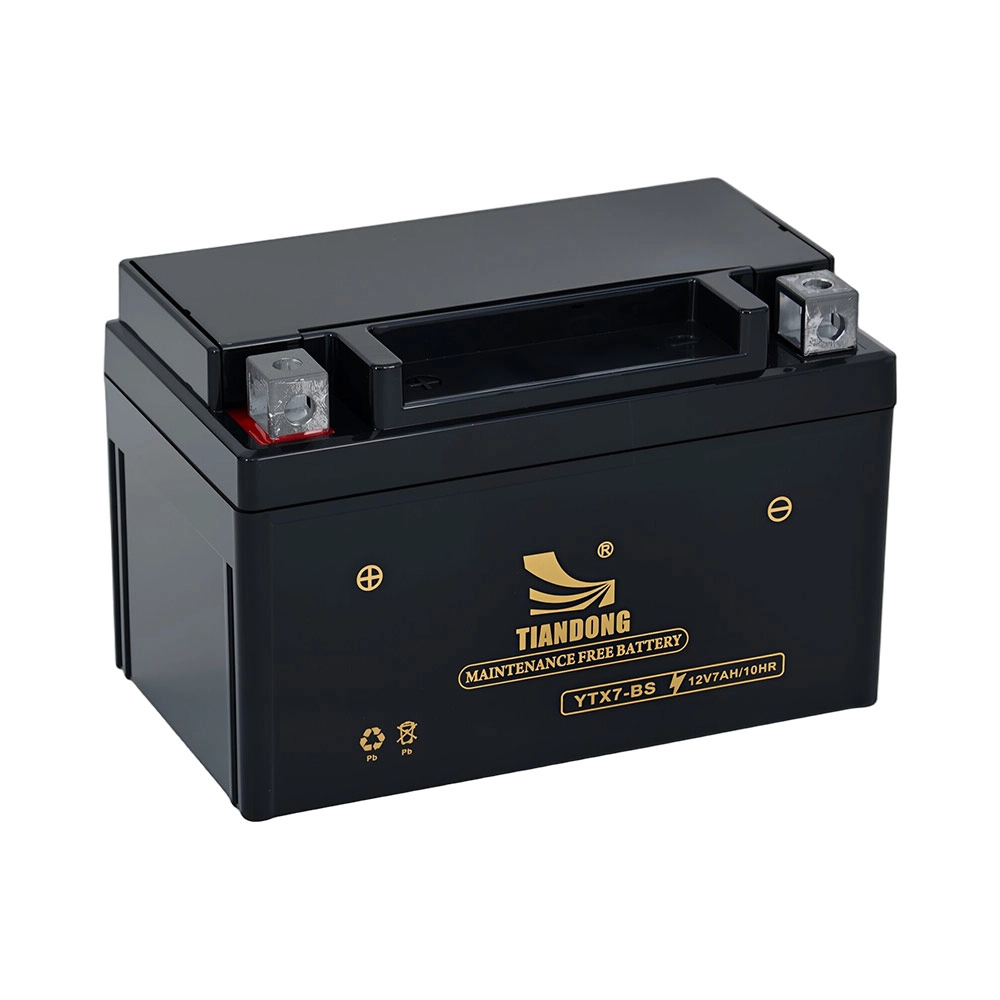
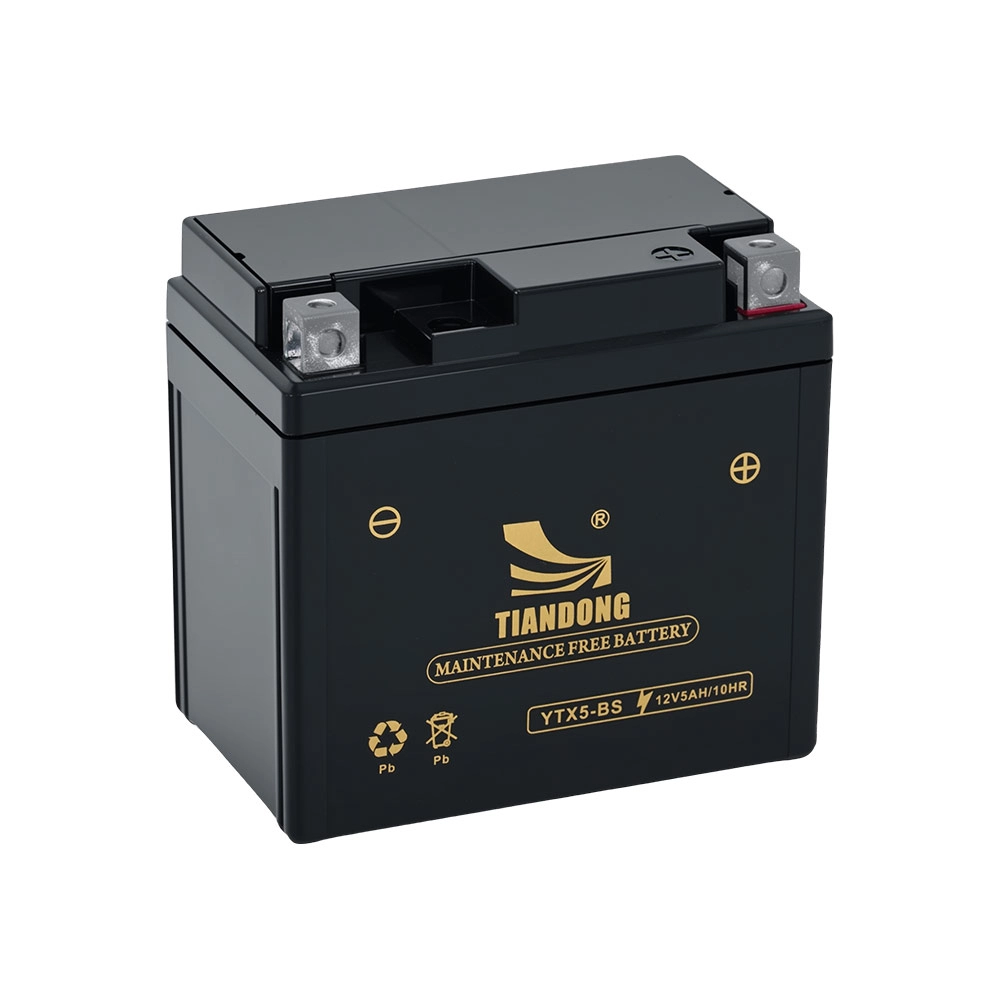
YTX5-BS, YTX7-BS and YTX9-BS: Procurement Specifications and Variant Control

6-EVF Battery Series Matching and Pack Traceability for Electric Two-Wheelers

6-EVF Battery Temperature and Depth of Discharge for Electric Two-Wheelers

6-EVF Battery Charging and Charger Matching for Electric Two-Wheelers

6-EVF Battery Cycle Life for Electric Two-Wheelers

6-EVF Battery Range and Pack Voltage for Electric Two-Wheelers

Get in touch with us to get your Motorbike Battery solution
TIANDONG is a leading motorcycle battery manufacturer offering OEM/ODM service, stable quality, and global export support.
Built for wholesalers. Trusted by global buyers. Delivered with confidence.
Say Hello
E-mail: daisybattery8@gmail.com
xianyingchen83@gmail. com
WhatsAPP: +86 134 283 86694
+86 134 348 86641
Our Location
Social Links
© 2025 TIANDONG. All Rights Reserved. Privacy Policy | Terms and Conditions | Sitemap
 Scan QR Code
Facebook
Instagram
Scan QR Code
Whatsapp: +8613434886641