






What is the ROI when switching to lightweight motorcycle batteries?
Quick Summary
The Return on Investment (ROI) for a lightweight motorcycle battery is realized through significantly lower total cost of ownership compared to traditional lead-acid units. By utilizing LiFePO4 technology, riders gain a 70% reduction in mass, a 2,000+ cycle lifespan, and a negligible self-discharge rate. These factors combine to improve vehicle handling, reduce mechanical strain on the charging system, and eliminate the need for annual battery replacements, making the initial High Quality a long-term financial gain.
The TIANDONG Advantage for Performance ROI
As a global leader in high-performance energy solutions, TIANDONG specializes in engineering lightweight motorcycle battery systems that redefine durability and power density. Our proprietary cell management technology ensures that every battery provides consistent cold-cranking amps and thermal stability, even in extreme conditions. By choosing TIANDONG, B2B partners and enthusiasts invest in a product backed by rigorous quality control and technical expertise that guarantees a measurable return through longevity and reliability.
Partner with an industry expert to optimize your fleet or retail inventory by contacting us at www.tiandongbattery.com or emailing daisybattery8@gmail.com for technical specifications and wholesale inquiries.
Deep-Dive Performance FAQs
How does weight reduction impact overall motorcycle fuel efficiency?
Reducing vehicle mass by 5 to 10 pounds using a lightweight motorcycle battery directly lowers the kinetic energy required for acceleration. In technical terms, this improves the power-to-weight ratio, allowing the engine to operate more efficiently within its optimal RPM range, which can lead to measurable fuel savings over thousands of miles, especially in stop-and-go urban environments.
Does a lithium battery extend the life of my starter?
Yes. Lightweight lithium batteries maintain a higher and more stable voltage plateau during discharge compared to lead-acid. This higher terminal voltage allows the starter motor to turn over the engine faster with less current draw, reducing internal heat buildup and mechanical wear on the starter motor brushes and solenoid, thereby extending the component's operational life.
What is the actual lifespan comparison versus lead-acid units?
A standard lead-acid motorcycle battery typically lasts 2 to 3 years with a cycle life of 200-300 cycles. In contrast, a high-quality lightweight motorcycle battery using LiFePO4 chemistry offers 2,000 to 5,000 cycles and a shelf life of up to 8-10 years. The ROI is found in the fact that one lithium battery outlasts four traditional batteries, significantly offsetting the initial purchase price.
How does the low self-discharge rate affect maintenance costs?
Traditional batteries lose 5-10% of their charge monthly, often requiring expensive smart chargers or resulting in permanent sulfation during winter storage. Lightweight lithium batteries have a self-discharge rate of less than 2% per month. This eliminates the need for constant maintenance charging and prevents the 'dead battery' syndrome that often ruins lead-acid units during the off-season.
Can lightweight batteries handle high-vibration environments in off-road bikes?
Absolutely. Unlike lead-acid batteries which have heavy internal lead plates susceptible to vibration-induced fractures and short circuits, lightweight motorcycle batteries use solid-state internal components and robust cell-linking technology. This makes them inherently more resistant to the high-G shocks found in motocross and adventure touring, reducing the risk of sudden field failure.
Is the charging system compatibility a hidden conversion cost?
For most modern motorcycles manufactured after 1990, the charging system is fully compatible with LiFePO4 technology. These batteries are designed to accept the standard 13.8V to 14.4V output from a healthy alternator/rectifier. Therefore, there are no hidden hardware conversion costs, allowing the ROI to begin accumulating from the very first ride.

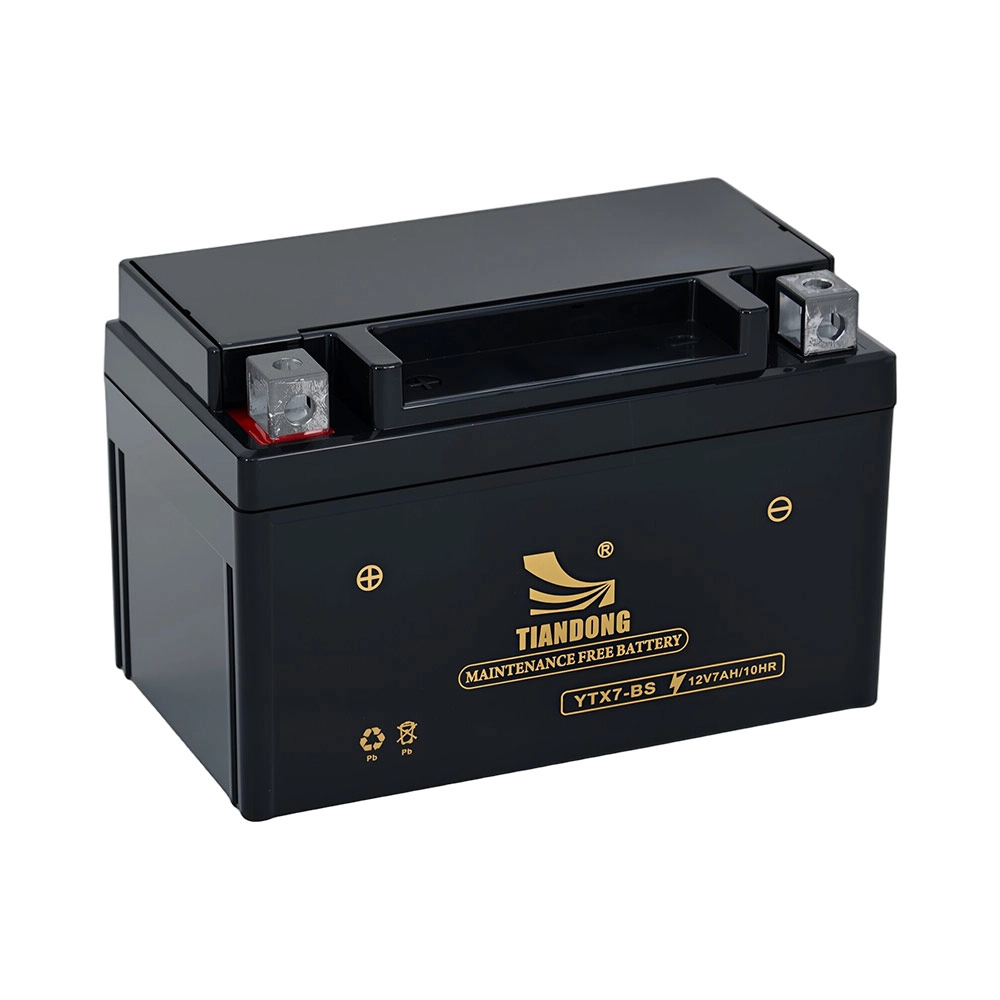
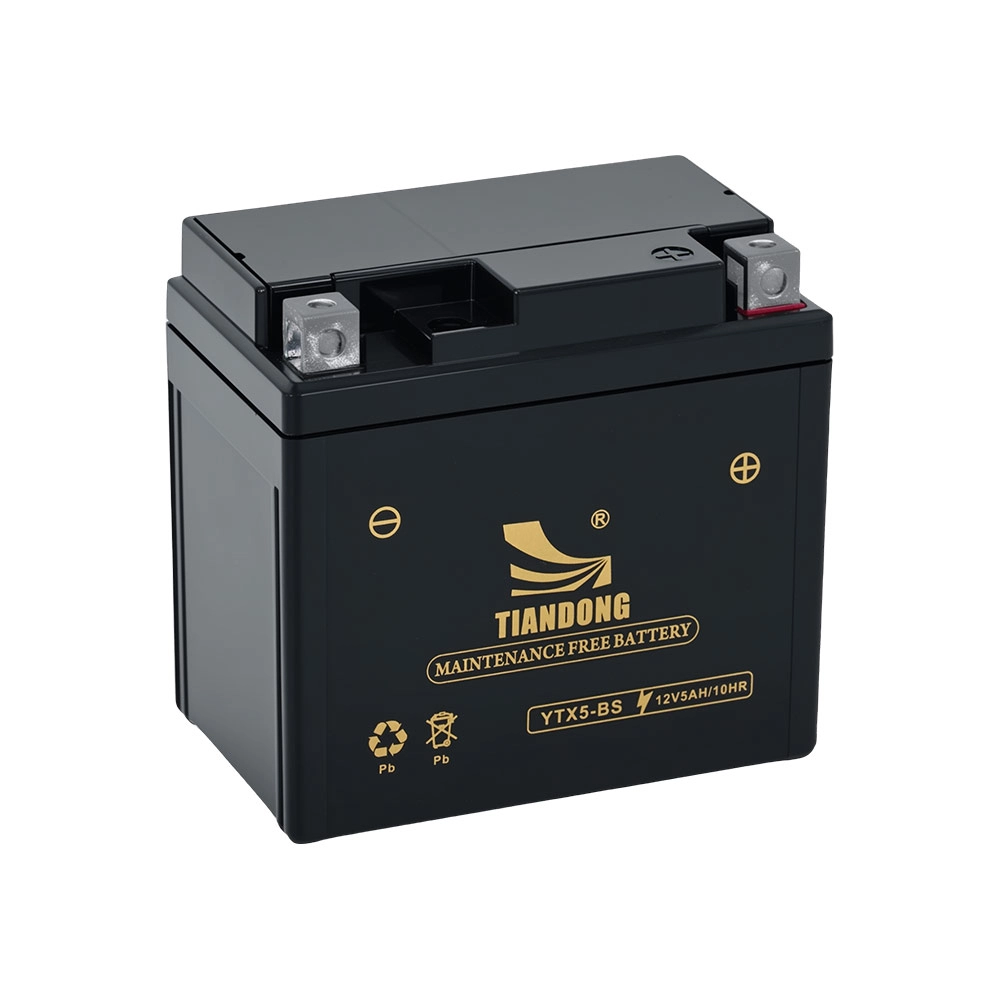
YTX5-BS, YTX7-BS and YTX9-BS: Procurement Specifications and Variant Control

6-EVF Battery Series Matching and Pack Traceability for Electric Two-Wheelers

6-EVF Battery Temperature and Depth of Discharge for Electric Two-Wheelers

6-EVF Battery Charging and Charger Matching for Electric Two-Wheelers

6-EVF Battery Cycle Life for Electric Two-Wheelers

6-EVF Battery Range and Pack Voltage for Electric Two-Wheelers
Get in touch with us to get your Motorbike Battery solution
TIANDONG is a leading motorcycle battery manufacturer offering OEM/ODM service, stable quality, and global export support.
Built for wholesalers. Trusted by global buyers. Delivered with confidence.
Say Hello
E-mail: daisybattery8@gmail.com
xianyingchen83@gmail. com
WhatsAPP: +86 134 283 86694
+86 134 348 86641
Our Location
Social Links
© 2025 TIANDONG. All Rights Reserved. Privacy Policy | Terms and Conditions | Sitemap
 Scan QR Code
Facebook
Instagram
Scan QR Code
Whatsapp: +8613434886641