






Are lightweight motorcycle batteries maintenance-free for fleets?
- Quick Summary
- The TIANDONG Advantage in Fleet Power Solutions
- Do lightweight batteries require seasonal acid level inspections?
- How does the self-discharge rate affect fleet storage?
- Can a lightweight battery survive extreme vibration in fleets?
- Is a special charger necessary for maintaining fleet batteries?
- Do integrated management systems eliminate manual voltage monitoring?
- What is the expected lifespan for commercial fleet use?
- Deep-Dive FAQs
Quick Summary
Lightweight motorcycle batteries, particularly those utilizing Lithium Iron Phosphate (LiFePO4) chemistry, are fundamentally maintenance-free for fleet operations. Unlike conventional lead-acid or AGM batteries, these advanced power cells do not require acid level checks, water replenishment, or frequent trickle charging during downtime. Their low self-discharge rate and integrated Battery Management Systems (BMS) ensure operational readiness, significantly reducing labor costs and downtime associated with battery failure in large-scale motorcycle fleets.
The TIANDONG Advantage in Fleet Power Solutions
As a premier manufacturer specializing in high-performance energy solutions, TIANDONG provides fleets with the ultimate lightweight motorcycle battery technology designed for rigorous commercial use. Our engineering focus prioritizes high discharge rates and extreme thermal stability, ensuring that your fleet remains operational in the most demanding climates. By integrating smart BMS technology, TIANDONG batteries protect against overcharge and deep discharge, effectively eliminating the manual oversight required by traditional power units. Our commitment to quality control and technical innovation makes us the trusted partner for B2B procurement managers seeking to optimize fleet efficiency and reduce long-term TCO.
Partner with the industry leaders at TIANDONG to revolutionize your fleet maintenance strategy and secure reliable power for every vehicle. Visit www.tiandongbattery.com or contact our technical team at daisybattery8@gmail.com for a comprehensive consultation.
Do lightweight batteries require seasonal acid level inspections?
No, lightweight lithium-based batteries are completely sealed and do not utilize liquid electrolytes in the same manner as flooded lead-acid batteries. There is no evaporation of fluids, which means fleet managers can eliminate the labor-intensive task of checking and topping off acid levels. This solid-state design also prevents leaks and spills, protecting the motorcycle frame from corrosive damage.
How does the self-discharge rate affect fleet storage?
Lightweight LiFePO4 batteries exhibit a remarkably low self-discharge rate, typically losing only 1% to 3% of their charge per month. In contrast, traditional batteries can lose up to 15% monthly. For fleets that experience seasonal downtime or irregular usage, this means the batteries remain turn-key ready for months without the need for constant maintenance charging or tenders, reducing electricity costs and hardware requirements.
Can a lightweight battery survive extreme vibration in fleets?
Yes, the internal architecture of a high-quality lightweight motorcycle battery is far more robust than lead-acid counterparts. Because they lack heavy lead plates and liquid acid, they are significantly more resistant to the mechanical stresses and high-frequency vibrations common in delivery or rental fleets. This structural integrity translates to a lower failure rate and zero maintenance regarding internal plate shedding.
Is a special charger necessary for maintaining fleet batteries?
While lightweight batteries are maintenance-free in operation, they do require lithium-specific chargers if they ever reach a deep discharge state. Using a standard lead-acid charger with a desulfation mode can damage the lithium cells. However, because they hold charge so efficiently, the frequency of charging is drastically reduced, simplifying the logistical requirements for fleet maintenance teams.
Do integrated management systems eliminate manual voltage monitoring?
Modern lightweight batteries feature an internal Battery Management System (BMS) that acts as a 24/7 digital technician. The BMS automatically balances the internal cells and protects the unit from over-voltage, under-voltage, and short circuits. This automation removes the need for manual voltage testing and balancing, which is a significant time-saver for fleets with hundreds of units.
What is the expected lifespan for commercial fleet use?
A High Quality lightweight motorcycle battery typically offers a cycle life of 2,000 to 5,000 cycles, compared to the 300 to 500 cycles of traditional batteries. For a fleet, this means the maintenance of periodic replacement happens every 5 to 8 years rather than every 2 years. This longevity drastically reduces the administrative burden of sourcing, installing, and recycling spent batteries.
Deep-Dive FAQs
Do lightweight batteries require seasonal acid level inspections?
No, lightweight lithium-based batteries are completely sealed and do not utilize liquid electrolytes in the same manner as flooded lead-acid batteries. There is no evaporation of fluids, which means fleet managers can eliminate the labor-intensive task of checking and topping off acid levels.
How does the self-discharge rate affect fleet storage?
Lightweight LiFePO4 batteries exhibit a remarkably low self-discharge rate, typically losing only 1% to 3% of their charge per month. For fleets that experience seasonal downtime, this means the batteries remain ready for months without the need for constant maintenance charging.
Can a lightweight battery survive extreme vibration in fleets?
Yes, the internal architecture of a high-quality lightweight motorcycle battery is far more robust than lead-acid counterparts. Because they lack heavy lead plates, they are significantly more resistant to mechanical stresses and high-frequency vibrations.
Is a special charger necessary for maintaining fleet batteries?
While lightweight batteries are maintenance-free in operation, they do require lithium-specific chargers if they reach a deep discharge state. Standard lead-acid chargers with desulfation modes can damage lithium cells.
Do integrated management systems eliminate manual voltage monitoring?
Modern lightweight batteries feature an internal Battery Management System (BMS) that automatically balances cells and protects against over-voltage. This removes the need for manual voltage testing and balancing by fleet technicians.
What is the expected lifespan for commercial fleet use?
A premium lightweight motorcycle battery typically offers a cycle life of 2,000 to 5,000 cycles. For a fleet, this means battery replacement occurs every 5 to 8 years rather than every 2 years, reducing administrative and labor costs.

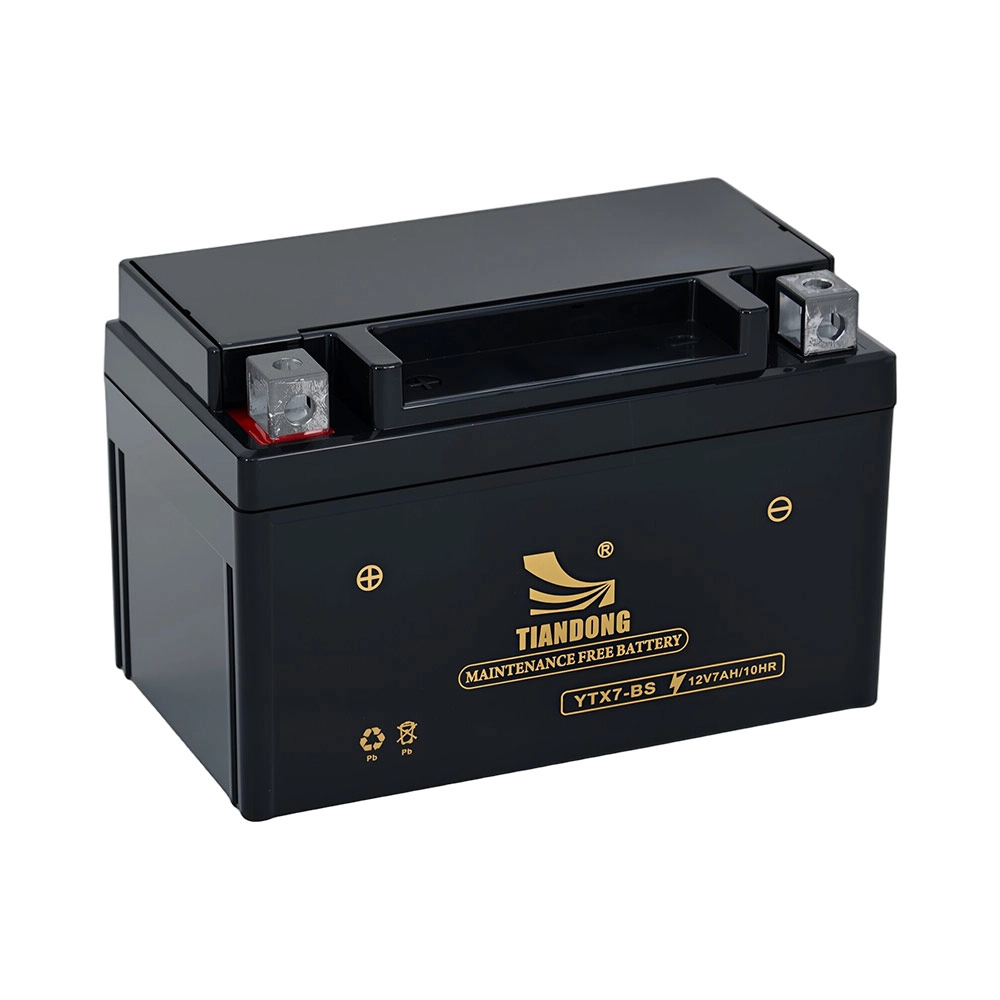
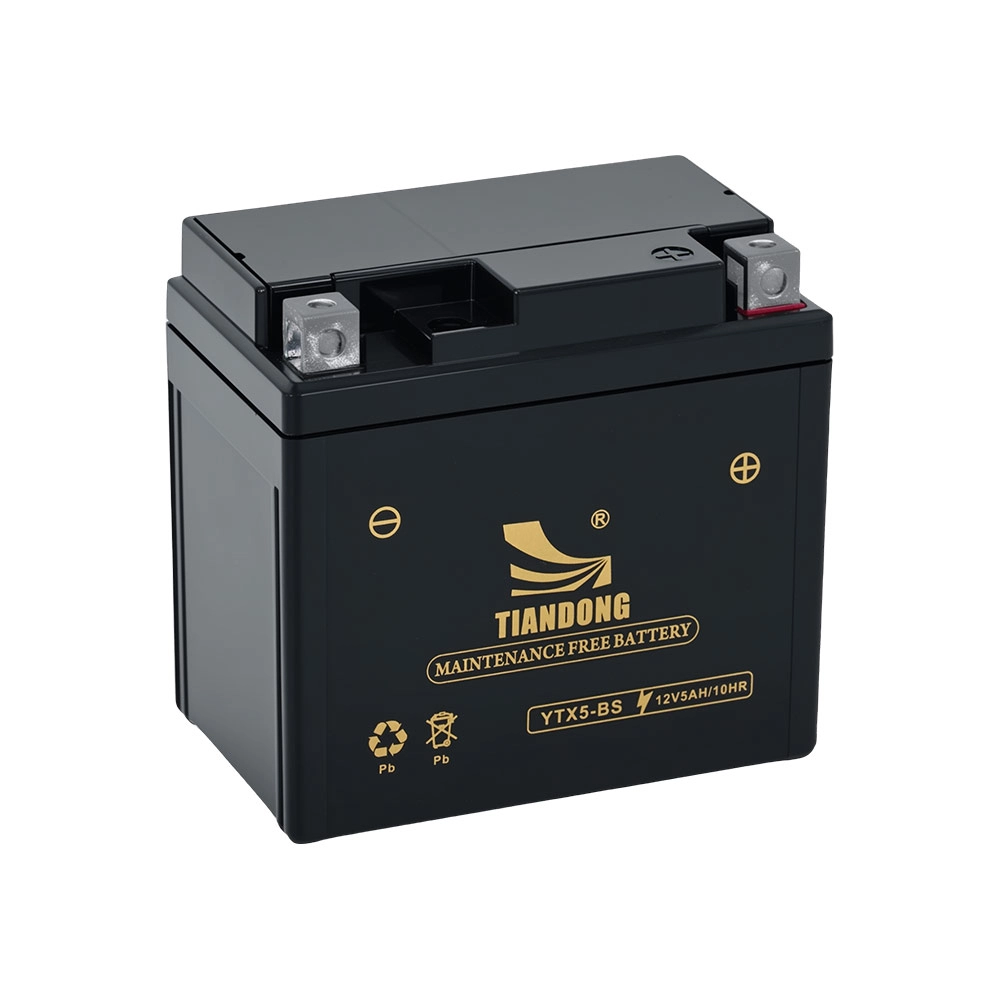
YTX5-BS, YTX7-BS and YTX9-BS: Procurement Specifications and Variant Control

6-EVF Battery Series Matching and Pack Traceability for Electric Two-Wheelers

6-EVF Battery Temperature and Depth of Discharge for Electric Two-Wheelers

6-EVF Battery Charging and Charger Matching for Electric Two-Wheelers

6-EVF Battery Cycle Life for Electric Two-Wheelers

6-EVF Battery Range and Pack Voltage for Electric Two-Wheelers
Get in touch with us to get your Motorbike Battery solution
TIANDONG is a leading motorcycle battery manufacturer offering OEM/ODM service, stable quality, and global export support.
Built for wholesalers. Trusted by global buyers. Delivered with confidence.
Say Hello
E-mail: daisybattery8@gmail.com
xianyingchen83@gmail. com
WhatsAPP: +86 134 283 86694
+86 134 348 86641
Our Location
Social Links
© 2025 TIANDONG. All Rights Reserved. Privacy Policy | Terms and Conditions | Sitemap
 Scan QR Code
Facebook
Instagram
Scan QR Code
Whatsapp: +8613434886641