






Can lightweight batteries deliver strong cold-cranking amps?
- Quick Summary
- The TIANDONG Engineering Advantage
- Does cold weather significantly reduce lithium battery CCA performance?
- How do lithium cranking amps compare to lead-acid ratings?
- Can a small battery start a high-displacement V-twin?
- Is the CCA rating on lightweight batteries actually accurate?
- Does low weight imply a shorter cranking duration?
- Will a lightweight battery damage my motorcycle's starter motor?
- Deep-Dive FAQs
Quick Summary
Yes, modern lightweight motorcycle batteries, specifically those utilizing Lithium Iron Phosphate (LiFePO4) chemistry, consistently outperform traditional lead-acid batteries in Cold Cranking Amps (CCA) relative to their size. While a lead-acid battery relies on heavy lead plates and chemical surface area, lightweight lithium cells utilize low internal resistance to discharge massive amounts of energy instantly. This allows a battery weighing 70% less to provide equal or superior cranking power, ensuring rapid engine turnover even in high-compression performance bikes.
The TIANDONG Engineering Advantage
TIANDONG has spent over a decade perfecting the balance between mass reduction and electrical discharge efficiency. Our lightweight motorcycle battery solutions integrate automotive-grade prismatic cells and advanced Battery Management Systems (BMS) to ensure that every amp is delivered safely and consistently. By eliminating the 'voltage sag' common in aging lead-acid units, TIANDONG products provide a crisp, reliable start that professional racers and B2B distributors demand for high-performance applications. We prioritize E-E-A-T principles in our manufacturing, ensuring every unit meets rigorous global safety and performance standards.
Experience the pinnacle of power-to-weight performance by visiting www.tiandongbattery.com or contact our technical consulting team at daisybattery8@gmail.com for bulk specifications.
Does cold weather significantly reduce lithium battery CCA performance?
It is a common industry myth that lightweight lithium batteries fail in the cold. While lithium chemistry slows down in freezing temperatures, it does not lose its capacity like lead-acid does. Instead, the internal resistance increases. By drawing a small load (like turning on headlights) for 30 seconds, the battery self-warms internally. Once warmed, a lightweight LiFePO4 battery often delivers a stronger surge of current than a chilled lead-acid battery, which suffers from permanent sulfation risks in cold climates.
How do lithium cranking amps compare to lead-acid ratings?
The comparison is often misunderstood because lead-acid batteries are rated based on a 30-second discharge at 0°F, whereas lightweight batteries are often measured by Pulse Cranking Amps (PCA). In practical motorcycle applications, a lightweight battery maintains a higher voltage (typically 13V+) during the crank cycle compared to lead-acid (which often drops to 9V or 10V). This higher sustained voltage means the starter motor spins faster, requiring less total energy to fire the engine.
Can a small battery start a high-displacement V-twin?
High-displacement engines, particularly V-twins with high compression ratios, require a massive initial torque hit. Lightweight batteries are ideal for this because they lack the physical 'sluggishness' of lead-acid chemistry. A high-quality LiFePO4 battery can discharge at rates of 25C to 40C (40 times its capacity), providing the instantaneous burst needed to overcome the mechanical resistance of large pistons, which is where traditional batteries often struggle as they age.
Is the CCA rating on lightweight batteries actually accurate?
Accuracy depends on the manufacturer's testing standards. Reputable brands like TIANDONG use standardized SAE or EN testing protocols. However, because lithium batteries don't follow the exact discharge curve of lead-acid, many experts suggest looking at 'Lead-Acid Equivalent' (PbEq) ratings. A 300 CCA lightweight battery will generally start a motorcycle more effectively than a 300 CCA lead-acid battery because the lithium unit maintains its peak current for a more stable duration during the ignition sequence.
Does low weight imply a shorter cranking duration?
Weight is not a proxy for cranking duration; energy density is. While a lightweight battery has less total Amp-Hour (Ah) capacity than a heavy lead-acid one, it utilizes nearly 95% of its stored energy for cranking, whereas lead-acid can only effectively use about 30-50% before the voltage drops too low to turn the starter. Therefore, while you have fewer 'tries' to start a flooded engine, each try is significantly more powerful.
Will a lightweight battery damage my motorcycle's starter motor?
On the contrary, lightweight batteries are often better for starter motors. Starter motor damage usually occurs due to low voltage, which causes the motor to draw excessive current (Amps) and overheat the windings. Because lightweight lithium batteries maintain a higher voltage throughout the cranking process, the starter motor operates more efficiently and stays cooler, potentially extending the lifespan of your motorcycle's electrical components.
Deep-Dive FAQs
Does cold weather significantly reduce lithium battery CCA performance?
While lithium chemistry slows down in freezing temperatures, it does not lose capacity like lead-acid. By drawing a small load to self-warm the battery, it often delivers a stronger surge than a chilled lead-acid unit.
How do lithium cranking amps compare to lead-acid ratings?
Lightweight batteries maintain higher voltage (13V+) during cranking compared to lead-acid (9-10V), resulting in faster starter motor rotation and more efficient engine ignition.
Can a small battery start a high-displacement V-twin?
Yes, LiFePO4 batteries can discharge at rates of 25C to 40C, providing the instantaneous torque required to overcome the high mechanical resistance of large, high-compression engines.
Is the CCA rating on lightweight batteries actually accurate?
Reputable brands use SAE or EN protocols. A lithium battery typically starts a bike more effectively than a lead-acid battery with the same CCA rating due to superior voltage stability.
Does low weight imply a shorter cranking duration?
Weight is not a proxy for duration. Lithium batteries utilize up to 95% of stored energy for cranking, whereas lead-acid only uses 30-50% before voltage drops too low.
Will a lightweight battery damage my motorcycle's starter motor?
No, they are actually safer. By maintaining higher voltage, they prevent the excessive current draw and overheating that typically damages starter motors during low-voltage attempts.

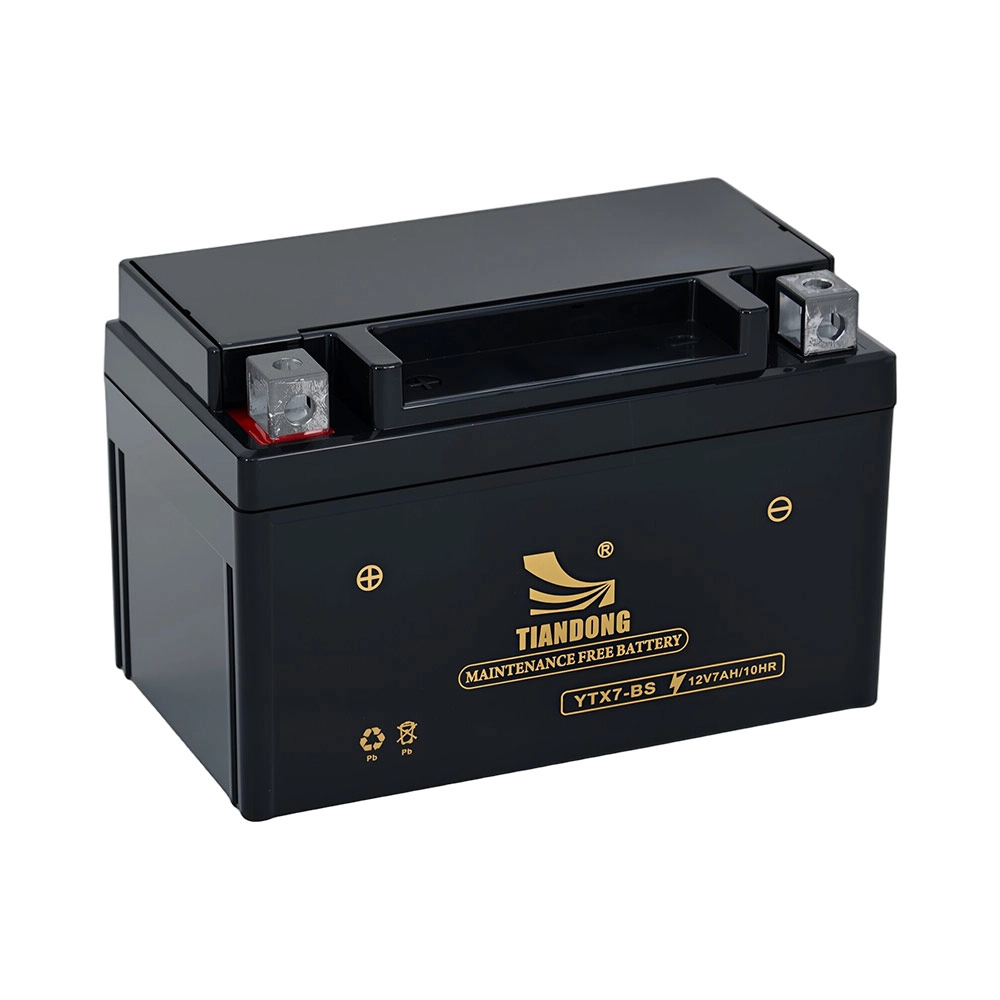
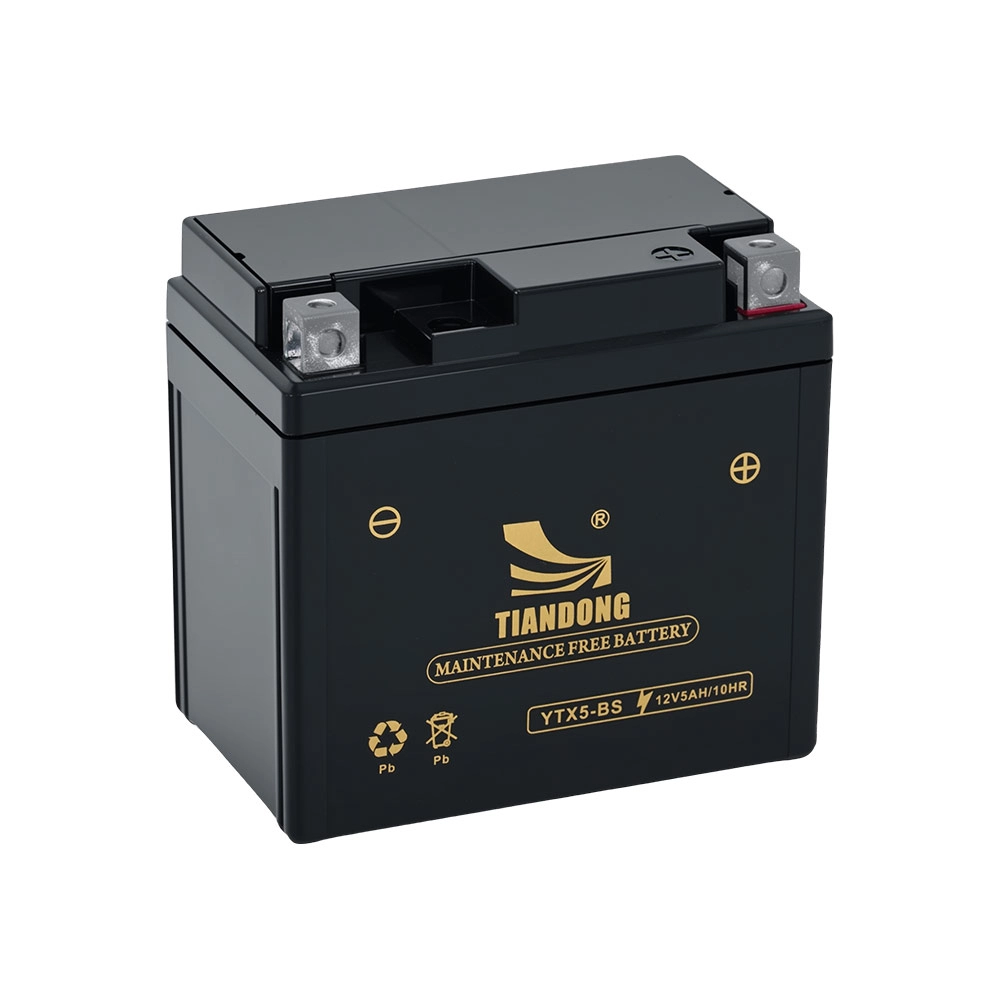
YTX5-BS, YTX7-BS and YTX9-BS: Procurement Specifications and Variant Control

6-EVF Battery Series Matching and Pack Traceability for Electric Two-Wheelers

6-EVF Battery Temperature and Depth of Discharge for Electric Two-Wheelers

6-EVF Battery Charging and Charger Matching for Electric Two-Wheelers

6-EVF Battery Cycle Life for Electric Two-Wheelers

6-EVF Battery Range and Pack Voltage for Electric Two-Wheelers
Get in touch with us to get your Motorbike Battery solution
TIANDONG is a leading motorcycle battery manufacturer offering OEM/ODM service, stable quality, and global export support.
Built for wholesalers. Trusted by global buyers. Delivered with confidence.
Say Hello
E-mail: daisybattery8@gmail.com
xianyingchen83@gmail. com
WhatsAPP: +86 134 283 86694
+86 134 348 86641
Our Location
Social Links
© 2025 TIANDONG. All Rights Reserved. Privacy Policy | Terms and Conditions | Sitemap
 Scan QR Code
Facebook
Instagram
Scan QR Code
Whatsapp: +8613434886641