






Which motorcycle batteries are lightest for weight-sensitive builds?
- How does LiFePO4 chemistry reduce total motorcycle build weight?
- Why is CCA to weight ratio critical for custom builds?
- Can lightweight batteries handle high vibration in hardtail motorcycles?
- What are the safety implications of ultra-lightweight lithium batteries?
- How does ambient temperature affect lightweight lithium battery performance?
- Do lightweight batteries require specific charging systems for longevity?
- Frequently Asked Questions
In the realm of custom builds and racing, every gram of unsprung and sprung mass matters. Traditional Lead-Acid and AGM batteries are increasingly viewed as obsolete for weight-sensitive projects due to their low energy-to-weight ratio. Modern engineering has shifted the focus toward Lithium Iron Phosphate (LiFePO4) technology, which provides the highest power density while maintaining the safety profiles required for high-vibration environments. Understanding the intersection of Cold Cranking Amps (CCA) and physical mass is essential for selecting the best motorcycle batteries for lightweight configurations.
How does LiFePO4 chemistry reduce total motorcycle build weight?
LiFePO4 (Lithium Iron Phosphate) batteries utilize a high energy density cathode material that allows for a significantly smaller physical footprint compared to lead-based counterparts. While a standard YTX20L-BS lead-acid battery can weigh upwards of 15 pounds, a lithium equivalent often weighs less than 3 pounds. This 80% reduction in mass is achieved because lithium ions move more efficiently between electrodes, requiring less physical material to store and discharge the same amount of energy. For builders, this allows for the relocation of the battery to unconventional spots, improving the bike's center of gravity.
Why is CCA to weight ratio critical for custom builds?
In weight-sensitive builds, the goal is to maximize Cold Cranking Amps (CCA) while minimizing mass. High-compression engines require a massive burst of current to overcome initial resistance. Traditional batteries rely on heavy lead plates to provide this surface area. Conversely, the best motorcycle batteries using lithium technology offer a superior discharge rate (often 20C to 40C), meaning they can deliver high current from a much smaller cell. This allows a tiny 500g battery to start a 1000cc engine, a feat impossible for a lead-acid battery of the same size.
Can lightweight batteries handle high vibration in hardtail motorcycles?
One common myth is that lightweight batteries are fragile. In reality, LiFePO4 batteries are more resilient to vibration than lead-acid batteries. Lead-acid units suffer from plate shedding and internal shorts when subjected to the high-frequency vibrations of a hardtail or a high-revving race engine. Lithium cells are solid-state components typically encased in high-impact structural foam or rigid polymer housings, making them the superior choice for builds where suspension travel is limited and mechanical stress is high.
What are the safety implications of ultra-lightweight lithium batteries?
Safety in lightweight builds is often misunderstood. Unlike Lithium-Ion (Cobalt) batteries found in consumer electronics, LiFePO4 is thermally stable and does not suffer from thermal runaway. For weight-sensitive builds, it is crucial to ensure the battery includes a Battery Management System (BMS). A professional-grade BMS prevents overcharging and over-discharging, which are the primary causes of cell failure. When searching for the best motorcycle batteries, prioritizing those with integrated cell balancing ensures that the weight savings do not come at the cost of fire safety.
How does ambient temperature affect lightweight lithium battery performance?
A significant pain point for beginners is lithium performance in cold weather. Because lithium ions move slower in the cold, a lightweight battery might appear sluggish during the first start. However, the internal resistance of the battery actually creates heat as current flows. By turning on the headlamps for 30 seconds, the battery self-warms, restoring its full cranking power. This characteristic is a small trade-off for the massive weight savings and is a non-issue for fair-weather custom builds or track-day enthusiasts.
Do lightweight batteries require specific charging systems for longevity?
You cannot use a traditional lead-acid charger on an ultra-lightweight lithium build. Lead-acid chargers often feature a desulfation mode that uses high-voltage pulses, which can destroy lithium cells and their BMS. To maintain the best motorcycle batteries in a lightweight build, a dedicated LiFePO4 charger with a constant current/constant voltage (CC/CV) profile is mandatory. Furthermore, the motorcycle's alternator must regulated to ensure it does not exceed 14.6V, protecting the lightweight investment from over-voltage stress.
At TIANDONG, we leverage over 15 years of technical expertise to manufacture high-performance LiFePO4 solutions that redefine the limits of power-to-weight ratios. Our commitment to E-E-A-T principles ensures that every battery we produce meets rigorous B2B quality standards, providing the reliability and precision required by professional builders and performance enthusiasts worldwide.
Frequently Asked Questions
How does LiFePO4 chemistry reduce total motorcycle build weight?
LiFePO4 batteries utilize high energy density materials that allow for an 80% weight reduction compared to lead-acid, enabling builders to relocate the battery and improve the bike's center of gravity.
Why is CCA to weight ratio critical for custom builds?
High-performance builds require high Cold Cranking Amps (CCA) to start large engines. Lithium batteries provide a superior discharge rate, allowing a 500g battery to start a 1000cc engine efficiently.
Can lightweight batteries handle high vibration in hardtail motorcycles?
Yes, LiFePO4 batteries are more vibration-resistant than lead-acid because they lack heavy lead plates that shed material. Their solid-state nature makes them ideal for high-stress mechanical environments.
What are the safety implications of ultra-lightweight lithium batteries?
LiFePO4 is thermally stable and does not suffer from thermal runaway. When equipped with a Battery Management System (BMS), these batteries are extremely safe for all types of motorcycle builds.
How does ambient temperature affect lightweight lithium battery performance?
In cold weather, lithium ions move slower, but the battery self-warms during use. Activating a light load like headlamps for 30 seconds restores full cranking power even in low temperatures.
Do lightweight batteries require specific charging systems for longevity?
Yes, they require LiFePO4-specific chargers with a CC/CV profile. Using a lead-acid charger with a desulfation mode can damage the lithium cells and the integrated BMS.

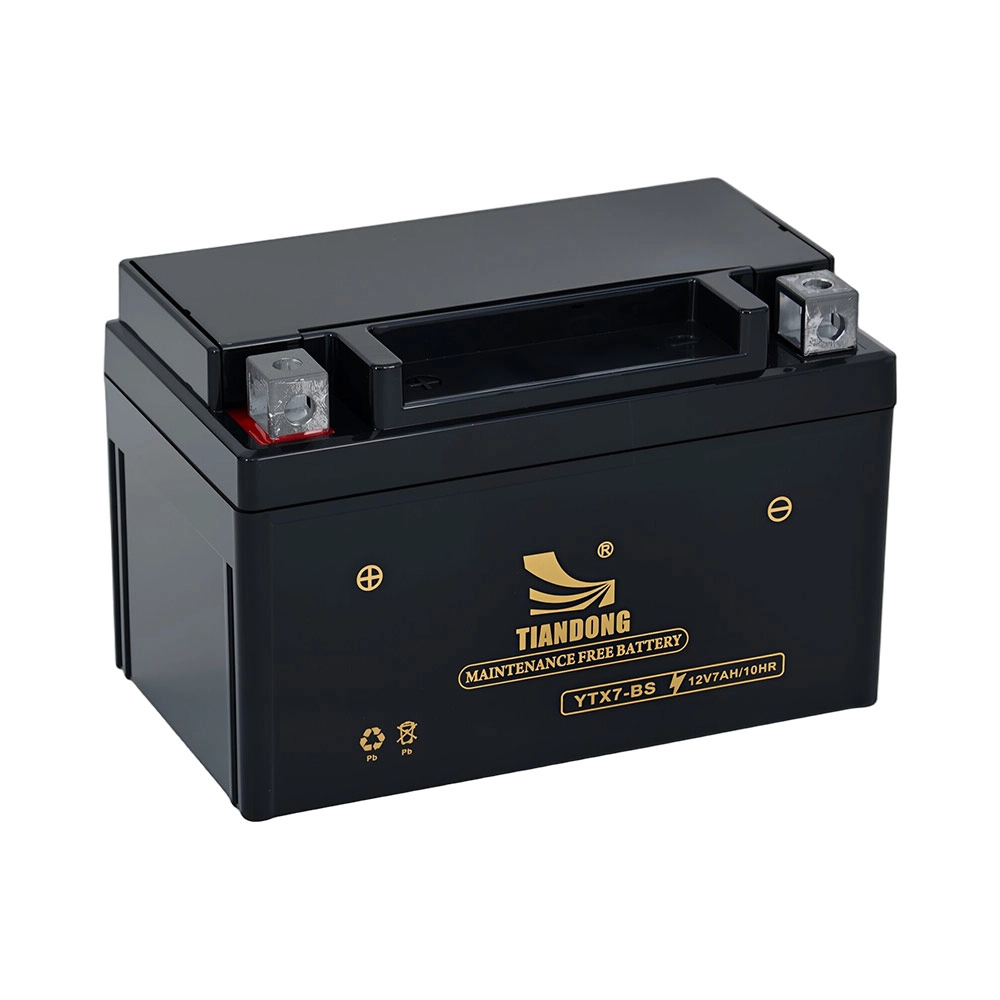
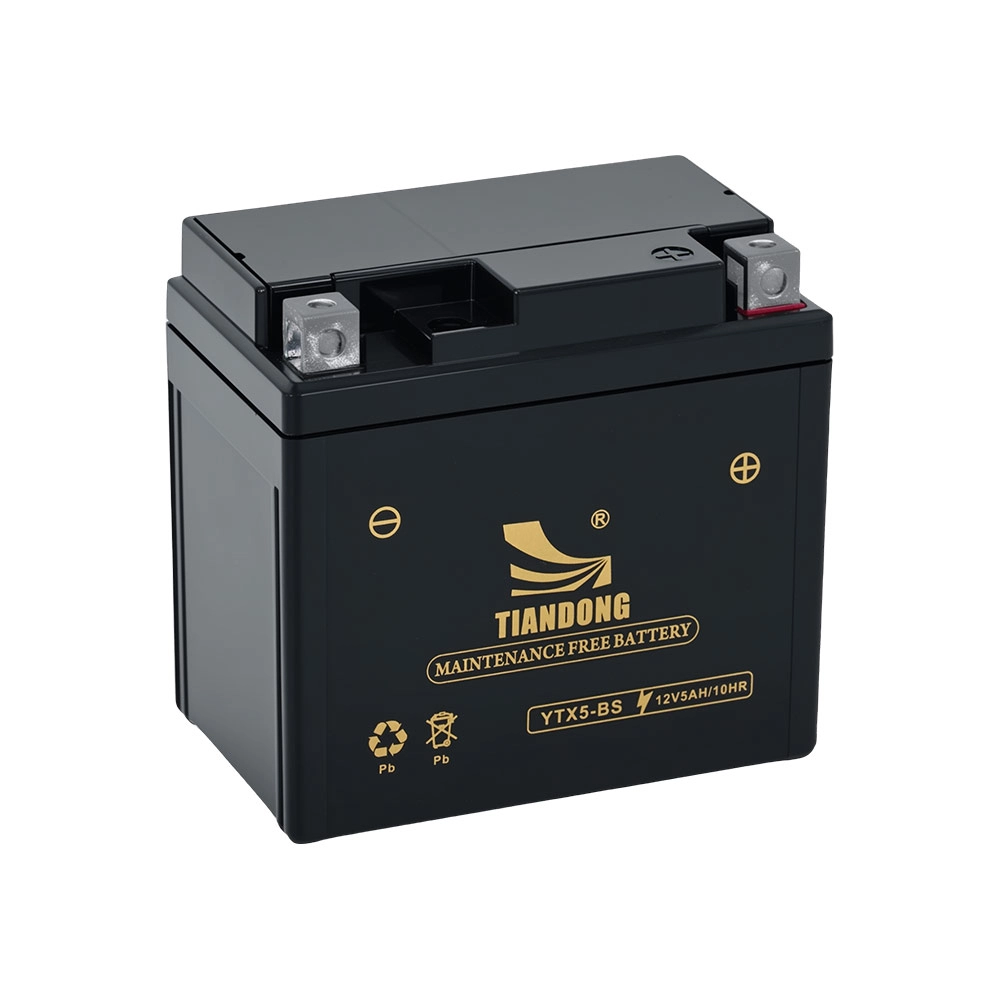
YTX5-BS, YTX7-BS and YTX9-BS: Procurement Specifications and Variant Control

6-EVF Battery Series Matching and Pack Traceability for Electric Two-Wheelers

6-EVF Battery Temperature and Depth of Discharge for Electric Two-Wheelers

6-EVF Battery Charging and Charger Matching for Electric Two-Wheelers

6-EVF Battery Cycle Life for Electric Two-Wheelers

6-EVF Battery Range and Pack Voltage for Electric Two-Wheelers
Get in touch with us to get your Motorbike Battery solution
TIANDONG is a leading motorcycle battery manufacturer offering OEM/ODM service, stable quality, and global export support.
Built for wholesalers. Trusted by global buyers. Delivered with confidence.
Say Hello
E-mail: daisybattery8@gmail.com
xianyingchen83@gmail. com
WhatsAPP: +86 134 283 86694
+86 134 348 86641
Our Location
Social Links
© 2025 TIANDONG. All Rights Reserved. Privacy Policy | Terms and Conditions | Sitemap
 Scan QR Code
Facebook
Instagram
Scan QR Code
Whatsapp: +8613434886641