






How to verify lightweight battery compatibility with my bike?
Quick Summary
To verify if a lightweight motorcycle battery is compatible with your bike, you must look beyond physical dimensions. Compatibility is determined by the chemistry (LiFePO4), the Battery Management System (BMS) threshold, and the motorcycle's charging system output. A successful swap requires a charging voltage between 14.0V and 14.6V and a CCA rating that meets or exceeds the original lead-acid specifications to ensure reliable ignition in varied climates.
The TIANDONG Advantage for High-Performance Power
At TIANDONG, we specialize in engineering advanced lithium-ion solutions that bridge the gap between racing-grade performance and daily reliability. Our lightweight motorcycle battery range features proprietary BMS technology designed to handle the rigorous electrical demands of modern fuel-injected engines. By choosing TIANDONG, you are investing in a power source that offers up to 70% weight reduction and a significantly lower self-discharge rate compared to traditional AGM alternatives. Our technical team provides rigorous validation for B2B partners, ensuring every unit meets strict E-E-A-T standards for safety and longevity.
For expert consultation on bulk orders or technical specifications, visit www.tiandongbattery.com or contact our senior engineering team at daisybattery8@gmail.com.
Deep-Dive Compatibility FAQs
Does my bike charging system support lithium battery technology?
Most modern motorcycles produced after 2000 utilize a permanent magnet alternator and a regulator-rectifier that outputs between 14.0V and 14.6V, which is ideal for LiFePO4 chemistry. However, vintage bikes with mechanical regulators or over-voltage issues (exceeding 15V) will destroy a lightweight motorcycle battery. You must verify your resting and charging voltage with a multimeter before installation to ensure the BMS can safely manage the input without triggering a high-voltage disconnect.
How do I calculate equivalent CCA for lithium batteries?
Industry standards for a lightweight motorcycle battery often use 'Lead-Acid Equivalent' (PbEq) ratings. Because lithium has much lower internal resistance, it can deliver high current bursts more efficiently than lead-acid. To verify compatibility, ensure the lithium battery's rated CCA is equal to or higher than the OEM lead-acid battery. Using a battery with insufficient CCA will lead to voltage sag during the start cycle, potentially damaging the starter solenoid or the battery's internal cells.
Will the smaller physical size affect battery terminal security?
Lightweight batteries are significantly smaller than their lead-acid counterparts. Compatibility is maintained through the use of high-density foam spacers included with the battery. It is critical to ensure the battery is immobilized within the tray to prevent vibration-induced terminal fatigue. Furthermore, verify the terminal polarity (Positive/Negative orientation); while many lithium batteries offer quad-terminal designs for universal fitment, crossing polarities can cause catastrophic electrical failure.
Is a specialized charger required for lightweight motorcycle batteries?
Yes, verifying compatibility includes your maintenance hardware. You cannot use a lead-acid charger that features a 'desulfation mode' or 'pulse charging,' as high-voltage pulses will damage the lithium cells and the BMS. A compatible charger must use a Constant Current/Constant Voltage (CC/CV) profile with a termination point at 14.4V-14.6V. Using the wrong charger voids warranties and poses a thermal risk, making it a vital part of the compatibility checklist.
How does parasitic drain impact lightweight battery health?
Modern bikes with alarms, GPS, or ECU memory have a constant parasitic draw. While a lightweight motorcycle battery has a lower self-discharge rate, its total Amp-Hour (Ah) capacity is often lower than lead-acid. If your bike has a high parasitic draw (above 5mA), the battery may drain faster during storage. Verify compatibility by checking your bike's 'dark current' draw; if it is high, you must use a lithium-specific tender or a physical disconnect switch.
Can lithium batteries function in extreme cold weather conditions?
LiFePO4 chemistry experiences temporary resistance increase in temperatures below freezing. To verify compatibility for cold-weather riding, understand the 'self-warming' process: turning on the headlamps for 1-2 minutes creates a small internal draw that warms the cells, restoring cranking power. If you frequently start your bike in sub-zero temperatures, ensure your chosen lightweight battery has a high enough capacity to handle this initial resistance without dropping below the 10V cutoff threshold.

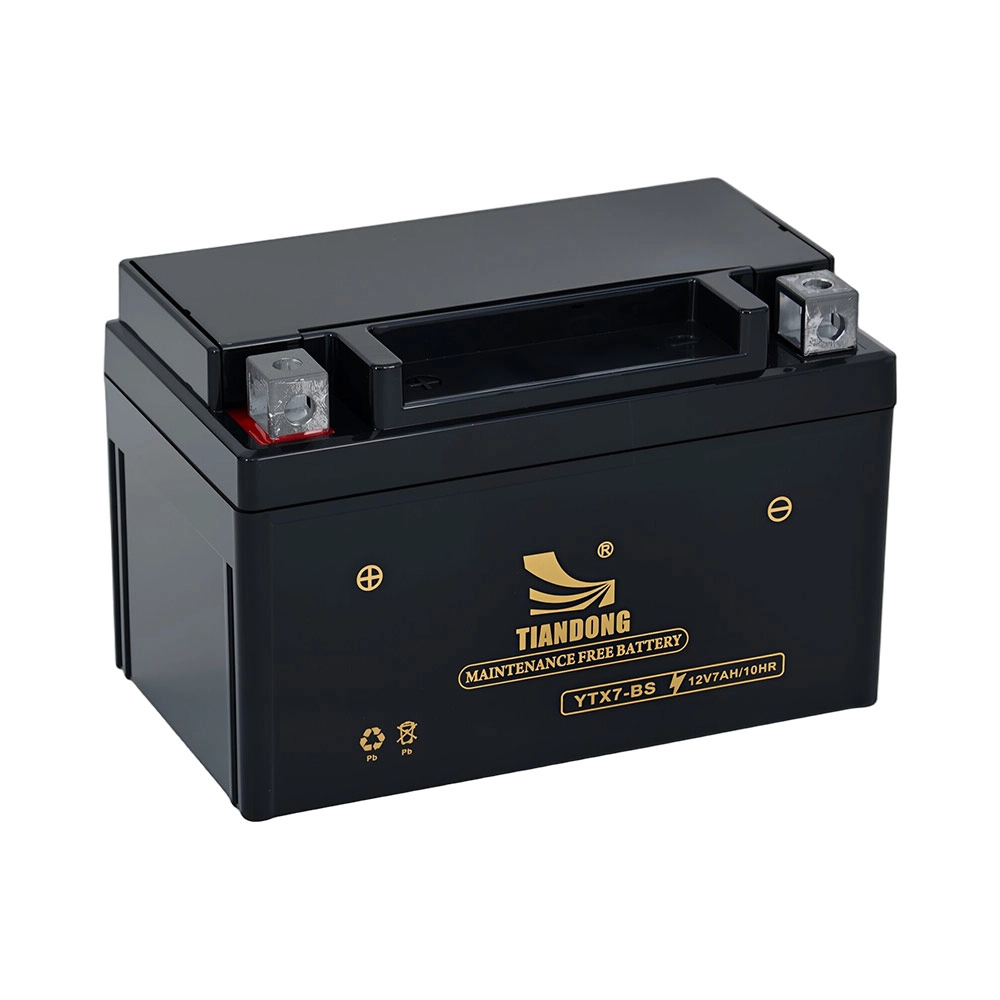
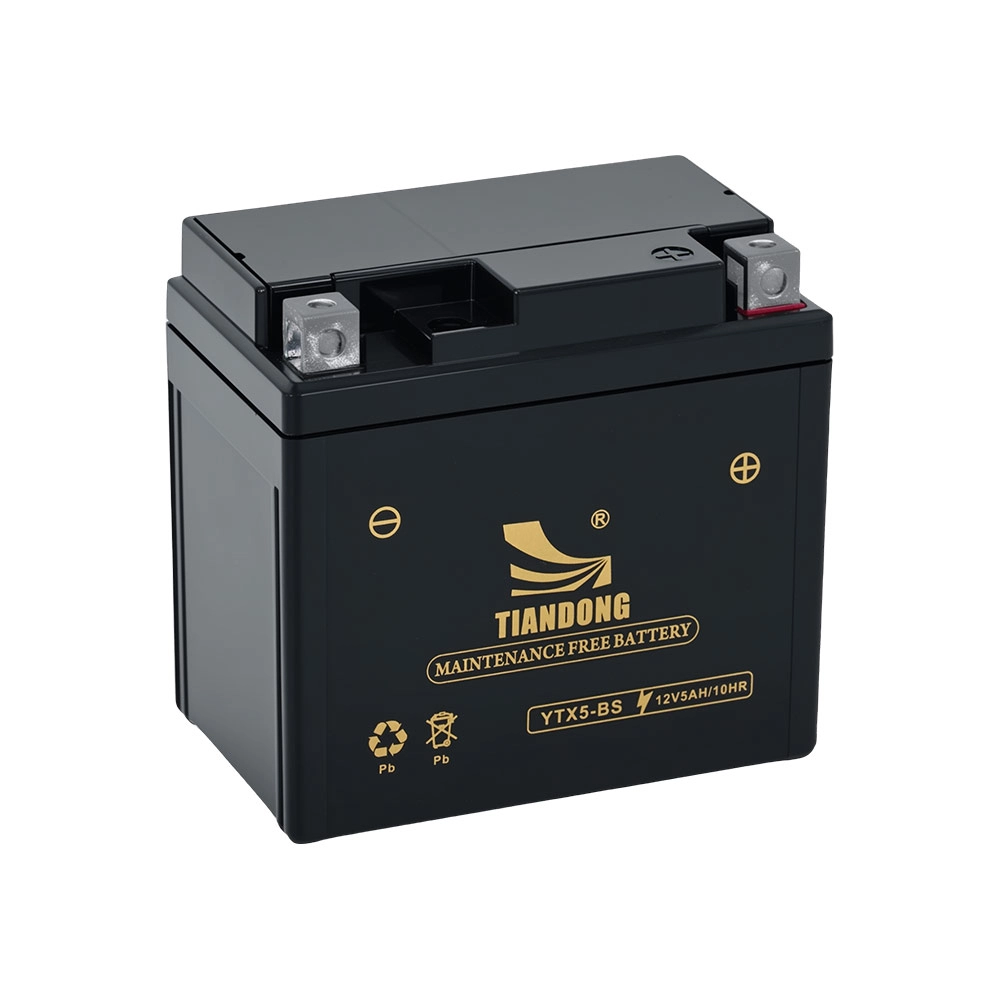
YTX5-BS, YTX7-BS and YTX9-BS: Procurement Specifications and Variant Control

6-EVF Battery Series Matching and Pack Traceability for Electric Two-Wheelers

6-EVF Battery Temperature and Depth of Discharge for Electric Two-Wheelers

6-EVF Battery Charging and Charger Matching for Electric Two-Wheelers

6-EVF Battery Cycle Life for Electric Two-Wheelers

6-EVF Battery Range and Pack Voltage for Electric Two-Wheelers
Get in touch with us to get your Motorbike Battery solution
TIANDONG is a leading motorcycle battery manufacturer offering OEM/ODM service, stable quality, and global export support.
Built for wholesalers. Trusted by global buyers. Delivered with confidence.
Say Hello
E-mail: daisybattery8@gmail.com
xianyingchen83@gmail. com
WhatsAPP: +86 134 283 86694
+86 134 348 86641
Our Location
Social Links
© 2025 TIANDONG. All Rights Reserved. Privacy Policy | Terms and Conditions | Sitemap
 Scan QR Code
Facebook
Instagram
Scan QR Code
Whatsapp: +8613434886641