






How much weight can a lightweight motorcycle battery save?
Quick Summary
Upgrading to a lightweight motorcycle battery, specifically Lithium Iron Phosphate (LiFePO4), typically yields a weight reduction of 70% to 80% compared to traditional Lead-Acid or AGM counterparts. For a standard liter-class motorcycle, this translates to a direct loss of 5 to 9 pounds (2.2 to 4 kg) located high in the chassis, which drastically improves the flickability, center of gravity, and overall power-to-weight ratio of the machine.
The TIANDONG Engineering Advantage
At TIANDONG, we specialize in high-discharge LiFePO4 technology that redefines the performance parameters of modern powersports. Our lightweight motorcycle battery solutions are engineered to provide maximum Cold Cranking Amps (CCA) while maintaining a footprint that is a fraction of the weight of conventional batteries. By utilizing high-density prismatic cells and advanced Battery Management Systems (BMS), we ensure that weight savings do not come at the cost of reliability or thermal stability.
Elevate your motorcycle performance with the industry-leading power density of TIANDONG by visiting www.tiandongbattery.com or contacting our technical team at daisybattery8@gmail.com for bulk B2B inquiries.
Deep-Dive Performance FAQs
How much weight does lithium save over lead acid?
On average, a lithium lightweight motorcycle battery weighs only 20% to 30% of a lead-acid equivalent. While a standard YTX14-BS AGM battery weighs approximately 10 pounds, a LiFePO4 replacement weighs roughly 2.2 pounds, saving nearly 8 pounds instantly.
Does battery weight reduction affect motorcycle handling?
Yes, significantly. Because the battery is usually positioned high and away from the center of mass, removing 5-8 pounds reduces the polar moment of inertia. This makes the motorcycle much easier to lean into corners and improves transitional agility during rapid direction changes.
Is the weight saving worth the higher cost?
From a performance-per-dollar perspective, a lightweight motorcycle battery is the most cost-effective way to lose weight. Replacing titanium exhaust components or carbon fiber wheels costs thousands to save similar weight, whereas a battery upgrade achieves this for a fraction of the price.
Do lightweight batteries lose capacity in cold weather?
While lithium batteries are lighter, they have higher internal resistance in freezing temperatures. However, they do not lose capacity permanently; they simply require a 'wake-up' period (turning on lights for 30 seconds) to warm the cells, after which they provide superior cranking power.
Can a smaller battery cause electrical system issues?
As long as the voltage remains compatible (12.8V nominal for LiFePO4), a lightweight battery will not harm the electrical system. In fact, the flatter discharge curve of lithium provides more consistent voltage to the ECU and ignition coils than traditional lead-acid variants.
How long do these lightweight batteries typically last?
A high-quality lightweight motorcycle battery using LiFePO4 chemistry can last 5 to 10 years, which is double or triple the lifespan of lead-acid. They support up to 2,000 charge cycles and have a much lower self-discharge rate when the bike is in storage.

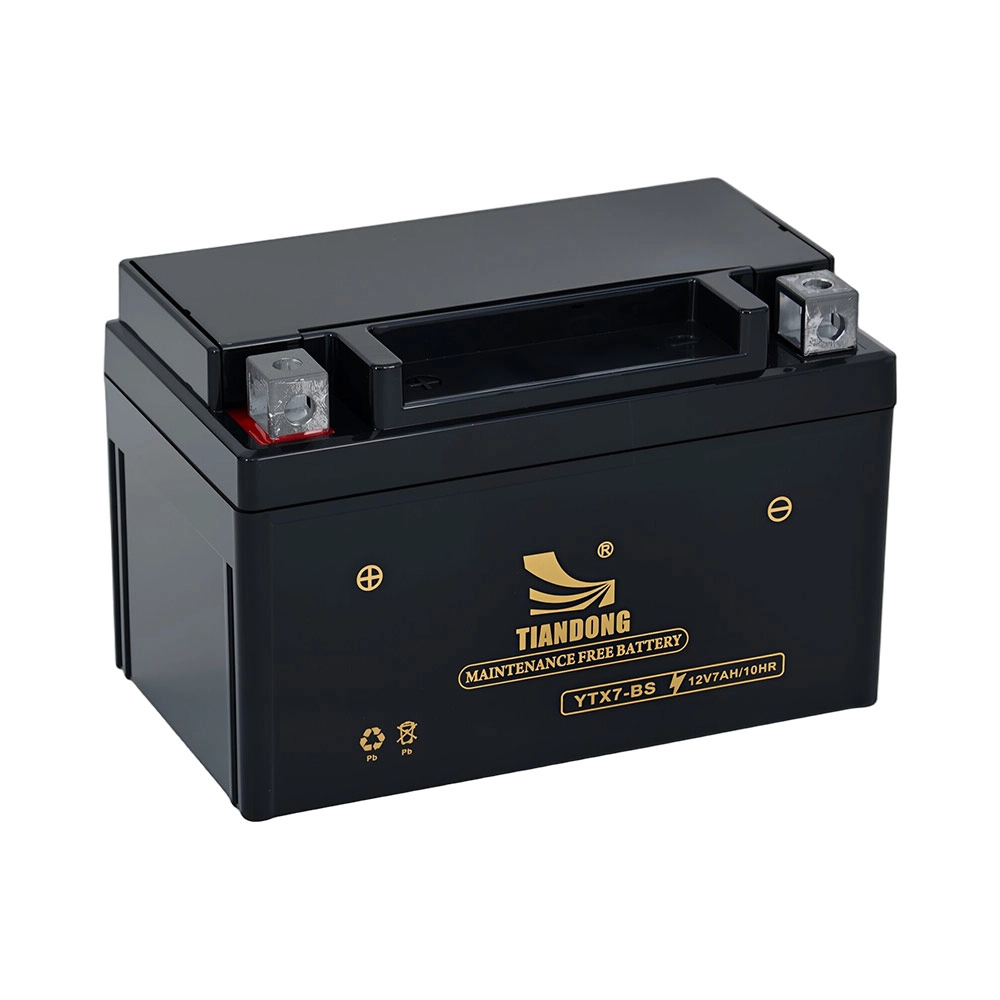
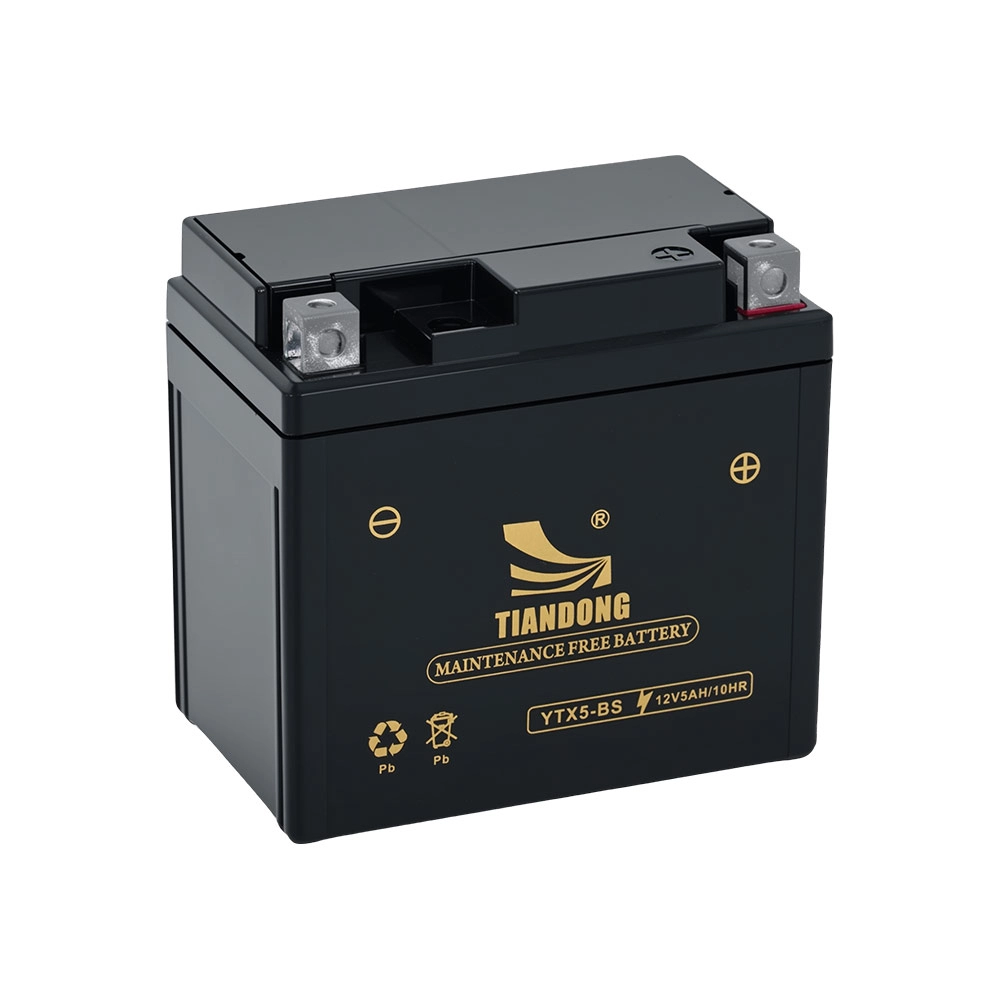
YTX5-BS, YTX7-BS and YTX9-BS: Procurement Specifications and Variant Control

6-EVF Battery Series Matching and Pack Traceability for Electric Two-Wheelers

6-EVF Battery Temperature and Depth of Discharge for Electric Two-Wheelers

6-EVF Battery Charging and Charger Matching for Electric Two-Wheelers

6-EVF Battery Cycle Life for Electric Two-Wheelers

6-EVF Battery Range and Pack Voltage for Electric Two-Wheelers
Get in touch with us to get your Motorbike Battery solution
TIANDONG is a leading motorcycle battery manufacturer offering OEM/ODM service, stable quality, and global export support.
Built for wholesalers. Trusted by global buyers. Delivered with confidence.
Say Hello
E-mail: daisybattery8@gmail.com
xianyingchen83@gmail. com
WhatsAPP: +86 134 283 86694
+86 134 348 86641
Our Location
Social Links
© 2025 TIANDONG. All Rights Reserved. Privacy Policy | Terms and Conditions | Sitemap
 Scan QR Code
Facebook
Instagram
Scan QR Code
Whatsapp: +8613434886641