






Which motorcycle batteries recharge fastest without damage?
- How does LiFePO4 chemistry enable ultra-fast charging speeds?
- Why do AGM batteries fail when charged too quickly?
- Can smart chargers prevent damage during rapid replenishment?
- What role does the alternator play in fast charging?
- Does fast charging significantly reduce total battery lifespan?
- How does ambient temperature affect rapid charging safety?
- Frequently Asked Questions About Rapid Battery Charging
In the high-stakes world of powersports, the ability to recover energy quickly is a critical performance metric. While traditional lead-acid units are limited by internal resistance and chemical lag, modern Lithium Iron Phosphate (LiFePO4) cells have revolutionized the industry. These advanced power sources can safely accept a charge current up to four times higher than their AGM counterparts, reaching 90% capacity in under an hour without the risk of thermal runaway or plate sulfation. Understanding the intersection of C-rates, internal impedance, and charging profiles is essential for riders seeking the best motorcycle batteries for rapid recovery.
How does LiFePO4 chemistry enable ultra-fast charging speeds?
The secret lies in the low internal resistance and the stability of the olivine crystal structure. Unlike lead-acid batteries, which suffer from high impedance as they reach full charge, LiFePO4 cells maintain a consistent charge acceptance rate. This allows the battery to handle high amperage from the alternator or a dedicated fast-charger without generating excessive heat. When evaluating the best motorcycle batteries, the ability to sustain a 1C or even 2C charge rate means a battery can be fully replenished in 30 to 60 minutes, whereas an AGM battery would require 6 to 10 hours to reach the same state of charge safely.
Why do AGM batteries fail when charged too quickly?
Absorbent Glass Mat (AGM) batteries are susceptible to a phenomenon known as thermal runaway. Because AGM is a sealed system, high-current charging generates oxygen gas at the positive plate faster than it can be recombined at the negative plate. This buildup of internal pressure and heat can lead to the casing bulging or the safety valves venting, which permanently reduces the electrolyte levels. For those searching for a reliable motorcycle battery, it is vital to recognize that lead-acid chemistry is fundamentally limited by the speed of the chemical conversion of lead sulfate back into lead and lead dioxide.
Can smart chargers prevent damage during rapid replenishment?
Yes, but the charger must have a specific profile for the battery chemistry. A high-quality Battery Management System (BMS) integrated into High Quality units acts as a gatekeeper, monitoring individual cell voltages and temperatures. If the charging current exceeds safe thresholds or if the temperature rises too rapidly, the BMS will throttle the input to prevent damage. This is a crucial distinction when selecting the best motorcycle batteries; a sophisticated BMS allows for the fastest possible charge by operating right at the edge of the safety envelope without ever crossing it.
What role does the alternator play in fast charging?
Most modern motorcycle charging systems are designed for lead-acid profiles, providing a constant voltage output. While this works for LiFePO4, it may not maximize the speed potential of the battery. However, because lithium batteries have a much lower resistance, they naturally pull more current from the alternator than a lead-acid battery would at the same voltage. This results in a significantly faster recharge while riding. It is a common industry myth that you need a special alternator; in reality, a high-quality lithium motorcycle battery is simply more efficient at capturing the energy your bike already produces.
Does fast charging significantly reduce total battery lifespan?
For lead-acid batteries, the answer is a definitive yes, as it causes grid corrosion and shedding of active material. For LiFePO4, however, fast charging within the manufacturer's specified C-rate has a negligible impact on cycle life. Because lithium ions move physically between the anode and cathode rather than undergoing a heavy chemical transformation, the mechanical stress is much lower. This makes lithium the superior choice for riders who frequently use high-draw accessories or participate in short-trip urban commuting where the battery rarely has time for a long, slow trickle charge.
How does ambient temperature affect rapid charging safety?
Temperature is the primary constraint for fast charging. Charging a lithium battery in sub-freezing temperatures can cause lithium plating on the anode, which leads to permanent capacity loss and potential short circuits. Conversely, extreme heat reduces the efficiency of the charge. The most advanced motorcycle battery designs now include thermal sensors that communicate with the BMS to disable high-speed charging if the core is too cold or too hot. This ensures that the speed of the recharge never comes at the cost of the battery's long-term integrity or safety.
At TIANDONG, we leverage over 15 years of technical expertise to manufacture power solutions that redefine speed and reliability. Our Lithium Iron Phosphate batteries are engineered with high-conductivity terminals and advanced BMS architectures to ensure they remain the most resilient and fastest-charging options on the market. We bridge the gap between professional racing requirements and everyday consumer needs, providing a level of engineering rigor that generic brands simply cannot match.
Frequently Asked Questions About Rapid Battery Charging
How does LiFePO4 chemistry enable ultra-fast charging speeds?
LiFePO4 chemistry features low internal resistance and a stable olivine crystal structure, allowing it to accept high-current charging (up to 1C or 2C rates) without the thermal lag or chemical resistance found in lead-acid batteries.
Why do AGM batteries fail when charged too quickly?
AGM batteries are prone to thermal runaway; high-current charging creates gas faster than it can recombine, leading to internal pressure, heat buildup, and potential venting which permanently damages the battery.
Can smart chargers prevent damage during rapid replenishment?
Yes, smart chargers with specific lithium profiles work alongside an integrated Battery Management System (BMS) to monitor voltage and temperature, throttling the current if it exceeds safe limits.
What role does the alternator play in fast charging?
Because lithium batteries have lower internal resistance, they naturally draw more current from the motorcycle's alternator than lead-acid types, resulting in much faster recovery during normal riding.
Does fast charging significantly reduce total battery lifespan?
For lead-acid, yes, due to grid corrosion. For LiFePO4, fast charging within the manufacturer's C-rate specifications has a negligible impact on its 2,000+ cycle life.
How does ambient temperature affect rapid charging safety?
Charging in sub-freezing temperatures can cause lithium plating, while extreme heat reduces efficiency. Advanced batteries use a BMS to block fast charging in unsafe temperature ranges to protect the cells.

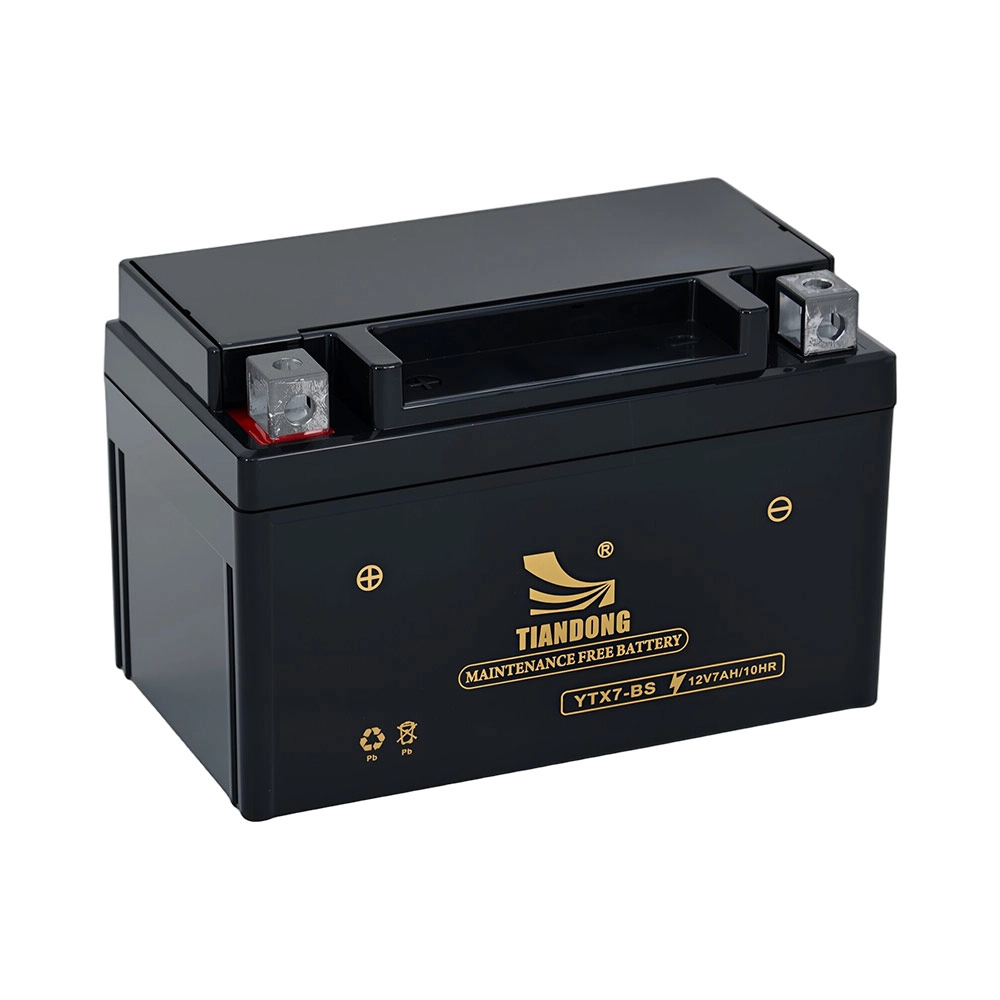
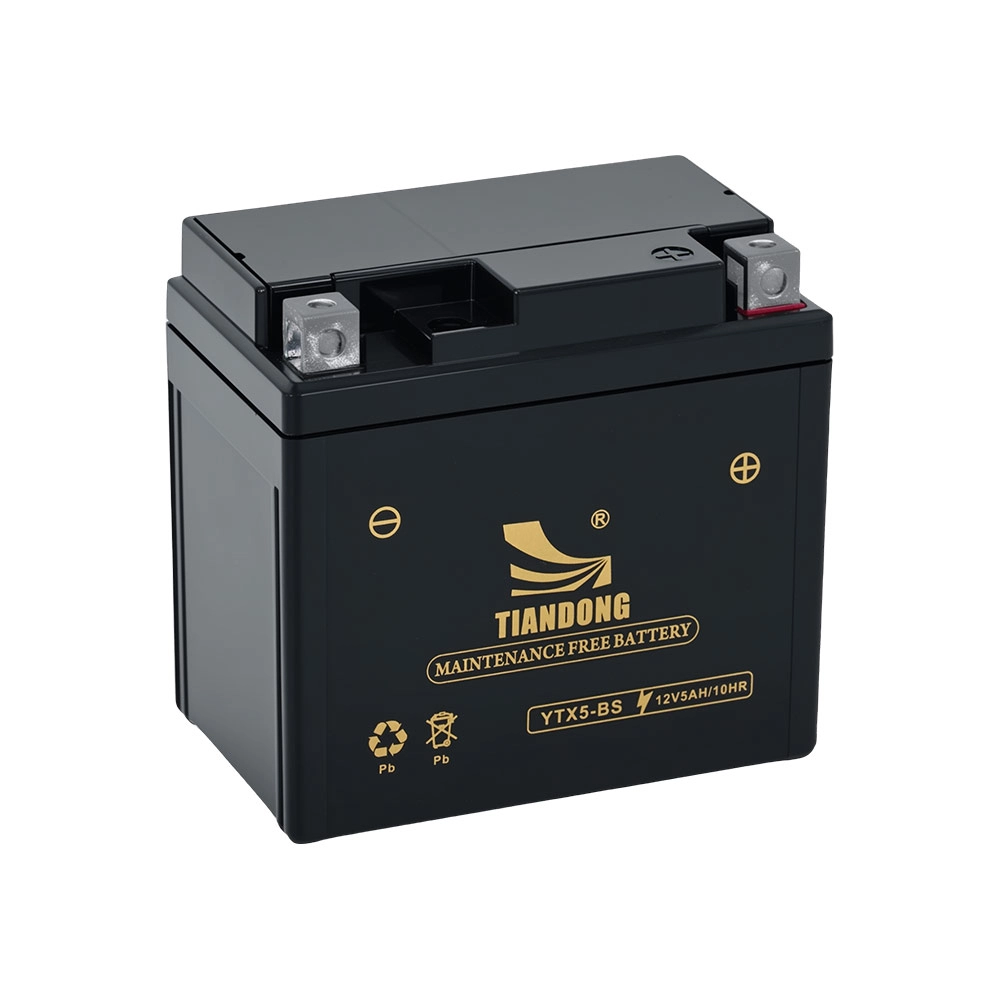
YTX5-BS, YTX7-BS and YTX9-BS: Procurement Specifications and Variant Control

6-EVF Battery Series Matching and Pack Traceability for Electric Two-Wheelers

6-EVF Battery Temperature and Depth of Discharge for Electric Two-Wheelers

6-EVF Battery Charging and Charger Matching for Electric Two-Wheelers

6-EVF Battery Cycle Life for Electric Two-Wheelers

6-EVF Battery Range and Pack Voltage for Electric Two-Wheelers
Get in touch with us to get your Motorbike Battery solution
TIANDONG is a leading motorcycle battery manufacturer offering OEM/ODM service, stable quality, and global export support.
Built for wholesalers. Trusted by global buyers. Delivered with confidence.
Say Hello
E-mail: daisybattery8@gmail.com
xianyingchen83@gmail. com
WhatsAPP: +86 134 283 86694
+86 134 348 86641
Our Location
Social Links
© 2025 TIANDONG. All Rights Reserved. Privacy Policy | Terms and Conditions | Sitemap
 Scan QR Code
Facebook
Instagram
Scan QR Code
Whatsapp: +8613434886641