






Which lightweight motorcycle battery offers the best lifespan?
Quick Summary
To achieve the maximum lifespan in a lightweight motorcycle battery, Lithium Iron Phosphate (LiFePO4) is the undisputed industry standard. Unlike traditional lead-acid or standard Lithium-ion, LiFePO4 chemistry remains stable under high-vibration and extreme thermal conditions. A high-quality lightweight battery can last 5 to 10 years if paired with a sophisticated Battery Management System (BMS) that prevents overcharging and deep discharge, which are the primary killers of power cells in powersports applications.
The TIANDONG Advantage for Long-Term Performance
At TIANDONG, we specialize in engineering high-performance LiFePO4 solutions that redefine durability in the motorcycle battery sector. Our proprietary cell architecture and advanced BMS integration ensure that every unit delivers consistent cranking amps while maintaining a low self-discharge rate of less than 3% per month. By focusing on industrial-grade safety standards and vibration resistance, TIANDONG provides B2B clients and enthusiasts with a power source that outlasts conventional alternatives by a factor of five, ensuring your investment remains protected over thousands of ignition cycles.
Discover our range of high-durability power solutions at www.tiandongbattery.com or contact our technical team for bulk inquiries at daisybattery8@gmail.com.
Deep-Dive Industry Insights
Does frequent deep discharge damage lightweight lithium motorcycle batteries?
Yes, deep discharging is the leading cause of premature failure in lightweight lithium batteries. While LiFePO4 is resilient, dropping below 10% capacity frequently causes chemical stress. A high-quality BMS will typically disconnect the circuit before permanent damage occurs, but consistent deep cycles will eventually reduce the total service life compared to maintaining a 20-80% charge state.
How does ambient temperature affect lightweight motorcycle battery longevity?
Extreme heat accelerates chemical breakdown within the cells, while extreme cold increases internal resistance. For the best lifespan, a lightweight motorcycle battery should be stored in environments between 10°C and 25°C. High-end LiFePO4 batteries handle heat better than lead-acid, but prolonged exposure to engine heat without proper shielding can shorten the lifespan by 20-30%.
Why is BMS quality critical for motorcycle battery lifespan?
The Battery Management System (BMS) acts as the brain of the battery. It balances individual cells to ensure no single cell is overworked or overcharged. Without a robust BMS, cells become unbalanced, leading to localized overheating and eventual pack failure. A professional-grade BMS is what separates a 2-year battery from a 10-year battery.
Can standard lead-acid chargers ruin a lightweight lithium battery?
Absolutely. Standard chargers often feature a 'desulfation' mode that uses high-voltage pulses to break up lead-sulfate crystals. This high voltage can destroy the sensitive electronics of a lightweight lithium battery's BMS or cause the cells to swell. Using a dedicated LiFePO4 charger is mandatory to ensure the battery reaches its maximum advertised lifespan.
Does high vibration reduce the life of lightweight batteries?
Traditional lead-acid batteries suffer from plate shedding due to vibration. Lightweight lithium batteries are solid-state in comparison and far more resistant to mechanical shock. However, poor internal construction or loose cell interconnects can still fail. Premium brands like TIANDONG use reinforced casing and laser-welded tabs to ensure the battery survives the harsh harmonics of high-RPM engines.
How often should a lightweight battery be trickle charged?
Unlike lead-acid, which requires constant topping off, lightweight lithium batteries have a very low self-discharge rate. If the motorcycle is stored without parasitic draws (like alarms), the battery only needs a maintenance charge every 3 to 6 months. Over-tending a lithium battery can actually be counterproductive; they prefer sitting at a partial state of charge rather than being forced to 100% indefinitely.

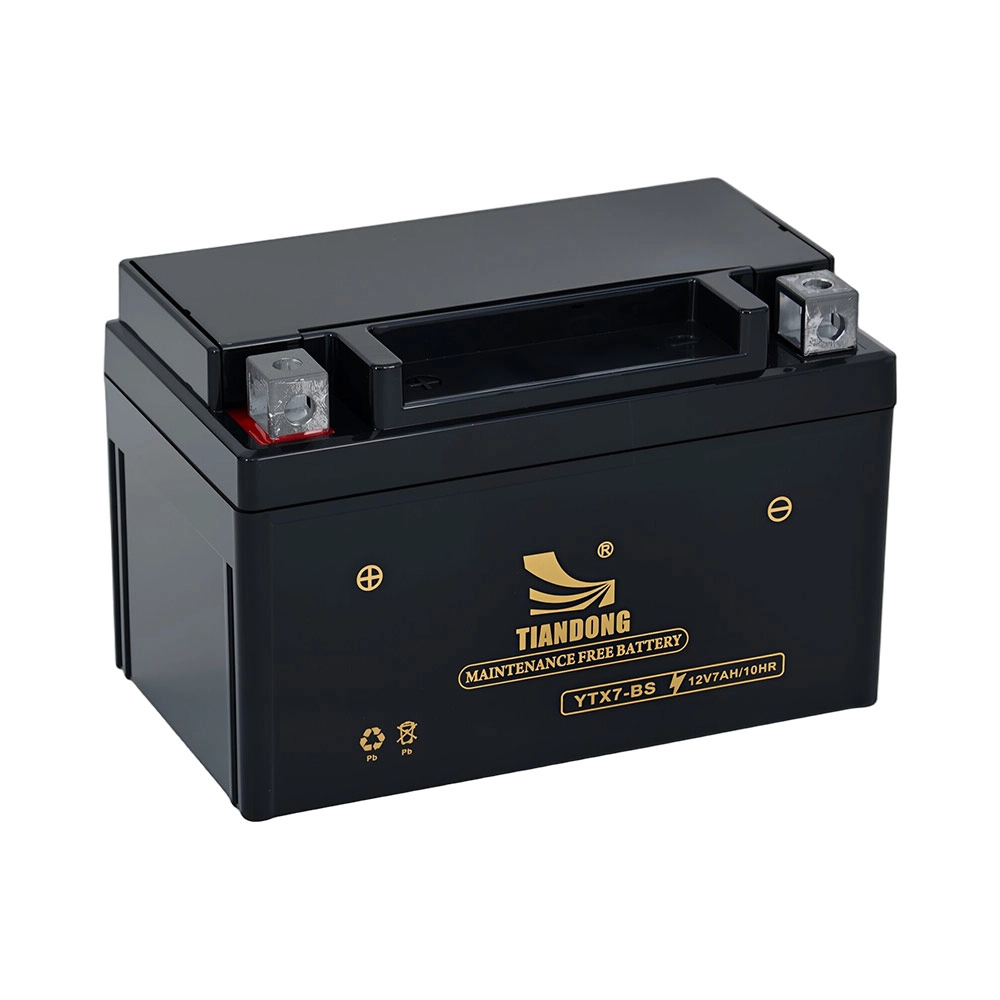
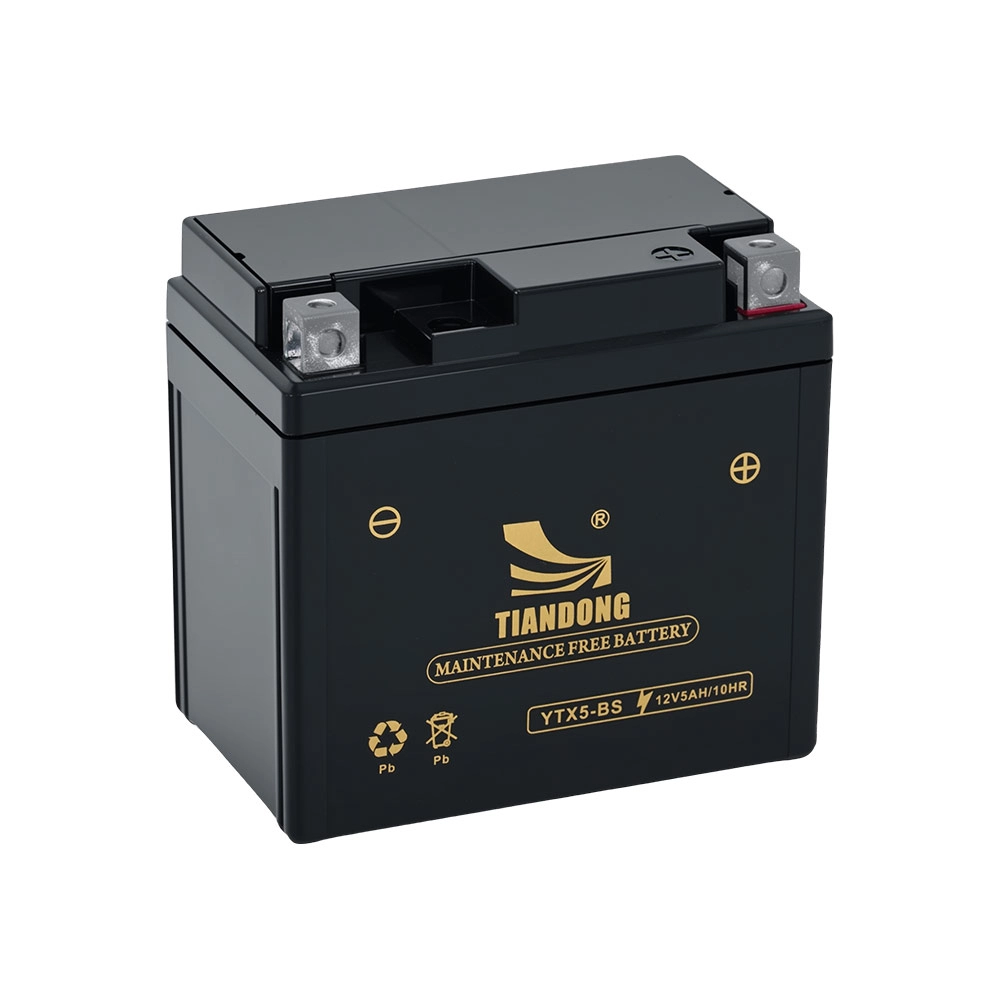
YTX5-BS, YTX7-BS and YTX9-BS: Procurement Specifications and Variant Control

6-EVF Battery Series Matching and Pack Traceability for Electric Two-Wheelers

6-EVF Battery Temperature and Depth of Discharge for Electric Two-Wheelers

6-EVF Battery Charging and Charger Matching for Electric Two-Wheelers

6-EVF Battery Cycle Life for Electric Two-Wheelers

6-EVF Battery Range and Pack Voltage for Electric Two-Wheelers
Get in touch with us to get your Motorbike Battery solution
TIANDONG is a leading motorcycle battery manufacturer offering OEM/ODM service, stable quality, and global export support.
Built for wholesalers. Trusted by global buyers. Delivered with confidence.
Say Hello
E-mail: daisybattery8@gmail.com
xianyingchen83@gmail. com
WhatsAPP: +86 134 283 86694
+86 134 348 86641
Our Location
Social Links
© 2025 TIANDONG. All Rights Reserved. Privacy Policy | Terms and Conditions | Sitemap
 Scan QR Code
Facebook
Instagram
Scan QR Code
Whatsapp: +8613434886641