






6-EVF Battery Cycle Life for Electric Two-Wheelers
- Cycle life is a system result
- Define depth of discharge before comparing packs
- Match the charger to the battery system
- Recharge promptly after use
- Temperature changes both performance and aging
- Keep series-connected modules matched
- Control vehicle loads and mechanical condition
- Use receiving inspection to protect pack consistency
- Verified TIANDONG options for pack planning
- 6‑EVF‑32 Battery
- 6‑EVF‑45 Battery
- 6‑EVF‑58 Battery
- Create a meaningful cycle-life validation plan
- Track trends instead of waiting for failure
- Write an RFQ that makes cycle-life claims comparable
- A practical cycle-life control sequence
- Frequently Asked Questions
Quick Answer: Cycle life in a 6‑EVF electric two-wheeler battery pack is controlled by the complete operating system, not by one catalog number. Depth of discharge, charger profile, recharge timing, temperature, load, pack balance, cable resistance, storage state, and maintenance decisions all influence how quickly usable capacity declines. Buyers should define the vehicle, pack voltage, daily route, charging opportunity, environment, acceptance test, and replacement policy before comparing suppliers. TIANDONG recommends matching batteries as one series pack and monitoring the pack from receiving inspection through field service.
Cycle life is a system result
A lead-acid traction battery does not experience a cycle as an isolated laboratory event. In an electric two-wheeler, the battery supplies a motor controller through changing speed, acceleration, gradient, payload, tire condition, and ambient temperature. It is then recharged by a charger whose voltage stages, current behavior, termination, and restart logic must suit the approved battery system. Field cycle life is therefore the result of repeated operating and charging conditions applied to the complete pack.
One cycle count cannot be interpreted without its test conditions. The discharge depth, end-of-discharge criterion, current, rest periods, recharge method, temperature, and capacity-retention threshold all change the result. Procurement teams should ask for the test basis behind a cycle-life statement and compare like with like. A value without the method can create false confidence because a shallow controlled laboratory cycle is not equivalent to a deep, hot, high-load delivery route.
Our 6‑EVF product range includes active 12V battery models used for electric-vehicle applications, including published 6‑EVF‑32, 6‑EVF‑45, and 6‑EVF‑58 options. Model selection affects capacity, physical fit, pack mass, cable layout, and vehicle range planning, but a larger model does not automatically solve abusive charging or pack imbalance. The buyer should approve the battery, charger, vehicle, and use profile together. Any expected service-life claim needs evidence tied to that configuration.
Define depth of discharge before comparing packs
Depth of discharge describes how much of the available capacity is removed before recharge. Repeated deeper discharge generally places more demand on a lead-acid traction battery than a shallower operating window, but the actual effect depends on battery design, load, temperature, and recharge conditions. A fleet should not set a universal return threshold by guesswork. The operating window should be established through vehicle tests, route data, charger availability, and the supplier’s approved recommendations.
Usable energy and nameplate capacity are not interchangeable in route planning. Voltage under load, controller cut-off behavior, current demand, battery age, and temperature can reduce what the vehicle can deliver before the driver experiences weak acceleration or a shutdown. A route that appears to use a moderate share of rated capacity may create a much deeper effective discharge under high load. Commissioning should therefore record pack behavior on representative routes instead of relying only on distance estimates.
Reserve should be planned for variability rather than treated as energy that drivers routinely consume. Payload, stops, gradients, tire pressure, traffic, wind, and seasonal temperature can move energy demand away from the average. If daily operation regularly reaches the low-voltage limit, the pack and route plan need review. The corrective action may involve charging opportunity, vehicle maintenance, payload policy, pack size, or route assignment rather than simply replacing batteries earlier.
| Cycle-life factor | Evidence to collect | Risk signal | Controlled response |
|---|---|---|---|
| Discharge depth | Route energy and end voltage | Frequent low-voltage events | Review route, pack and charging window |
| Recharge timing | Time from return to full charge | Long partial-charge storage | Establish approved recharge procedure |
| Temperature | Charging and parking conditions | Persistent heat or blocked airflow | Improve location and verify charger behavior |
| Pack balance | Module readings under common conditions | One module diverges repeatedly | Inspect pack, connections and service history |
Match the charger to the battery system
The charger is an active part of cycle-life control. Its voltage profile, current limit, charge stages, temperature behavior, termination, and restart logic must match the approved pack voltage and battery requirements. A connector that physically fits does not prove electrical suitability. The procurement file should identify the charger model and settings used during validation so field replacements do not introduce an unknown profile.
Undercharging can leave the pack in a persistent partial state of charge, while inappropriate overcharge can increase heating and water loss mechanisms even in a nominally maintenance-free design. The correct diagnosis requires charger and battery evidence rather than assumptions based on charge time alone. Service teams should verify supply conditions, charger output behavior, connections, and battery response with suitable procedures. They should not alter charger settings without authorization from the responsible technical parties.
Charge opportunity needs enough time for the approved process to complete. A fleet that repeatedly disconnects early may never reach the intended final stage, while a charger left connected in unsuitable conditions may create a different risk. The operating procedure should define when charging begins, how completion is recognized, ventilation and access controls, and what abnormal heat or smell requires. Records should be simple enough for staff to use consistently.
Recharge promptly after use
Lead-acid batteries should not be left discharged longer than the approved operating procedure allows. A vehicle that returns with a partially depleted pack and remains parked can accumulate conditions that reduce recoverable performance. Fleet scheduling should include charging access as part of the route plan rather than treating it as an optional end-of-day task. The responsible operator needs a clear handover when a charger or outlet is unavailable.
Opportunity charging must still follow the validated charger and operating method. Connecting for a short period may help a particular duty cycle, but it should not be assumed to replace a complete approved recharge. The fleet should monitor whether frequent interruptions cause the pack to begin each shift at a lower state of charge. Route assignment and charging windows can then be adjusted before repeated deep discharge becomes normal.
Vehicles stored between seasons or held as spare units need a separate plan. Storage state, ambient temperature, inspection interval, and recharge method should follow approved supplier guidance for the delivered battery. Keys, auxiliary loads, alarms, or controllers may continue to draw current even when the vehicle is not moving. Isolation and periodic checks should be documented so hidden parasitic loads do not leave the pack deeply discharged.
Temperature changes both performance and aging
Battery temperature can differ from ambient air because discharge current, charging, enclosure design, airflow, sunlight, and recent operation add heat. High temperature can accelerate unwanted aging processes, while low temperature can reduce available power and make a route feel more demanding. A fleet should record where vehicles are parked and charged, not only the regional climate. Enclosures and chargers need adequate ventilation according to the approved system design.
Charging a hot pack immediately after a demanding route may produce different behavior from charging a rested pack in a controlled room. The operating method should define any required inspection or temperature precautions without inventing a universal delay. Abnormal case temperature, swelling, odor, leakage, damaged terminals, or discolored connectors should trigger isolation and qualified review. Staff should not continue charging to see whether the condition disappears.
Seasonal comparisons need context. A winter range reduction does not automatically mean the battery has permanently lost the same amount of capacity, and a warm-weather increase in apparent range does not prove the pack is healthy. Trend records should include temperature, route, payload, charger, and pack age when possible. This prevents procurement teams from drawing a service-life conclusion from one uncontrolled observation.
Keep series-connected modules matched
Electric two-wheelers commonly use multiple 12V batteries in series to reach the required pack voltage. The same current passes through each series module, but modules can diverge because of manufacturing variation, age, temperature, connection resistance, previous abuse, or replacement history. The weakest module can reach an unfavorable condition before the others. Pack inspection therefore needs module-level evidence under comparable conditions.
Mixing old and new batteries or different models in one pack creates an uncontrolled combination. Even when nominal voltage matches, capacity, internal condition, charge acceptance, and history may differ. Replacement policy should be agreed with the battery and vehicle supplier and should consider the complete pack. A single emergency substitution should not quietly become the fleet’s permanent standard without validation.
Cables and terminals influence balance because resistance creates voltage drop and heat under load and charging current. Loose, corroded, damaged, undersized, or poorly crimped connections can make a sound battery appear weak and can disturb charger behavior. Inspection should include terminal condition, correct polarity, cable routing, protective covers, fastener retention, and signs of heating. Cleaning or tightening must follow a safe approved procedure with the pack isolated.

Control vehicle loads and mechanical condition
High electrical demand can come from the route, but it can also come from a vehicle fault or maintenance issue. Low tire pressure, dragging brakes, bearing problems, wheel alignment, excessive payload, frequent hard acceleration, and steep gradients all increase the work the pack must perform. Battery replacement alone will not correct these causes. A cycle-life investigation should include the vehicle and route before concluding that the battery model is unsuitable.
Controller settings and motor characteristics affect current demand and low-voltage behavior. A controller changed during service may allow a different load profile or cut-off point from the validated configuration. Buyers should record the vehicle model and key electrical configuration used for testing and fleet approval. Unauthorized tuning can invalidate comparisons between vehicles that appear mechanically identical.
Driver training can reduce avoidable stress without relying on unrealistic operating restrictions. Smooth acceleration, appropriate payload, timely charging, and early fault reporting help keep the fleet within its validated use. Training should explain observable actions rather than unsupported technical promises. Drivers should know what reduced power, abnormal heat, odor, swelling, connector damage, or repeated charger faults require them to report.
Use receiving inspection to protect pack consistency
A wholesale or OEM shipment should be checked before batteries are released to vehicle assembly. Receiving records can confirm product model, quantity, case and terminal condition, polarity marking, dimensions relevant to the compartment, production or lot identification when available, and packaging damage. Batteries intended for one pack should be managed as a matched set according to the approved procedure. Suspect items should be segregated instead of mixed into production.
Electrical checks need a defined timing and method because readings vary with charge state, rest period, temperature, and instrument. A single open-circuit voltage measurement cannot prove full capacity or cycle life. It can still help identify an obvious outlier when all items are checked under comparable conditions. Acceptance criteria should state which readings, functional tests, or supplier reports are required and who may release the lot.
Warehouse handling must protect terminals, cases, and state of charge. Batteries should be kept in the approved orientation, separated from conductive objects, and stored under suitable conditions with controlled inventory rotation. Pallets and cartons should not place damaging loads on terminals or cases. The storage plan should include inspection and recharge actions when stock remains beyond the intended period.

Verified TIANDONG options for pack planning
Our active catalog provides verified 6‑EVF model options for electric-vehicle projects. The published 6‑EVF‑32 record identifies a 12V model with 37Ah minimum capacity, while the 6‑EVF‑58 record identifies a 12V model with 63Ah capacity. The active 6‑EVF‑45 listing is also presented for electric-vehicle and scooter use. These facts support model screening, but the final selection still requires compartment, mass, terminal, charger, pack-voltage, and route verification.
Model numbers should not be used as a substitute for a complete specification. The buyer should confirm the current product drawing, terminal direction, dimensions, reference weight, packing, and electrical test basis for the quoted configuration. A vehicle designed around one case size cannot accept another model simply because both are 12V. We can review the application and identify which published option is suitable for sampling and pack validation.

6‑EVF‑32 Battery
A verified 12V model for compartment, pack, route, charger, and acceptance evaluation.
View Product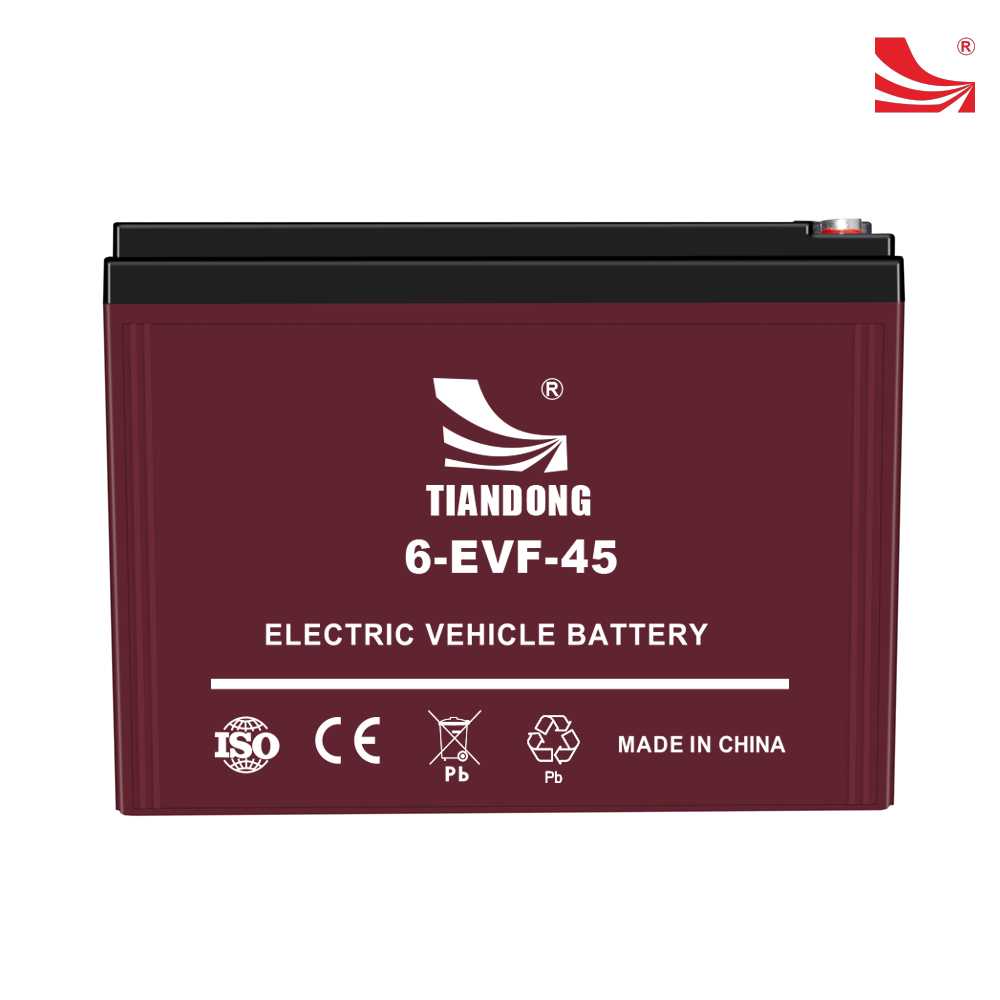
6‑EVF‑45 Battery
An active electric-vehicle battery option for matched-pack and OEM configuration review.
View Product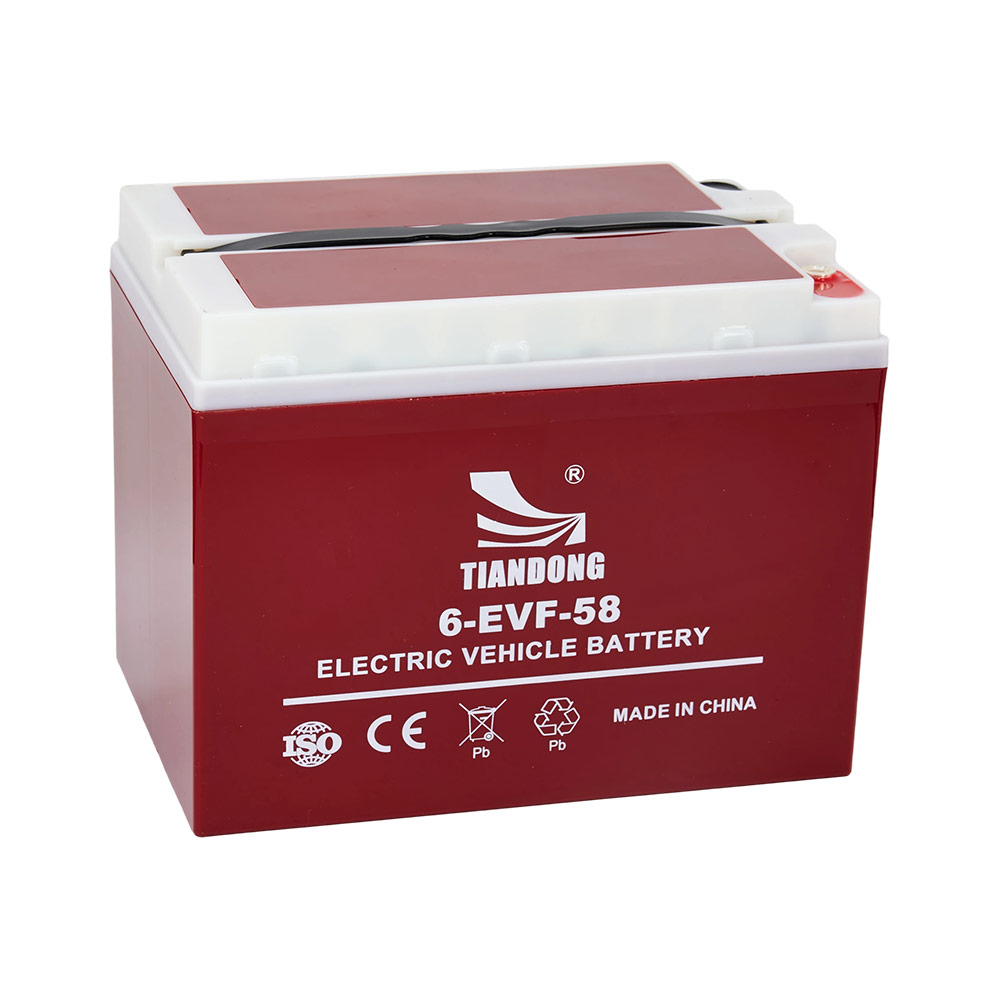
6‑EVF‑58 Battery
A verified 12V model for higher-capacity pack planning subject to vehicle validation.
View ProductCreate a meaningful cycle-life validation plan
Validation begins with a written duty profile. The buyer should define vehicle model, controller, motor, pack voltage, battery model, payload range, route, gradients, speeds, stops, ambient conditions, charging window, charger, and end-of-shift criteria. A representative pilot fleet is more informative than one carefully operated vehicle. The plan should identify what data will be collected and what condition triggers review.
Battery tests can include incoming checks, controlled capacity or discharge testing when agreed, charger verification, pack balance observations, route trials, and periodic trend measurements. Exact procedures must follow qualified technical guidance and applicable safety requirements. Results from different methods should not be combined as if they were identical. The report needs enough context to explain what was tested and which conclusion is supported.
A useful acceptance threshold separates initial product quality from long-term field management. Factory acceptance can confirm model, appearance, dimensions, terminals, selected electrical results, and documentation. Vehicle commissioning can confirm fit, pack voltage, polarity, cable routing, charger behavior, route performance, and abnormal heating. Field monitoring then evaluates how the approved system changes over time without pretending that initial acceptance guarantees a fixed service life.
| Stage | Review items | Record | Decision |
|---|---|---|---|
| Supplier approval | Model, drawing, test basis, packing, charger assumptions | Approved specification | Release sample order |
| Receiving | Lot, cases, terminals, dimensions, comparable readings | Lot inspection report | Release matched sets |
| Commissioning | Vehicle fit, pack, charger, route, temperature, balance | Vehicle sign-off | Approve fleet use |
| Field trend | Range, faults, module divergence, charging, environment | Service history | Correct system cause |
Track trends instead of waiting for failure
A fleet can monitor cycle-life risk with a small set of consistent records. Useful fields include battery and vehicle identifiers, installation date, route or duty group, charger, charging exceptions, low-voltage events, service findings, module readings under defined conditions, and replacement reason. The goal is not to collect data that nobody reviews. It is to reveal repeated patterns early enough for corrective action.
Range complaints should be investigated with the same discipline. The team should compare route, payload, tire condition, brakes, temperature, charger completion, pack balance, connections, and recent repairs before assigning cause. Swapping batteries between vehicles without control can spread the uncertainty and destroy traceability. A defined diagnostic sequence protects good batteries from unnecessary replacement and identifies vehicle faults sooner.
End-of-life decisions should use approved performance and safety criteria rather than age alone. A battery that cannot support the required route, shows persistent imbalance, has physical damage, or fails the agreed test needs qualified disposition. Removed batteries must be handled and recycled according to applicable rules and approved channels. They should not be placed into another pack simply because they still show nominal voltage at rest.
Write an RFQ that makes cycle-life claims comparable
A strong RFQ states the vehicle and pack configuration, required physical envelope, pack voltage, route, payload, daily energy demand, charging windows, charger, climate, storage, quantity, packing, and acceptance evidence. It asks the supplier to identify the test conditions behind any cycle-life or capacity statement. It also separates guaranteed specifications from engineering estimates. This gives purchasing teams a consistent basis for comparing proposals.
The RFQ should identify whether the order needs battery-only supply, charger coordination, OEM labeling, matched-pack delivery, pre-shipment inspection, or pilot validation. Each added scope item needs a clear deliverable and approval point. Unverified certification, warranty, or service-life language should not be copied from a marketplace listing. Claims should match current supplier documentation and the destination market.
Commercial evaluation should include usable route performance, charger compatibility, pack replacement policy, warehouse rotation, diagnostic labor, packaging, transport, recycling, and support evidence. Lowest initial price does not reveal the cost of imbalance, premature replacement, or vehicle downtime. The buyer should compare the complete operating system and the supplier’s ability to document it. A disciplined specification reduces variables that otherwise appear later as battery complaints.
A practical cycle-life control sequence
Fleet governance should assign ownership for the battery, charger, vehicle, and operating data. Purchasing can control approved models and suppliers, engineering can freeze the pack and charger configuration, operations can manage routes and charging windows, and service teams can diagnose faults. When responsibility is unclear, each department can change one variable without understanding the combined effect. A short responsibility matrix makes escalation faster and protects the validated configuration.
Charger identification should remain visible and traceable throughout service. Fleets with several pack voltages or battery types need physical and administrative controls that prevent a convenient but incompatible charger from being used. Labels should support the approved operating procedure without replacing electrical verification. When a charger is repaired or replaced, the responsible technician should confirm its configuration before returning it to the charging area.
Software records can support trend analysis, but simple disciplined records are more valuable than an unused complex platform. A small fleet may use controlled inspection sheets, while a large operator may connect battery events to vehicle maintenance software. In both cases, identifiers and definitions must remain consistent. A “battery failure” code should distinguish physical damage, insufficient route capacity, charger fault, connection problem, imbalance, and end-of-life evidence whenever the diagnosis is available.
Audit samples should be chosen across vehicles, routes, drivers, chargers, and storage locations rather than only from the easiest units to access. This helps the team find site-specific heat, route, or charging problems that an average value can hide. Audit frequency can change as the fleet demonstrates stability or enters a demanding season. Findings should lead to a named corrective action, owner, and verification date instead of remaining as observations in a report.
Supplier feedback is most useful when the fleet provides controlled evidence. Photographs of damage, model and lot identification, pack configuration, charger, measured conditions, vehicle history, and the sequence leading to the fault help technical teams investigate. A complaint that only states “short life” cannot separate product variation from a deep-discharge route, an incompatible charger, or a high-resistance connection. Evidence also helps identify whether other packs in the same lot require inspection.
Continuous improvement should not change the approved configuration casually. A proposed new charger, cable, battery model, controller setting, or pack layout needs a documented review and, where necessary, a new pilot. The team should compare the new baseline with the old one using the same definitions. This prevents a well-intended local change from invalidating cycle-life records or creating mixed fleets that are difficult to diagnose.
Budget planning should separate predictable replacement from avoidable early loss. The fleet can group packs by route severity, season, vehicle type, and charging location to understand where intervention creates value. A replacement forecast should not become a reason to ignore abnormal failures that occur earlier than the controlled baseline. Purchasing and service teams should review both cost and technical cause before adjusting order quantities.
Training records should cover new staff and contractors who handle charging or vehicle service. The procedure can explain approved chargers, connector inspection, ventilation, abnormal-condition reporting, isolation boundaries, and prohibited substitutions. Short practical demonstrations are more reliable than distributing a document without confirming understanding. Refresher training is appropriate when audits reveal repeated incomplete charging, mixed packs, damaged terminals, or poor fault records.
First, freeze the vehicle, pack voltage, battery model, charger, route, payload, and environmental assumptions. Confirm physical fit, terminal direction, cable design, protection, and matched-pack handling before the pilot begins. Agree on receiving checks, commissioning data, charging procedure, and fault escalation. This creates one controlled baseline for supplier, vehicle assembler, fleet operator, and service team.
Second, run representative routes and observe the complete recharge process under controlled conditions. Record exceptions such as interrupted charging, abnormal heat, low-voltage events, module divergence, or vehicle maintenance faults. Correct the system cause before expanding the fleet. Do not turn one favorable range result into an unsupported cycle-life promise.
Finally, keep the approved configuration and service history linked to each pack. Review trends by route and vehicle group, quarantine damaged or uncertain batteries, and repeat the relevant tests after repair. For a TIANDONG project, provide the application data and requested 6‑EVF model so we can confirm current product facts and unresolved interfaces. Cycle life becomes manageable when operating limits, charging, matching, inspection, and evidence remain connected throughout the pack’s service.
Frequently Asked Questions
What determines 6-EVF battery cycle life in an electric two-wheeler?
Depth of discharge, charger compatibility, recharge timing, temperature, vehicle load, pack balance, cable resistance, storage and maintenance all contribute. Cycle life must be evaluated with the complete vehicle and charging system.
Does a larger 6-EVF battery always last more cycles?
No. A larger capacity can change route reserve, but it does not correct an incompatible charger, repeated deep discharge, heat, imbalance or poor connections. The model must also fit the vehicle and approved pack configuration.
Why should all batteries in a series pack be matched?
The same current passes through each series module, but differences in model, age, condition, temperature or history can make one module reach an unfavorable state earlier. Matched sets and module-level checks reduce uncertainty.
Can open-circuit voltage confirm remaining battery life?
No. It can help identify an obvious outlier under comparable conditions, but it does not prove capacity, cycle life or load performance. Diagnosis needs controlled tests, charger information, route history and pack observations.
What should a fleet record to manage battery cycle life?
Record battery and vehicle identifiers, charger, route or duty group, charging exceptions, low-voltage events, temperature context, service findings, module divergence and replacement reason using consistent definitions.
What should be included in a 6-EVF battery RFQ?
Include vehicle and pack voltage, battery compartment, terminal direction, route, payload, daily energy demand, charging windows, charger, climate, storage, quantity, packing and the test basis required for capacity or cycle-life claims.

YTX5-BS, YTX7-BS and YTX9-BS: Procurement Specifications and Variant Control

6-EVF Battery Series Matching and Pack Traceability for Electric Two-Wheelers

6-EVF Battery Temperature and Depth of Discharge for Electric Two-Wheelers

6-EVF Battery Charging and Charger Matching for Electric Two-Wheelers

6-EVF Battery Range and Pack Voltage for Electric Two-Wheelers

6-EVF-32 vs 6-EVF-45 vs 6-EVF-58: Battery Selection for Electric Two-Wheelers
Get in touch with us to get your Motorbike Battery solution
TIANDONG is a leading motorcycle battery manufacturer offering OEM/ODM service, stable quality, and global export support.
Built for wholesalers. Trusted by global buyers. Delivered with confidence.
Say Hello
E-mail: daisybattery8@gmail.com
xianyingchen83@gmail. com
WhatsAPP: +86 134 283 86694
+86 134 348 86641
Our Location
Social Links
© 2025 TIANDONG. All Rights Reserved. Privacy Policy | Terms and Conditions | Sitemap
 Scan QR Code
Facebook
Instagram
Scan QR Code
Whatsapp: +8613434886641