


6-EVF-32 vs 6-EVF-45 vs 6-EVF-58: Battery Selection for Electric Two-Wheelers
- Why the 6-EVF Model Comparison Matters
- Verified Product Data for Initial Shortlisting
- Start With the Battery Bay, Not the Nominal Model
- Build the Correct Pack Voltage
- Do Not Convert a Model Name Directly Into Range
- Charger and Charging-Control Compatibility
- Weight, Vehicle Handling and Service Work
- Sample and Incoming Inspection Plan
- Current TIANDONG Options
- 6-EVF-32
- 6-EVF-45
- 6-EVF-58
- What to Put in the RFQ
- Define commercial and quality responsibilities
- Plan storage and rotation before arrival
- Frequently Asked Questions
The 6-EVF-32, 6-EVF-45 and 6-EVF-58 should not be selected by model number alone. For an electric two-wheeler program, buyers need to confirm battery-bay dimensions, pack voltage, cable and terminal orientation, allowable pack mass, charger compatibility, route duty and the test method used for capacity acceptance. TIANDONG’s current product records show all three as 12 V models, while their case dimensions and reference weights differ materially. A sample pack installed in the target vehicle remains the safest basis for final approval.
Why the 6-EVF Model Comparison Matters
Electric scooters and other two-wheel electric vehicles are usually designed around a series-connected battery pack rather than one battery. A small difference in the length, width or height of each unit can therefore become a major packaging issue when several units must fit into a fixed tray. The same is true for mass: the difference between a lighter and heavier unit is multiplied across the full pack, affecting handling, suspension loading and installation work. Procurement teams should treat battery selection as a vehicle-integration decision, not as a simple catalogue substitution.
The model designation helps organize a shortlist, but it does not prove range, cycle life or compatibility with a particular vehicle. Range depends on pack energy, vehicle efficiency, rider and cargo mass, road gradient, speed, temperature, tire condition and usable depth of discharge. Cycle performance also depends on charge settings, storage state and operating temperature. For these reasons, TIANDONG recommends that buyers define the target duty first, then compare physical fit, electrical architecture and sample-test results against that duty.
Verified Product Data for Initial Shortlisting
The table below uses the values currently recorded in TIANDONG’s product database. The 6-EVF-32 and 6-EVF-45 records include a field labelled “capacity(min)” with the value “≥130,” but the field does not state a unit or test method. It is therefore not presented here as ampere-hour capacity. Buyers should request the applicable datasheet and test basis before using any capacity figure for pack calculations.
| Model | Rated voltage | Recorded dimensions | Reference weight | Procurement note |
|---|---|---|---|---|
| 6-EVF-32 | 12 V | 257 × 77 × 170 mm, ±2 mm | 9.32 kg | Long, narrow footprint; verify tray length and restraint points. |
| 6-EVF-45 | 12 V | 226 × 120 × 75 mm, ±2 mm | 12.60 kg | Different low-profile geometry; confirm orientation before assuming interchangeability. |
| 6-EVF-58 | 226 × 160 × 175 mm, ±2 mm | 17 kg | Product record states 63 Ah; obtain the associated test conditions for approval. |
All three records identify OEM service as supported and Jiangxi, China as the origin. The terminal-direction entries also differ in their notation, so drawings or approved samples should settle polarity and cable-routing questions. A purchasing specification should never rely on a thumbnail image to establish terminal orientation. The vehicle maker should provide the required positive and negative cable positions, connector arrangement and protective-device layout.
Start With the Battery Bay, Not the Nominal Model
Measure the usable battery compartment in three dimensions and record obstructions such as welds, cable exits, hold-down brackets, service covers and ventilation paths. The nominal cavity size is not the same as usable clearance. Allow room for manufacturing tolerance, installation movement, protective insulation and cable bend radius. The 6-EVF-32 is narrow but relatively long and tall; the recorded 6-EVF-45 geometry is much lower and wider; the 6-EVF-58 occupies the largest envelope of the three. Those shapes may drive a different series-pack arrangement even when the electrical plan is similar.
Restraint design deserves equal attention. Batteries should not depend on terminal cables to prevent movement. The pack enclosure must support the units during braking, vibration and normal road shock without crushing the case or abrading wiring. Buyers should ask the vehicle engineering team to document the restraint method and installation order. A physical sample makes it possible to verify that technicians can install and remove each unit without forcing the case past sharp edges.
Build the Correct Pack Voltage
Because the listed products are 12 V units, a higher-voltage vehicle pack normally uses batteries connected in series. The number of units must match the voltage architecture approved by the vehicle and controller manufacturer. Buyers should not change the series count merely to pursue more range. The charger, controller, low-voltage protection, wiring, contactors and service procedures are designed around the complete pack voltage, not the rating of one battery.
Series packs also require matched units. Mixing different models, different production batches, used and new batteries, or units with materially different states of charge can cause imbalance. The weakest unit may reach its discharge or charge limit first and constrain the whole pack. For a wholesale order, define batch identification, incoming-voltage limits and the method used to screen units before assembly. Replacement policies should specify whether a single unit may be replaced and what matching checks are required.
Do Not Convert a Model Name Directly Into Range
A capacity label alone cannot guarantee kilometres per charge. Vehicle energy use changes with payload, rolling resistance, acceleration pattern, route gradient, ambient temperature and average speed. The discharge rate used in a laboratory rating may also differ from the rate imposed by a vehicle. Procurement comparisons should therefore separate verified battery data from vehicle-level performance claims. If a target range is contractually important, define a repeatable route or dynamometer procedure with payload, speed profile, temperature and end-of-discharge criteria.
A useful pilot compares complete packs under the same controlled conditions. Record start voltage, rest time after charging, ambient temperature, route or load profile, end voltage, energy delivered where instrumentation permits, and recovery voltage after discharge. Repeat the test across more than one pack so the decision is not based on a single unusually strong sample. The result supports a model choice for the actual platform without pretending that every scooter will achieve the same field range.
Charger and Charging-Control Compatibility
The charger must be approved for the complete lead-acid pack architecture. Confirm nominal pack voltage, charging stages, voltage limits, current limit, temperature assumptions, termination behaviour and any float or maintenance mode. An unsuitable charger can create chronic undercharge, excessive charge stress or long charging times. The battery purchase and charger purchase should therefore be reviewed together rather than assigned to separate teams with no shared acceptance document.
Field charging conditions also influence the specification. A fleet that returns to a depot each night can use controlled charging stations and documented connection procedures. Privately owned scooters may be charged in less predictable environments. Buyers should define connector keying, polarity protection, cable condition checks, ventilation expectations and instructions for batteries that have been stored or deeply discharged. Any promised charging time must be validated with the selected pack and actual charger.
Weight, Vehicle Handling and Service Work
The recorded reference weights are 9.32 kg for the 6-EVF-32, 12.60 kg for the 6-EVF-45 and 17 kg for the listed 6-EVF-58 product. Multiply the unit mass by the pack count to estimate the battery contribution to vehicle mass, then include brackets, cables and enclosure hardware. The heavier option may be inappropriate where gross vehicle weight, centre of gravity or manual handling is constrained. Weight should be checked on production samples because the listed value is a reference rather than a shipment acceptance tolerance.
Service access can be as important as initial assembly. Technicians need a safe lifting path, sufficient hand clearance and a sequence that does not put tools across live terminals. The enclosure should prevent accidental short circuits during maintenance. If batteries are removed frequently, define lifting aids or pack modules that reduce strain. A slightly smaller battery may produce a more maintainable design even when a larger unit appears attractive on paper.
Sample and Incoming Inspection Plan
A sample approval should include identity, appearance, dimensions, mass, terminal position, open-circuit voltage, pack fit and charger compatibility. Electrical capacity and discharge tests need an agreed standard, current, temperature, end voltage and rest procedure. Without those conditions, two laboratories can report different results while both believe they followed a reasonable method. The approved sample, signed drawing and test report should become the reference set for mass-production inspection.
| Inspection stage | Checks | Evidence to retain | Decision |
|---|---|---|---|
| Pre-sample review | Drawing, voltage, dimensions, mass, terminals, pack count | Controlled specification revision | Approve sample build |
| Fit and integration | Tray clearance, restraint, cable routing, service access | Fit report and photographs | Approve vehicle installation |
| Electrical trial | Charge profile, controlled discharge, voltage balance, temperature | Raw test log and calibrated-equipment IDs | Approve performance basis |
| Incoming lot | Quantity, damage, labels, date/batch codes, sample dimensions and voltage | Receiving checklist and nonconformance record | Accept, quarantine or reject |
Packaging inspection belongs in the plan as well. Heavy batteries need cartons, internal supports and palletization that prevent movement, terminal damage and case abrasion. The buyer should define shipment mode, pallet limits, labels and the documents required for the destination market. Transport requirements can vary by route and jurisdiction, so the responsible logistics provider should confirm the current rules for the selected battery and shipment configuration.
Current TIANDONG Options
The three product records below are useful starting points for drawing and sample requests. Their different case formats make them suitable for different battery-bay layouts; they should not be treated as drop-in substitutes without engineering review.
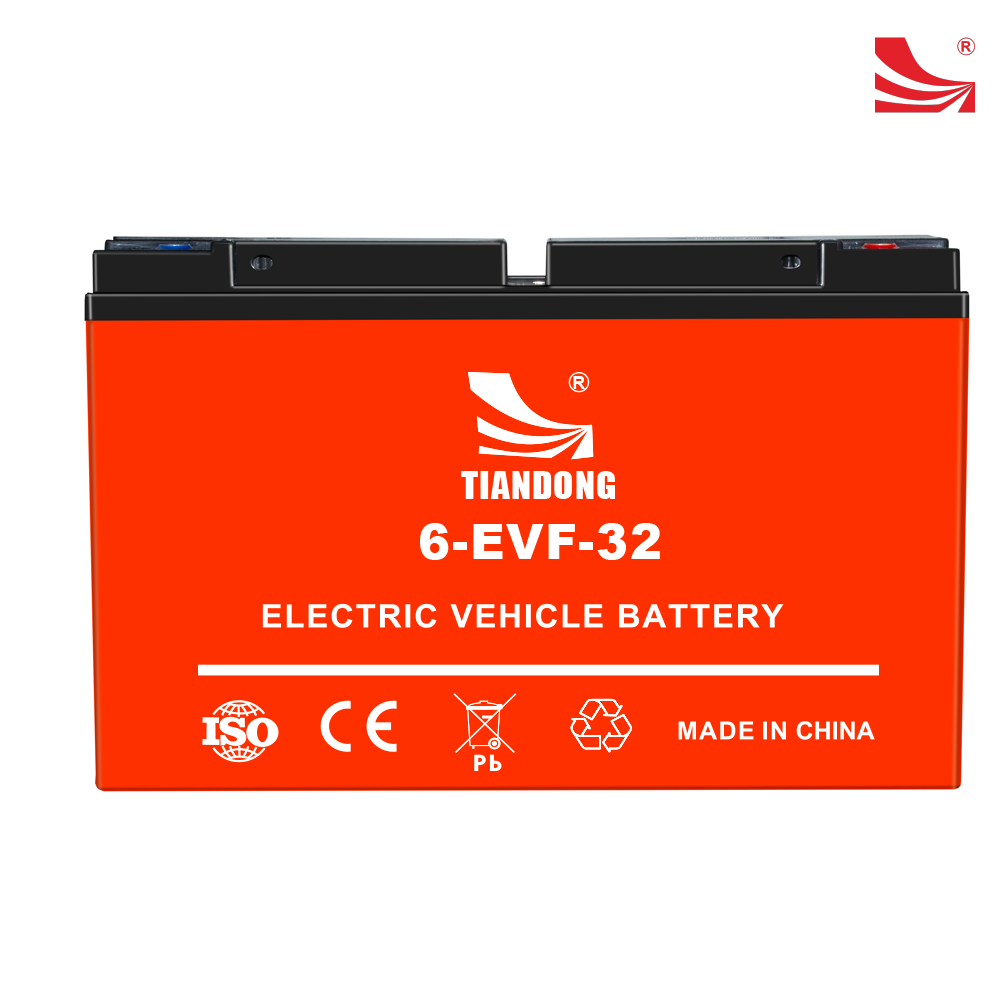
6-EVF-32
A 12 V option with a long, narrow case recorded at 257 × 77 × 170 mm and a reference weight of 9.32 kg. Confirm tray length, restraint and terminal orientation with a sample.
View Product
6-EVF-45
A 12 V model with recorded dimensions of 226 × 120 × 75 mm and a reference weight of 12.60 kg. Its low-profile geometry needs orientation and enclosure-clearance verification.
View Product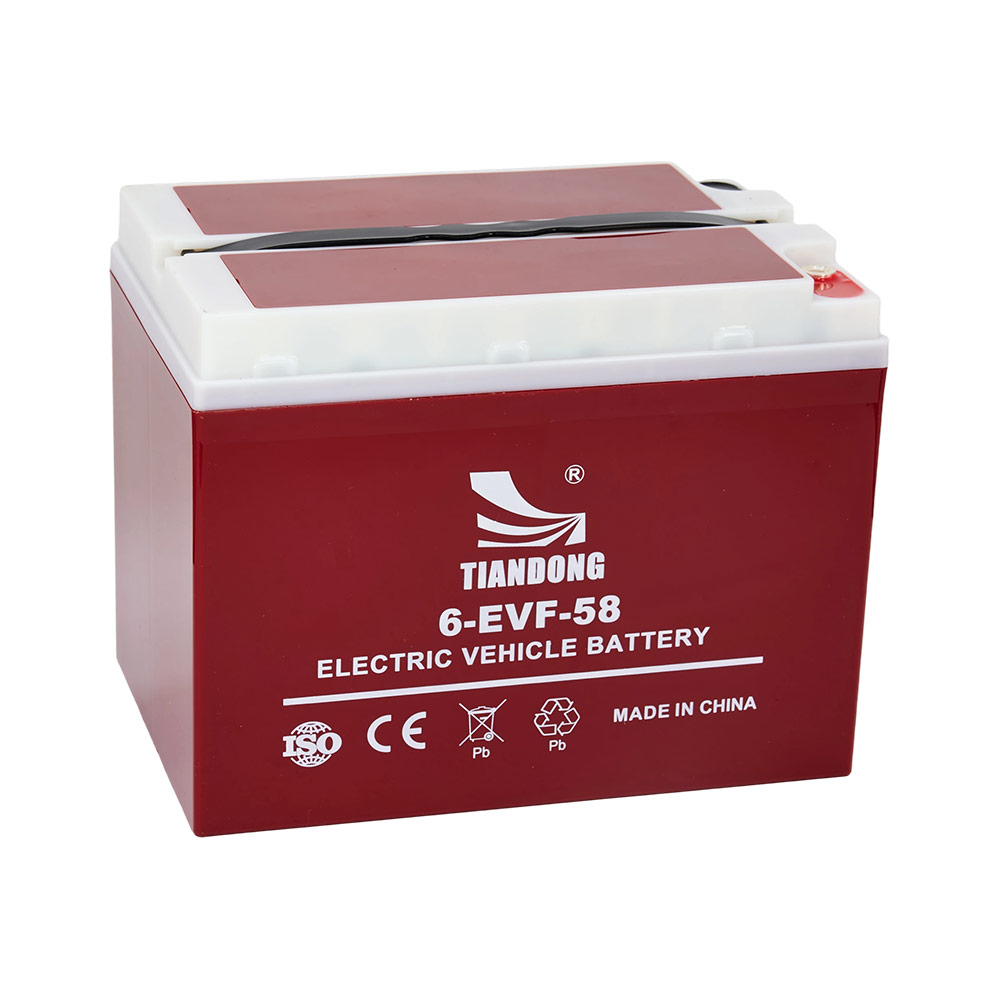
6-EVF-58
The current record lists 12 V, 63 Ah, 226 × 160 × 175 mm and a 17 kg reference weight. Request the capacity test method and approve the complete pack in the target vehicle.
View ProductWhat to Put in the RFQ
Define commercial and quality responsibilities
The RFQ should name the party responsible for approving the battery, charger and vehicle as an integrated system. It should also define who owns the golden sample, how specification revisions are authorized and how a production deviation is communicated. If the buyer uses more than one assembly plant, identify whether a single approval applies to every plant or whether each location must complete a fit check. Clear responsibility prevents an approved component from being installed in an unapproved pack configuration.
For repeat orders, request batch and production-date traceability that can connect a finished unit to inspection records. Define the sampling level for visual, dimensional, mass and voltage checks, along with the response to an out-of-limit result. The response may include quarantine, expanded sampling, root-cause review or replacement, depending on the agreed quality plan. Avoid vague phrases such as “high quality” when an objective measurement, drawing tolerance or inspection record can express the requirement more clearly.
Plan storage and rotation before arrival
Warehouses need a first-in, first-out process, protected terminals, suitable environmental conditions and periodic checks during extended storage. Define the acceptable receiving state and the action required when inventory remains unused beyond the agreed interval. Storage practice can influence the condition of a lead-acid battery before it ever reaches a vehicle, so the supply plan should connect factory dispatch, transit time, warehouse dwell time and dealer inventory. A forecast that supports smaller, regular lots may protect stock condition better than a single oversized purchase.
A useful RFQ identifies the vehicle model, target pack voltage, number of batteries per pack, annual volume, battery-bay drawing, allowable mass, terminal and cable layout, charger details, expected payload, route profile, climate, storage period and intended shipping destination. It should also state the required sample quantity, test standard, acceptance limits, packaging format and traceability expectations. If private labeling is needed, separate label artwork, carton marks and documentation requirements from the technical battery approval.
The final choice among 6-EVF-32, 6-EVF-45 and 6-EVF-58 is the model that passes the buyer’s agreed fit, charge, discharge, handling and logistics checks. That evidence-led process is more reliable than comparing names or unqualified capacity claims. TIANDONG can use the vehicle and pack information in the RFQ to support the correct sample discussion, while the vehicle manufacturer retains responsibility for validating the integrated system.
Frequently Asked Questions
Are the 6-EVF-32, 6-EVF-45 and 6-EVF-58 interchangeable?
No. Their recorded case dimensions and reference weights differ, and a vehicle may also require a specific terminal orientation, restraint method, cable layout and charger setting. Approve the selected model in the target battery bay and complete pack before ordering.
How many 12 V batteries are needed in an electric two-wheeler pack?
The quantity depends on the vehicle's approved pack-voltage architecture. The controller, charger, wiring and protection system must all match the complete series pack. Buyers should use the vehicle manufacturer's specification rather than changing the battery count independently.
Can the model number be used to predict vehicle range?
No. Range depends on usable pack energy, payload, route, speed, temperature, vehicle efficiency and discharge conditions. Validate range with a controlled test using the target vehicle, complete battery pack and approved charger.
What should be checked during battery sample approval?
Check model identity, dimensions, mass, terminal position, pack fit, restraint, cable routing, charger compatibility, voltage balance and controlled discharge results. Record the test method, temperature, load, end voltage and equipment used.
Why must batteries in a series pack be matched?
A series pack is constrained by its weakest unit. Mixing models, batches, ages or states of charge can increase imbalance, so buyers should define matching, incoming inspection and replacement procedures.
What information should an OEM buyer include in the RFQ?
Include the vehicle and pack voltage, unit count, battery-bay drawing, terminal layout, allowable mass, charger details, duty profile, climate, order volume, test and acceptance method, packaging, traceability, destination and any labeling requirements.

YTX5-BS, YTX7-BS and YTX9-BS: Procurement Specifications and Variant Control

6-EVF Battery Series Matching and Pack Traceability for Electric Two-Wheelers

6-EVF Battery Temperature and Depth of Discharge for Electric Two-Wheelers

6-EVF Battery Charging and Charger Matching for Electric Two-Wheelers

6-EVF Battery Cycle Life for Electric Two-Wheelers

6-EVF Battery Range and Pack Voltage for Electric Two-Wheelers

Get in touch with us to get your Motorbike Battery solution
TIANDONG is a leading motorcycle battery manufacturer offering OEM/ODM service, stable quality, and global export support.
Built for wholesalers. Trusted by global buyers. Delivered with confidence.
Say Hello
E-mail: daisybattery8@gmail.com
xianyingchen83@gmail. com
WhatsAPP: +86 134 283 86694
+86 134 348 86641
Our Location
Social Links
© 2025 TIANDONG. All Rights Reserved. Privacy Policy | Terms and Conditions | Sitemap
 Scan QR Code
Facebook
Instagram
Scan QR Code
Whatsapp: +8613434886641